US Warns Iran of ‘Economic D-Day’ as Tehran Threatens to Halt Oil Exports
Washington is preparing fresh economic sanctions on Iran and has warned countries doing business with Tehran of serious consequences. Iran, in response, has threatened to stop oil exports and could consider support for the US economic campaign an “act of war.”
Washington, August 24, 2026: Tensions between the United States and Iran have entered a new and potentially serious phase, with Washington preparing another round of economic sanctions against Tehran and warning countries that continue doing business with Iran that they could also face consequences.
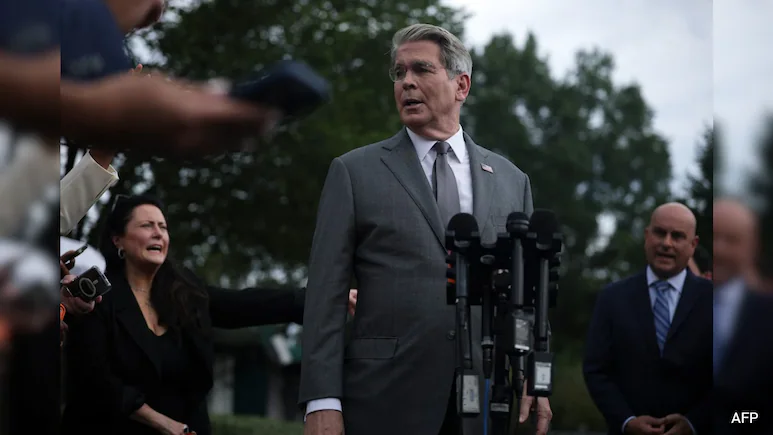
US Treasury Secretary Scott Bessent described the upcoming measures as an “economic D-Day”, saying the Trump administration wants to put maximum financial pressure on Iran and cut off the economic channels that help sustain its government.
In an opinion article published ahead of a scheduled US announcement, Bessent said the objective was to isolate Iran economically and force Tehran back towards negotiations. He also warned countries that purchase or transport Iranian oil, facilitate fuel transfers or allow financial transactions linked to Tehran that they could face what he described as “tremendous economic consequences.”
The warning could have significant implications for countries that maintain economic ties with Iran, particularly China, which remains a major buyer of Iranian oil.
Washington Says Pressure Will Intensify
Bessent argued that the United States had already taken major steps against Iran’s military and nuclear capabilities and that Washington was now shifting its focus towards the country’s economy.
He said the US wanted to target the financial and commercial networks that allow Iran to continue selling petroleum and accessing international markets.
Bessent also issued a warning against any possible military response from Tehran, saying that if Iran reacted to the economic measures with force, President Donald Trump would respond “swiftly and decisively.”
The remarks underline Washington’s intention to use economic pressure as a major tool in its confrontation with Tehran.
Iran Rejects US Sanctions Threat
Iran has strongly rejected the US approach.
Iranian Foreign Ministry spokesperson Esmaeil Baghaei described the planned sanctions as an attempt by Washington to impose its authority beyond its own borders. He argued that such secondary sanctions have no basis in international law.
Iranian officials have also warned that countries cooperating with the US economic campaign could face consequences.
Mohsen Rezaei, secretary of Iran’s Supreme National Security Council, issued one of the strongest warnings, saying Tehran could treat any country’s participation in or support for the US economic campaign as an “act of war.”
Iran Threatens Oil Supply
Tehran has also raised the stakes by threatening to halt oil exports if the economic pressure continues.
Rezaei said that if the economic conflict persisted, Iran could prevent oil from being exported through the Strait of Hormuz or from other parts of the Persian Gulf.
The threat is significant because the Strait of Hormuz is one of the world’s most important energy routes. Any prolonged disruption could have consequences for global oil supplies and energy markets.
Oil shipments through the waterway have already been severely affected amid the wider conflict, while Tehran has continued to use control over the region’s energy routes as a source of leverage.
China Faces a Difficult Position
China is particularly important in the unfolding economic confrontation because it is a major destination for Iranian oil.
According to 2025 data cited in the report from analytics firm Kpler, China purchased more than 80 per cent of Iran’s shipped oil. Any US effort to target countries involved in Iranian oil trade could therefore put Beijing under increased pressure.
China has urged both sides to pursue diplomacy rather than allowing the confrontation to escalate further.
Iran Calls for a Diplomatic Solution
Despite the increasingly aggressive rhetoric, Iranian leaders have also spoken about the need for a diplomatic path forward.
Iranian President Masoud Pezeshkian has called for an end to the conflict through negotiations. He argued that reaching a settlement while Iran retains strength and dignity would be preferable to allowing the confrontation to continue.
Iranian Parliament Speaker Mohammad Baqer Qalibaf has also acknowledged the pressure facing the country’s economy. He said that military strength alone would not be enough for Iran to withstand prolonged pressure and stressed the importance of economic activity, national production and financial stability.
A New Economic Front in the Conflict
The latest developments suggest that the confrontation between Washington and Tehran is increasingly moving beyond the battlefield and into the global economy.
The United States is preparing to use sanctions, financial restrictions and pressure on Iran’s trading partners to squeeze Tehran. Iran, meanwhile, is threatening to use its oil exports and strategic position around the Persian Gulf as leverage.
With neither side currently moving decisively towards a peace agreement, the economic confrontation could have consequences well beyond Iran and the US, particularly for global energy supplies, oil prices and countries that maintain trade relations with Tehran.
News source: Information for this article was gathered from a variety of reliable news outlets.