Trump Says US-Iran War Could End After November Elections, But Iran Signals No Retreat
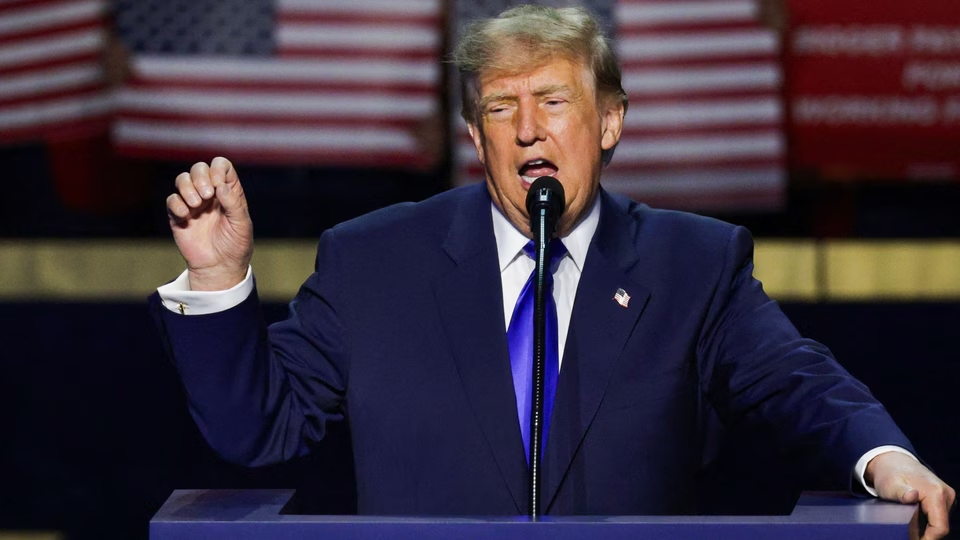
Washington/Tehran: The conflict between the United States and Iran shows no immediate signs of easing, with US President Donald Trump predicting that the war could come to an end soon after the American midterm elections, while Tehran has warned that it is prepared for an even more intense confrontation.
Trump made the remarks on Wednesday while travelling to Dallas for the Republican National Convention. He said he believed Iran was attempting to influence the upcoming US elections but would ultimately be unable to continue fighting under growing economic and military pressure.
“I think war is going to end immediately after the election,” Trump told reporters, arguing that Iran was running out of options.
His comments, however, came as Iranian officials sent a very different message, insisting that Tehran has no intention of backing down.
Iran Says It Is Ready for a Longer War
According to a senior Iranian official cited by Bloomberg, Iran is preparing for the possibility of a prolonged and more intense conflict with the United States.
The official said Tehran would increase its counterattacks if American forces continued striking Iranian territory and critical infrastructure.
Iran’s leadership reportedly views the confrontation as an existential struggle, making a quick retreat unlikely despite the growing economic pressure.
The official also claimed that Iran has been rebuilding its military capabilities since the most intense phase of the conflict in April and has enough missiles to sustain a lengthy confrontation.
Trump Says Washington Is Not in a Hurry to Negotiate
Trump also indicated that the United States is not currently prioritising diplomatic negotiations with Tehran.
Asked whether he expected talks to restart or military operations to continue, Trump said that Washington was not actively seeking negotiations, although he did not completely rule out the possibility of diplomacy.
He argued that American military operations had severely weakened Iran and suggested that Tehran had little capacity left to continue resisting indefinitely.
Trump said that while a negotiation could still take place, it was not something his administration was currently pursuing.
For now, his message suggests that the United States intends to maintain pressure on Iran rather than immediately seek a diplomatic settlement.
Trump Repeats Warning Over Iran’s Nuclear Programme
During his speech at the Republican National Convention, Trump again stressed that Iran must not be allowed to acquire a nuclear weapon.
He presented the issue as a major reason for continuing the US campaign against Tehran.
Trump also suggested that preventing Iran from obtaining a nuclear weapon was more important than the short-term economic consequences of the conflict, including higher energy prices.
His comments underline how strongly the Iranian nuclear programme remains at the centre of Washington’s approach to the conflict.
Oil Prices Rise as Fighting Intensifies
The growing confrontation has also begun to affect global energy markets.
Oil prices rose sharply as fears increased over possible disruptions around the Strait of Hormuz, one of the world’s most important energy routes.
International benchmark Brent crude moved above $100 a barrel, marking its first time above that level since July, after prices gained more than 3%.
Trump acknowledged that the war was contributing to higher energy costs but predicted that oil prices would eventually fall once the conflict ended.
He suggested that prices could begin dropping after the US midterm elections, although he acknowledged that it might take some additional time.
US Strikes Iranian Oil Tankers
The latest escalation followed US military action against five Iranian oil tankers.
The US Central Command said American forces struck the vessels after repeated missile attacks had reportedly targeted a US Navy warship.
According to US officials, four tankers were targeted in the Gulf of Oman, while another was struck near Kharg Island in the Persian Gulf.
The US military said the warship managed to evade the incoming attacks and continued its mission without American casualties. It also said crews aboard the targeted tankers had been instructed to leave the vessels before the strikes.
Iran subsequently responded with attacks of its own.
Iran Retaliates Near Jordan
On Wednesday, Iran reportedly launched missile strikes towards Jordan, targeting the Muwaffaq Salti Air Base, which is used by US forces.
The exchange marked another dangerous escalation in the conflict and raised concerns that the fighting could spread beyond the immediate US-Iran confrontation.
With military operations continuing, diplomatic efforts appear limited, while both sides continue to issue increasingly tough statements.
What Happens Next?
Trump’s prediction that the war could end immediately after the November midterm elections contrasts sharply with Tehran’s current position.
While Washington believes economic and military pressure could eventually force Iran to change course, Iranian officials are signalling that they are prepared to continue fighting and expand their response if American attacks continue.
The conflict has already created wider concerns over energy prices, regional security and the possibility of further escalation across the Middle East.
For now, there is little indication that either side is ready to make major concessions. Whether Trump’s prediction of an end to the conflict after the US elections becomes reality will depend on developments on the battlefield, the economic pressure on Iran and the possibility of renewed diplomatic engagement.
News source: Information for this article was gathered from a variety of reliable news outlets.