Six Months Into Iran War, Reopening Strait Of Hormuz Emerges As US’ Top Concern
Washington: Six months after the United States launched its war with Iran, what began as a campaign focused on Tehran’s nuclear and military capabilities has evolved into a much broader and increasingly complicated conflict.
When President Donald Trump ordered the strikes in late February, he predicted the war could be over within four to five weeks. Half a year later, however, there is still no clear path to an end. While Trump has repeatedly claimed that the US has won and suggested that a deal with Iran was close, negotiations have failed to produce a lasting breakthrough.
A memorandum of understanding reached in June, which was intended to lay the groundwork for ending the conflict, has effectively stalled. At the same time, US stocks of some key weapons have declined, prompting the administration to place greater emphasis on economic pressure against Tehran rather than sustained military strikes.
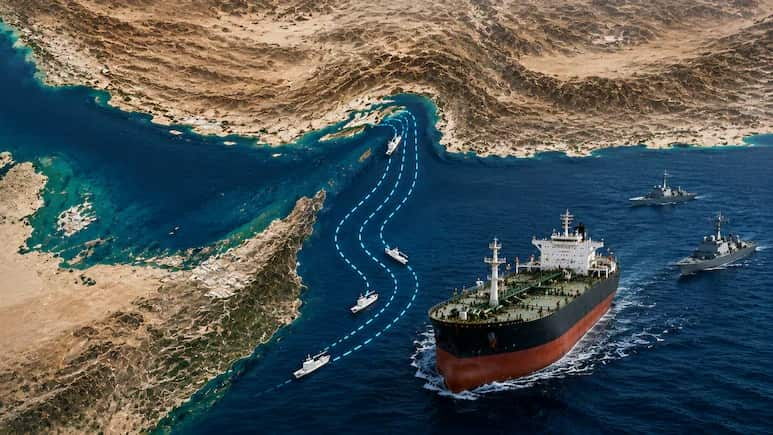
As the conflict has dragged on, Washington’s priorities have also changed. Reopening the Strait of Hormuz, a crucial global energy route, has now emerged as one of the biggest concerns.
The waterway traditionally carried roughly 20% of the world’s oil supplies. Since the war began, Iran has used the strait as a strategic chokepoint, with disruptions sending fuel and fertilizer prices higher and creating economic and political pressure in the US and beyond.
While American and Israeli attacks have significantly weakened Iran’s military infrastructure, several of Trump’s original objectives remain unresolved — while some have evolved considerably.
Iran’s Nuclear Programme
Last June, Trump declared that Iran’s nuclear programme had been “obliterated.” At the beginning of the war, however, his administration had argued that Tehran was only weeks away from potentially developing a nuclear weapon.
A major unresolved issue is Iran’s estimated 440-kilogram stockpile of enriched uranium. The material is believed to be buried beneath three locations targeted by US and Israeli strikes.
Trump has said the material should be recovered and destroyed in coordination with Iran and the International Atomic Energy Agency (IAEA). Tehran, however, has not indicated whether it would agree to such a move.
Experts have warned that attempting to seize the material without Iran’s consent could require a major US military operation on Iranian territory.
The June memorandum reportedly included Iran’s commitment not to develop or acquire nuclear weapons and called for its highly enriched uranium to be diluted. However, several important aspects of Tehran’s nuclear programme were left for future negotiations, and it remains unclear how much progress was made before the talks collapsed.
Strait Of Hormuz
Reopening the Strait of Hormuz has become one of Washington’s most pressing challenges.
Trump has said any agreement with Iran would involve reopening the waterway, alongside an end to the US blockade of Iranian ports. At other times, however, he has made suggestions about the US asserting control over the international shipping route and potentially charging vessels a toll.
Trump has also repeatedly insisted that the strait is already functioning.
Yet Iran continues to demonstrate its ability to disrupt shipping in the region, including through drone attacks and other military activity.
Iran’s Missile Arsenal
Another major US objective was to destroy Iran’s missile capabilities and cripple its missile industry.
Trump initially claimed that around 90% of Iran’s missiles and launchers had been destroyed. By late March, he said most of Iran’s missile capabilities had been eliminated, before later putting the figure at around 82%.
Despite the heavy damage, Iran has retained the ability to launch attacks in the region, including drone strikes targeting vessels near the Strait of Hormuz.
US Central Command continued to report strikes against Iranian military infrastructure as recently as July, including command centres, air-defence and coastal surveillance sites, missile and drone launch facilities and communications networks.
Iran’s Defence Industry
The US has also targeted Iran’s weapons production and missile and drone manufacturing facilities.
Secretary of State Marco Rubio told lawmakers in June that Iran’s defence industrial base had suffered “massive destruction”, estimating an 80% to 90% attrition rate and saying Tehran could need years to rebuild its capabilities.
The US and Israel also established significant air superiority over Iran during the conflict.
Rubio said Iran retained drone capabilities but had lost the ability to deploy large drone swarms on the scale seen at the beginning of the war. He also claimed Iran’s conventional navy had effectively been eliminated, leaving smaller armed vessels as its primary maritime capability.
Trump later went further, saying Iran’s navy and air force were “totally gone.”
Protecting US Allies
Another major objective announced by Trump was protecting American allies across the Middle East, including Israel, Saudi Arabia, Qatar, the United Arab Emirates, Bahrain and Kuwait.
The US continues to maintain thousands of troops and military assets across the region. However, questions remain over how far Washington is prepared to go to protect its partners from Iranian retaliation in the long term.
When Iran launched missile attacks against Kuwait and Bahrain in June, the US responded with strikes against Iranian targets.
Oman, however, has found itself in a very different position. Rather than receiving strong backing from Washington, Muscat has faced Trump’s criticism over negotiations it has been conducting with Iran concerning the Strait of Hormuz.
In August, Trump even threatened military action against Oman if it interfered with US objectives.
Iran’s Proxy Groups
Early in the conflict, the Trump administration repeatedly described dismantling Iran’s network of regional proxy groups as a key objective.
The administration initially focused on Iranian-aligned militias in Iraq, while Israel’s continuing confrontation with Hezbollah in Lebanon became another major front.
Iran has maintained that an end to the fighting in Lebanon should be part of any broader agreement with Washington.
The US helped mediate an arrangement involving Israel and the Lebanese government under which Israeli forces would withdraw from southern Lebanon in exchange for Hezbollah disarming. A US administration official described the development as a major step.
But Hezbollah has rejected direct negotiations and its leadership has continued to oppose disarmament.
A War With No Clear End
Six months into the conflict, the US can point to significant damage inflicted on Iran’s military and defence infrastructure. But the war has also produced new challenges that were not central to Washington’s original plans.
The Strait of Hormuz has become a critical pressure point for the global economy, Iran’s nuclear material remains unresolved and diplomatic efforts have stalled.
For Trump, the challenge now goes beyond demonstrating military strength. The bigger question is whether Washington can turn battlefield gains into a sustainable agreement — and restore stability to a region where the war’s consequences continue to spread.
News Source : Information for this article was gathered from a variety of reliable news outlets.