US Court Permanently Drops Charges Against Gautam Adani and Sagar Adani, Ending Nearly Two-Year Legal Battle
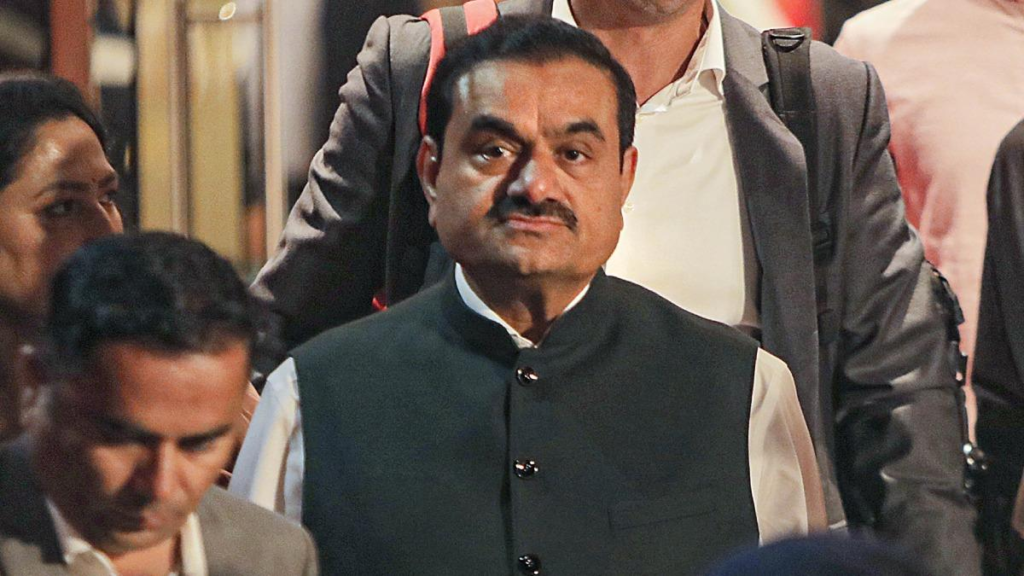
The Adani Group has repeatedly rejected the criminal allegations, calling them baseless and unfounded.
New York/New Delhi: A US court has permanently dismissed the criminal charges against Adani Group chairman Gautam Adani and his nephew Sagar Adani, bringing an end to a nearly two-year legal battle that had attracted significant attention in India and the United States.
The US District Court for the Eastern District of New York approved the Justice Department’s request to dismiss the indictment against Gautam Adani, Sagar Adani and former Adani Green Energy CEO Vneet Jaain.
The charges included securities-fraud conspiracy, wire-fraud conspiracy and securities fraud.
The case was dismissed with prejudice, which means the same criminal charges cannot simply be brought against the accused again. However, the dismissal should not be interpreted as a judicial finding that the underlying allegations were false or that the court had ruled on the merits of the accusations. The case ended before a trial took place.
How the Case Began
The case dates back to November 2024, when US prosecutors accused Gautam Adani, Sagar Adani, Vneet Jaain and others of allegedly participating in a scheme involving more than $250 million in bribes to Indian government officials.
According to the allegations made by prosecutors at the time, the payments were intended to help secure approvals for solar power projects that were expected to generate more than $2 billion in after-tax profits over approximately two decades.
US prosecutors also alleged that investors were misled while the Adani Group raised more than $3 billion through loans and bond issuances in US financial markets.
The Adani Group strongly denied the criminal allegations and repeatedly described them as baseless.
Why Did the US Government Seek to Drop the Case?
The case took a major turn after the US Justice Department under the Trump administration decided that continuing the prosecution was no longer in the interests of justice.
The government pointed to several challenges, including questions surrounding US jurisdiction, the fact that much of the alleged conduct was said to have taken place in India, and the involvement of Indian authorities in examining the matter.
The Justice Department also argued that there were difficulties in taking the case forward and that the indictment had little realistic prospect of reaching trial.
Prosecutors further raised broader public-interest considerations in asking the court to dismiss the charges.
The government also claimed that the indictment, which had been unsealed in November 2024 during the final weeks of the Biden administration, appeared to have been part of a politically motivated “name and shame” exercise. This was the government’s characterization, rather than a finding by the court that the case was politically motivated.
Judge Asked for More Answers
The decision to dismiss the case was not approved immediately.
US District Judge Nicholas Garaufis asked prosecutors to publicly explain why the Justice Department wanted to abandon the prosecution. He also sought clarification regarding whether Gautam Adani’s earlier announcement of plans to invest $10 billion in the United States had any connection with the government’s decision.
The judge required the defendants to submit sworn declarations confirming that there had been no promise, offer, quid pro quo or undisclosed agreement connected to the dismissal.
In his declaration, Gautam Adani categorically denied that any such arrangement existed.
After reviewing the government’s submissions and the sworn declarations, Judge Garaufis approved the Justice Department’s request.
What the Court’s Decision Means
The dismissal brings the criminal proceedings to an end before the matter could go to trial.
That means there was no trial in which witnesses were examined or evidence was tested before a jury. The court also did not make findings determining whether the original criminal allegations were true or false.
However, because the dismissal was entered with prejudice, the three criminal charges cannot simply be refiled against the defendants.
The judge also noted that federal courts have a limited role when reviewing prosecutors’ decisions to discontinue criminal cases.
Court Accepted One Key Legal Argument
In approving the dismissal, the court found that the Justice Department had met the legal requirements on at least one important ground.
The government argued that certain statements regarding Adani Green Energy’s anti-bribery policies and corporate compliance could be considered “inactionable puffery” — broad corporate statements that investors could not reasonably rely upon as specific factual guarantees.
The court accepted this reasoning as sufficient to support dismissal of the relevant charges.
Judge Garaufis did not accept or find sufficient several other arguments put forward by the government.
For example, the government had argued that much of the alleged conduct took place in India, creating questions about the reach of US securities laws. The court noted that the indictment itself alleged that investors had committed funds in the United States and that the transactions involved the US financial system.
The court also found that the government’s argument concerning the absence of sophisticated-investor deception did not independently provide enough support for dismissal.
However, because the court found the “puffery” argument sufficient, it did not need to resolve every other issue raised during the proceedings.
Separate SEC Matter
Alongside the criminal case, there was also a separate civil action involving the US Securities and Exchange Commission.
That matter has been resolved through a final judgment against Gautam Adani. Under the agreement, Adani consented to the order without admitting the allegations.
The judgment requires him to pay a civil penalty of $6 million to the SEC within 30 days.
This civil matter is separate from the criminal prosecution that has now been permanently dismissed.
Gautam Adani Welcomes the Decision
Gautam Adani welcomed the court’s decision and said his faith in the legal process had remained firm throughout the case.
In a post on X, he expressed gratitude to those who continued to support him and said the group would remain focused on its long-term goals.
Adani said the group’s priority would continue to be building for India, creating long-term value and working towards projects that serve a broader national purpose.
A Case That Drew Global Attention
The proceedings unfolded during a period of intense international scrutiny of the Adani Group.
The group had already faced significant attention following allegations made by short seller Hindenburg Research in January 2023. Those allegations triggered a sharp fall in Adani Group shares and, at their lowest point, wiped out more than $150 billion in market value.
The Adani Group rejected the allegations and maintained that it had complied with applicable laws and disclosure requirements.
The subsequent US criminal case added another layer of pressure and uncertainty for the conglomerate and its investors.
With the criminal proceedings now permanently closed, one of the most significant legal uncertainties surrounding the group in the United States has been removed.
Still, the court’s decision is important to understand in precise terms: it ends the criminal prosecution, but it does not constitute a judicial declaration on the truth or falsity of the original allegations because the case never went to trial.
For Gautam Adani and the Adani Group, however, the dismissal marks the conclusion of a lengthy and closely watched legal episode — one that had significant implications for the group’s reputation, investors and international business ambitions.
News source: Information for this article was gathered from a variety of reliable news outlets.