Sonia Gandhi’s Gaza Remarks Spark Political Row as BJP Hits Back
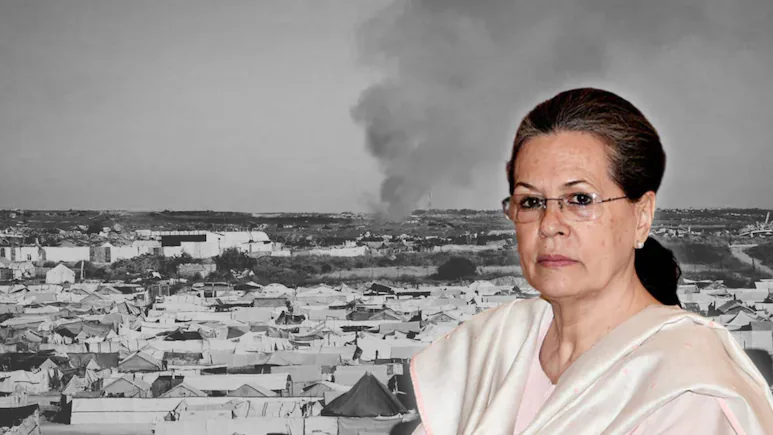
New Delhi , June 27 , 2026 : A fresh political debate has erupted after senior Congress leader Sonia Gandhi questioned the Indian government’s response to the ongoing humanitarian crisis in Gaza. In a strongly worded opinion piece, she accused the Centre of maintaining what she called a “silence” over the suffering of civilians in the conflict-hit region.
In her article, Sonia Gandhi expressed concern over India’s shifting foreign policy approach, suggesting that the country’s growing closeness with Israel may be affecting its long-standing support for Palestine and the Palestinian cause. She argued that India’s silence on the destruction in Gaza is not only morally troubling but could also harm the country’s historical global image as a supporter of justice and human rights.
Highlighting the humanitarian cost of the war, Gandhi pointed to reports claiming that thousands of children have lost their lives and tens of thousands more have been injured. She stressed that the scale of devastation in Gaza has reached alarming levels, with homes, hospitals, and public infrastructure reduced to rubble after years of conflict and military operations.
Her comments also referenced findings from international investigations and reports that have raised serious concerns over alleged war crimes and human rights violations during the conflict. According to her, despite growing evidence and legal debates on the global stage, the world community has largely failed to take decisive action to stop the violence.
The Bharatiya Janata Party (BJP), however, strongly rejected Sonia Gandhi’s criticism. BJP leaders accused her of attempting to mislead the public and mixing foreign policy with domestic vote-bank politics. Party spokesperson Shehzad Poonawalla defended the government, saying India has repeatedly clarified its balanced position on the Gaza conflict.
He pointed out that India has supported humanitarian aid for Gaza, voted at the United Nations on ceasefire-related resolutions, and has continued to maintain diplomatic ties with both Israel and Palestine. The BJP also argued that India’s foreign policy is driven by national interest and strategic balance rather than political calculations.
The controversy has once again brought attention to India’s delicate position in the Middle East conflict. Historically, India has maintained close ties with Palestine while also building strong strategic, economic, and defence partnerships with Israel in recent years. This balancing act has often required careful diplomatic positioning, especially during periods of heightened conflict.
As political parties continue to exchange sharp words over the issue, the debate reflects larger questions about India’s role on the global stage, its humanitarian responsibilities, and how foreign policy decisions are perceived both domestically and internationally. With the Gaza crisis continuing to dominate global headlines, the political discussion around India’s stance is unlikely to fade anytime soon.
News source: Information for this article was gathered from a variety of reliable news outlets.