Contractor’s Internal Report Warned Wayanad Tunnel Slope Could Collapse Before Deadly Landslide
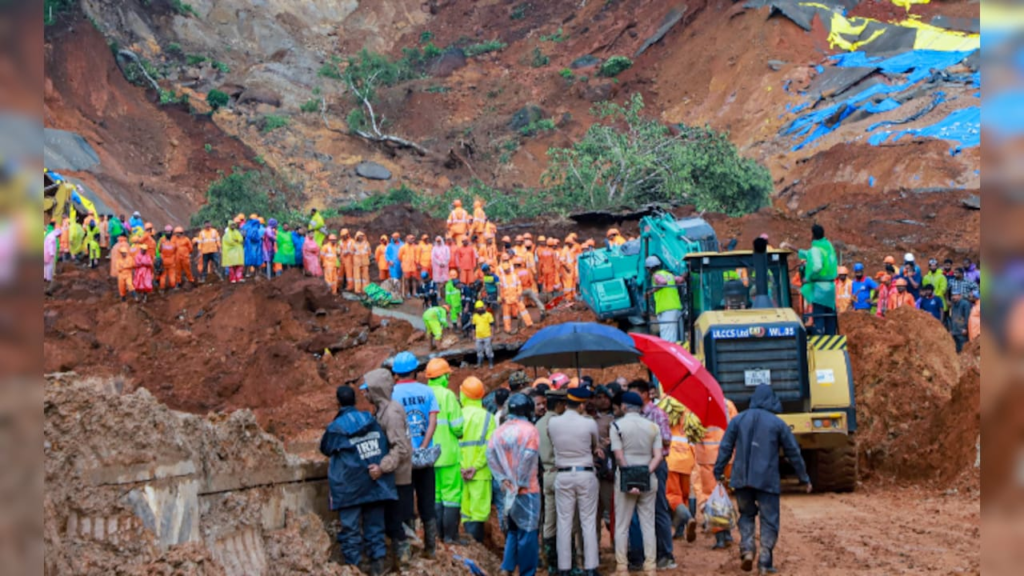
Wayanad (Kerala): A devastating landslide at the Wayanad tunnel construction site in Kerala that claimed six lives may have been preventable, according to an internal report accessed by NDTV. The document, prepared by the project’s sub-contractor, Dilip Buildcon Limited (DBL), had warned that the hillside above the tunnel’s North Portal was at risk of collapsing “at any time” due to worsening ground conditions during the monsoon.
The report was jointly prepared by DBL’s senior geologist Raju Sagar, Geological Survey of India (GSI) official A. Ramesh Kumar, and Authority Engineer Dr. H.K. Singh from Turkish Engineering Consulting & Contracting. Their assessment was based on inspections carried out between June 3 and June 11, several weeks before the fatal landslide.
The tunnel project connects Anakkampoyil in Kozhikode with Kalladi-Meppadi in Wayanad through two entry points – the South Portal and the North Portal. The landslide struck the North Portal, exactly where the report had identified the highest risk.
According to the assessment, the slope above the tunnel entrance consisted of nearly 35 metres of loose, silty soil resting over hard rock. Such soil is highly vulnerable during heavy rainfall because it retains water, becomes heavier, loses strength, and is more likely to slide downhill.
Although engineers had attempted to stabilise the slope by cutting it into stepped sections, applying shotcrete (sprayed concrete), and installing soil nails, the report noted that these safety measures were already showing signs of failure. Inspectors observed widening cracks, sinking soil, muddy water seepage, and underground cavities forming within the slope.
One of the most alarming findings was the sound of water flowing beneath the surface between two support levels. Experts said this indicated hidden internal erosion, where water silently washes away soil from within, significantly increasing the risk of a sudden collapse.
The report specifically identified the left side of the slope as being far more dangerous than the right and warned that, under the prevailing rainfall conditions, it “may culminate in sudden slope failure at any time.”
It also highlighted major shortcomings in the safety infrastructure. Drainage holes designed to release trapped groundwater were found to be largely ineffective on the high-risk slope. Essential monitoring equipment, including piezometers that measure underground water pressure, had not yet been installed. The only monitoring system in use was reportedly unable to accurately reflect the visible signs of distress at the site.
Despite these warning signs, trial blasting for the tunnel was conducted on June 5, June 6, and June 11. However, the report concluded that blast vibrations remained within permissible limits and that continuous heavy rainfall, rather than blasting, was the primary cause of the slope’s instability.
To reduce the risk, the report recommended several urgent measures. These included constructing gabion retaining walls to strengthen the exposed slope, covering the hillside with protective matting and tarpaulins to prevent rainwater infiltration, creating proper drainage channels, and testing whether existing soil nails and drainage systems remained effective under saturated conditions.
The engineers also warned that a nearby concrete batching plant and the movement of heavy vehicles could further destabilise the weakened slope. They recommended relocating the facility to a safer location.
Following the report, work at the North Portal was halted. An engineer associated with Konkan Railway Corporation said the study had been conducted to evaluate the impact of blasting and claimed that construction at the portal was stopped immediately after the findings.
The engineer defended the use of shotcrete, stating that it had been reinforced with 12-metre-long concrete rods placed at two-metre intervals. He also argued that no engineering measures could have completely prevented the massive landslide that eventually occurred.
When questioned about whether adequate preparations had been made considering the fragile terrain and the monsoon season, project officials maintained that all standard engineering practices had been followed. However, they were unable to clearly explain why key recommendations such as gabion walls and proper soil-retaining structures had not been fully implemented.
Officials also cited delays in government land allocation for storing excavated soil, claiming that the lack of designated dumping space complicated construction and slope management.
The engineer further revealed that around 200 workers stationed at the South Portal left the site after the tragedy out of fear. He said work would not resume until an expert committee appointed by the Kerala government reviewed and approved the project’s safety measures.
Notably, the contractor’s report predicting the possibility of a sudden slope collapse was prepared six days before the Wayanad District Collector issued an official stop-work order on June 20, raising fresh questions over whether earlier intervention could have helped prevent the fatal disaster.
News source: Information for this article was gathered from a variety of reliable news outlets.