Sonia Gandhi Says History Will Remember Manmohan Singh Kindly, Takes Aim At Modi Government
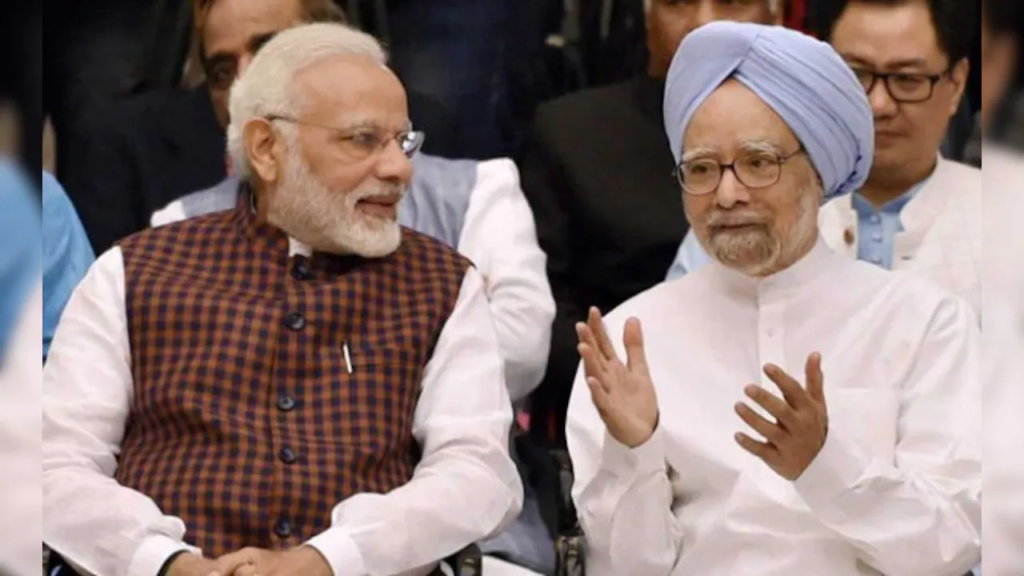
New Delhi : Congress leader Sonia Gandhi has strongly defended former Prime Minister Manmohan Singh, saying his legacy of honesty, accountability and governance will ultimately be remembered positively despite the political attacks he faced while in office.
In an article published in The Indian Express, Gandhi said the Supreme Court’s recent decision to uphold the CBI’s clean chit to Singh in the coal block allocation case had brought an end to what she described as a prolonged and unfair campaign against the former prime minister.
Gandhi referred to Singh’s famous remarks from his final press conference as prime minister in January 2014. At the time, Singh had said he believed history would be kinder to him than the contemporary media and opposition parties that had repeatedly criticised his government over allegations of corruption.
More than a decade later, Gandhi said those words had proved prophetic.
On July 29, 2026, the Supreme Court upheld the CBI’s closure report in the coal block allocation case involving Singh and set aside the trial court’s decision to summon him. The development formally brought the criminal proceedings against the former prime minister to an end.
Singh, who died on December 27, 2024, had faced intense political criticism over alleged irregularities linked to coal block allocations during the UPA government.
Gandhi described the case as one of the most unfortunate episodes in India’s political discourse. She called the campaign against Singh a “witch-hunt” and said the former prime minister had been subjected to attacks despite his reputation for personal integrity and public service.
According to Gandhi, the campaign against Singh involved several sections of public life, including political opponents, parts of the bureaucracy, media organisations and other institutions. She specifically criticised the BJP and RSS, accusing them of helping drive what she called a coordinated campaign against the former prime minister.
Gandhi also took a direct swipe at Prime Minister Narendra Modi, recalling his 2017 remark in the Rajya Sabha in which he had mocked Singh by saying that only the former prime minister knew the “art of bathing with a raincoat on” while wearing a suit.
She described the remark as one of the lowest moments in India’s parliamentary history.
Gandhi argued that the Supreme Court’s judgment was significant not only because it cleared Singh in the case, but also because it criticised the manner in which the trial court had rejected the CBI’s closure reports and made adverse observations against the former prime minister without sufficient reason.
She said Singh’s record of integrity should be viewed against what she described as the Modi government’s alleged misuse of investigative agencies such as the Enforcement Directorate and the Central Bureau of Investigation.
Gandhi accused the government of using these agencies to put political pressure on opposition leaders. She alleged that political leaders facing corruption allegations could find themselves treated differently depending on whether they remained in opposition or joined the BJP.
“When credible accusations of corruption emerge, the Modi government simply brushes them aside,” she said, arguing that political circumstances often determine how such allegations are treated.
Beyond the legal case, Gandhi used the opportunity to highlight what she considers the achievements of the Manmohan Singh government between 2004 and 2014.
She pointed to India’s economic growth during Singh’s tenure, saying the period witnessed strong expansion, increased consumption and private investment, and significant changes in the country’s economic landscape.
She also listed several major social and economic initiatives introduced during the UPA years, including the Right to Education Act, the Mahatma Gandhi National Rural Employment Guarantee Act (MGNREGA), the National Food Security Act and the Forest Rights Act.
According to Gandhi, these policies had a lasting impact on millions of Indians and reflected Singh’s approach to economic development combined with social welfare.
She also contrasted Singh’s handling of civil society and student protests with the current political environment. Gandhi said that during the UPA period, students and civil society groups had greater space to criticise the government and organise protests.
Another aspect of Singh’s tenure that Gandhi highlighted was his engagement with Parliament and the media. She said Singh regularly faced questions from journalists and participated in more than 100 unscripted press conferences during his time as prime minister.
Gandhi also recalled one of Singh’s most important foreign-policy achievements — the Indo-US civil nuclear agreement.
She described the nuclear deal as a landmark moment that ended decades of restrictions on India’s access to international nuclear cooperation and strengthened India’s position on the global stage.
According to Gandhi, Singh’s willingness to pursue the agreement despite significant political opposition demonstrated his political courage and determination.
She argued that the allegations that had once damaged Singh’s public image were increasingly being exposed as unfounded, particularly following the Supreme Court’s latest decision.
For Gandhi, the former prime minister’s legacy should therefore be judged not by the controversies that surrounded his government but by the economic, social and political changes that took place during his decade in office.
She also expressed regret that Singh was no longer alive to witness the legal vindication.
Gandhi said it was painful that Singh could not see the conclusion of the case or offer his advice and wisdom to the country. At the same time, she said the Supreme Court judgment provided some comfort to those who had long believed in his integrity.
Referring once again to Singh’s 2014 prediction, Gandhi said history was gradually proving him right.
She concluded that Manmohan Singh would ultimately be remembered as a quiet and gentle leader who nevertheless played a consequential role in India’s economic transformation, social policy and international diplomacy.
News source: Information for this article was gathered from a variety of reliable news outlets.