Punjab Police Seek Discharge of Man Who Earlier Confessed to Funding Border Checkpost Attack
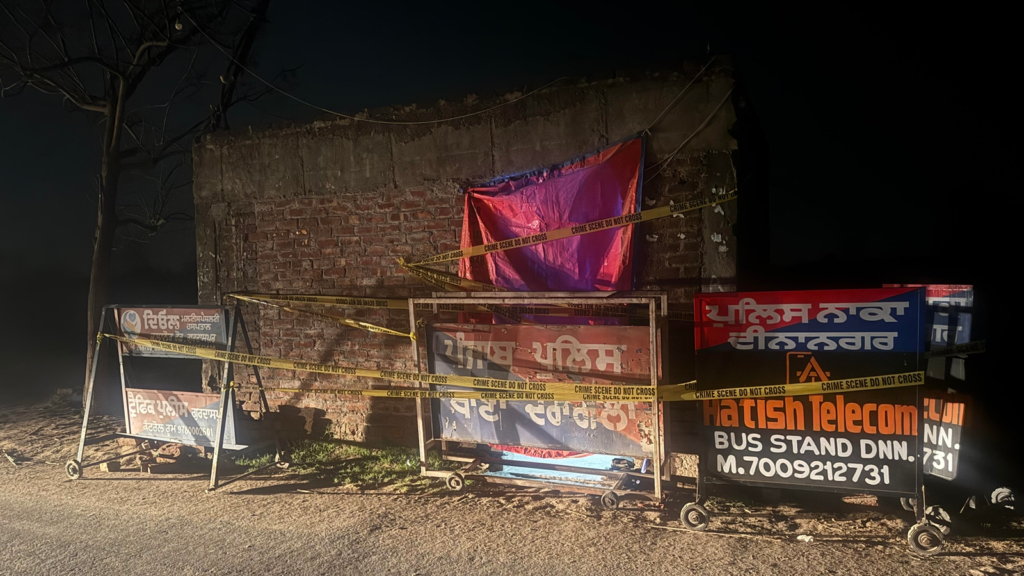
Amritsar : In a surprising turn in the Gurdaspur border killings case, the Punjab Police have approached the court seeking to discharge a man they had earlier described as a crucial link in an alleged international terror funding network.
The case dates back to February 22, 2026, when Assistant Sub-Inspector Gurnam Singh and Home Guard Ashok Kumar were shot dead at a police checkpost in Adhian village, located just two kilometres from the India-Pakistan border in Punjab’s Gurdaspur district. The brutal attack had raised serious security concerns, especially due to the area’s sensitive border location.
Soon after the killings, Punjab Police claimed that the attack was part of a larger conspiracy allegedly backed by Pakistan’s Inter-Services Intelligence (ISI). According to investigators, local men were reportedly recruited and promised money to carry out the deadly assault.
During the investigation, police identified three suspects. Two of them — Dilawar Singh and Inderjit Singh — were arrested, while the third accused, Ranjit Singh, was killed in what police described as an encounter.
Among those named in the case was Sukhjinder Singh, who was presented by police as an important operative in the terror funding chain. Investigators had even recorded his confession before a magistrate, in which he allegedly admitted to arranging funds for the attackers.
However, months later, the police have now taken a different stand and are asking the court to discharge him from the case. This sudden move has raised questions over the strength of the evidence and the direction of the investigation.
The development has added another layer of complexity to a case that was initially projected as a major terror-linked incident with cross-border implications. Families of the slain officers are still waiting for justice, while legal proceedings continue.
The incident remains a stark reminder of the dangers faced by security personnel stationed in sensitive border areas, where threats can emerge without warning.
News source: Information for this article was gathered from a variety of reliable news outlets.