Mumbai DRI Arrests 25-Year-Old Importer in ₹4.77 Crore Duty Evasion Case Over TCCA Shipments
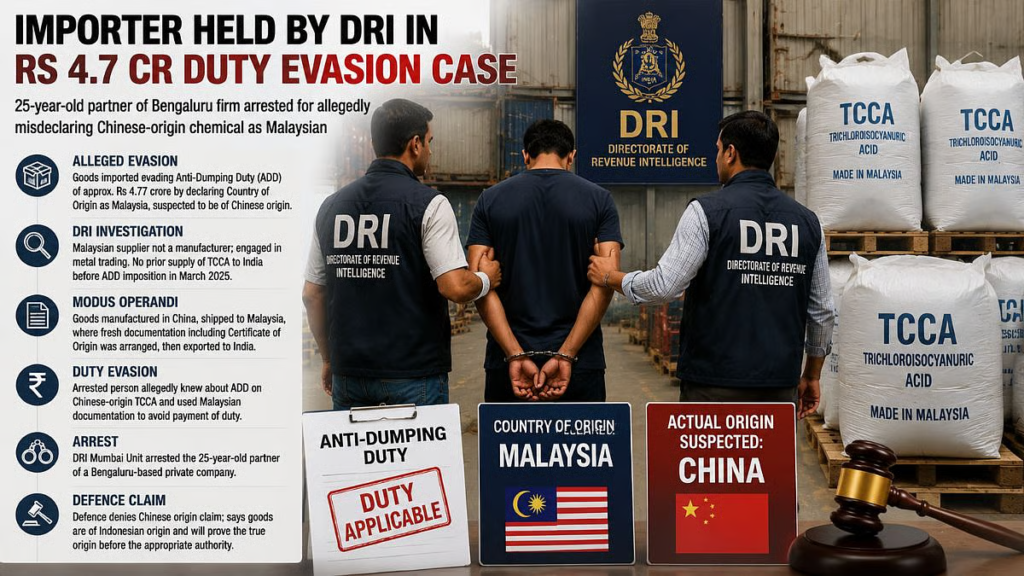
Mumbai : The Directorate of Revenue Intelligence (DRI) has arrested a 25-year-old importer in Mumbai in connection with an alleged ₹4.77 crore anti-dumping duty evasion case involving imports of TCCA, a chemical used in water treatment and other industrial applications.
The Mumbai unit of the DRI alleges that the importer’s Bengaluru-based firm brought TCCA into India by declaring the goods as being of Malaysian origin, even though investigators suspect the chemical was actually manufactured in China. According to the agency, the alleged arrangement was used to avoid the anti-dumping duty applicable to Chinese-origin TCCA.
However, the importer’s lawyer has rejected the allegation, maintaining that the goods were actually manufactured in Indonesia and not China.
DRI begins investigation after tracking imports
According to DRI officials, the investigation began after the agency received specific intelligence regarding the import of TCCA through a Malaysian supplier.
The Bengaluru-based partnership firm had previously sourced TCCA from China through an associated company. After anti-dumping duty was imposed on Chinese-origin TCCA, the firm allegedly began purchasing the chemical from a company based in Malaysia.
Investigators subsequently examined the Malaysian supplier and its business activities. According to the DRI, the company was involved primarily in trading metal products and did not appear to have the profile or infrastructure of a chemical manufacturer.
The agency also found it significant that the Malaysian supplier had apparently not supplied TCCA to Indian importers before the anti-dumping duty came into effect in March 2025.
These circumstances, according to DRI officials, raised questions about whether the Malaysian company was genuinely the manufacturer or whether the goods were being routed through Malaysia to conceal their actual origin.
DRI alleges Chinese goods were routed through Malaysia
The central allegation in the case is that the TCCA was manufactured in China before being transported to Malaysia and subsequently shipped to India.
The DRI claims that fresh documentation, including a Certificate of Origin, was allegedly arranged in Malaysia before the goods were exported to India. The agency suspects that the documentation was used to show Malaysia as the country of origin.
Investigators believe this allegedly allowed the importer to avoid paying the anti-dumping duty that would have applied if the goods had been correctly declared as Chinese-origin products.
The DRI has said that its investigation has gathered sufficient material to form a reasonable belief that the arrested importer was aware of the applicable duty and knowingly participated in the alleged misdeclaration.
The alleged duty evasion is estimated at approximately ₹4.77 crore.
Importer’s lawyer rejects DRI’s claims
The importer has denied the allegations through his lawyer, Advocate Ravi Hirani.
The defence has maintained that the TCCA shipments were not of Chinese origin and were actually manufactured in Indonesia. The lawyer said the importer intends to establish the true origin of the goods before the appropriate authorities.
The defence position directly contradicts the DRI’s allegation that the shipments originated in China and were routed through Malaysia.
The determination of the actual country of origin is therefore expected to be a key issue in the ongoing investigation.
Why the country of origin matters
The dispute over the origin of the TCCA is important because anti-dumping duties are imposed on certain imported products to protect domestic industries from potentially unfairly priced imports.
If the goods are found to have originated in a country on which such a duty applies, the importer may be required to pay the applicable duty. Authorities can also investigate whether incorrect declarations or documentation were used to avoid the levy.
In this case, the DRI suspects that declaring Malaysia as the country of origin allowed the goods to enter India without payment of the anti-dumping duty applicable to Chinese-origin TCCA.
Investigation continues
The DRI is continuing to examine import documents, supplier details, shipping records and other evidence to establish the complete chain through which the TCCA allegedly reached India.
Investigators are also examining the relationship between the Indian importer, the Malaysian supplier and the alleged Chinese manufacturer.
The agency’s findings will determine whether the imported goods were actually manufactured in China, Malaysia or Indonesia and whether there was any deliberate attempt to misrepresent their origin.
For now, the DRI has arrested the 25-year-old importer based on its investigation, while the defence continues to dispute the agency’s allegations.
The case highlights the scrutiny faced by importers over the declared origin of goods, particularly when customs duties or anti-dumping measures are involved. Further proceedings will determine the validity of the competing claims regarding the origin of the TCCA and the alleged ₹4.77 crore duty liability.
News source: Information for this article was gathered from a variety of reliable news outlets.