Mumbai Could Become Slum-Free Within 10 Years, Fadnavis Says; Dharavi Redevelopment to Lead the Transformation
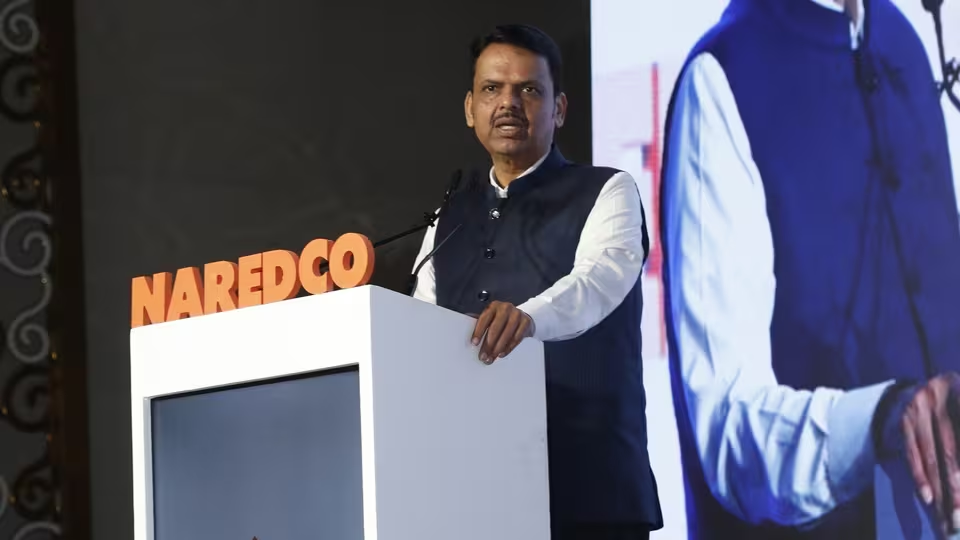
Mumbai: Maharashtra Chief Minister Devendra Fadnavis has expressed strong confidence that Mumbai could move towards becoming a slum-free city within the next decade, outlining an ambitious vision that combines large-scale redevelopment, affordable housing, modern infrastructure and the creation of new urban centres.
Speaking at a real estate conference organised by the National Real Estate Development Council (NAREDCO) Maharashtra in Mumbai, Fadnavis said the state government was preparing to take Mumbai’s development to a much larger scale. He said the government’s focus would be on redeveloping old and congested settlements, improving the use of valuable urban land and providing residents with better housing and civic infrastructure.
“I am very confident that with the measures we have taken, we will make Mumbai slum-free in the next 10 years,” Fadnavis said.
His statement comes at a time when Mumbai is witnessing an increasing push for redevelopment as the city faces limited land availability, ageing buildings, crowded neighbourhoods and a large population living in informal settlements.
Dharavi at the Centre of Mumbai’s Redevelopment Plan
One of the most important components of the government’s strategy is the redevelopment of Dharavi, one of Mumbai’s most densely populated areas and widely recognised as Asia’s largest slum settlement.
The government has set an ambitious target for the first phase of the Dharavi redevelopment project. According to Fadnavis, around 10,000 rehabilitation homes are expected to be ready by January 2029.
The Chief Minister said he wanted Prime Minister Narendra Modi to visit Mumbai in early 2029 to formally hand over the first set of rehabilitation homes to Dharavi residents.
“For Dharavi, we have set a deadline of readying 10,000 houses,” Fadnavis said, describing the target as an important milestone in the redevelopment process.
The proposed redevelopment is expected to go beyond simply replacing existing homes with new residential buildings. The larger vision involves creating a planned urban neighbourhood with improved infrastructure, commercial spaces, recreational facilities and better public amenities.
For thousands of Dharavi residents, redevelopment represents the possibility of moving from cramped and ageing structures into safer and more modern housing while remaining connected to Mumbai’s economic opportunities.
Cluster Redevelopment to Transform Older Areas
Fadnavis said Dharavi would not be the only focus of Mumbai’s redevelopment drive.
The state government is also adopting a cluster-based redevelopment model, under which larger groups of ageing buildings and settlements can be redeveloped together rather than dealing with individual properties separately.
According to the Chief Minister, several areas of Mumbai were developed decades ago and are now facing problems related to old buildings, inadequate infrastructure, overcrowding and inefficient use of land.
A cluster approach could allow these areas to be planned as larger neighbourhoods, making it easier to incorporate roads, public spaces, housing, commercial establishments, playgrounds and other facilities into the redevelopment process.
The government believes that better planning could also unlock valuable land in Mumbai while improving living conditions for residents.
More Than Just Housing
Fadnavis stressed that the redevelopment of Mumbai should not be viewed simply as a programme to construct residential towers.
The government’s broader vision includes mixed-use developments, where homes could exist alongside commercial spaces, museums, playgrounds, recreational facilities and improved transport infrastructure.
Such a model could potentially reduce the pressure created by Mumbai’s long commuting distances by bringing residential, employment and recreational facilities closer together.
The Chief Minister also spoke about the redevelopment of Mumbai’s old transport depot lands. The government has prepared plans and reports for these sites, which could eventually accommodate modern transport facilities as well as mixed-use developments.
These projects are being positioned as part of a wider effort to make better use of Mumbai’s limited land resources.
Mumbai’s Next Phase of Growth
The redevelopment plans are also connected to Maharashtra’s larger strategy for urban growth.
Fadnavis identified the Mumbai Metropolitan Region (MMR), Pune Metropolitan Region and Nagpur as major engines of Maharashtra’s future urbanisation.
He said these regions would create opportunities in areas such as real estate, data centres, advanced manufacturing and emerging technologies.
The Chief Minister pointed to Mumbai’s continuing importance as an economic centre while also emphasising the need to develop new urban centres outside the existing city core.
His vision is that Mumbai’s growth should no longer depend entirely on adding more buildings within the already crowded city. Instead, new economic hubs should develop around major infrastructure projects, allowing population and employment growth to spread across the wider metropolitan region.
‘Mumbai 3.0’ Vision
Fadnavis also referred to the government’s broader Mumbai 3.0 vision, which aims to create new urban centres around major infrastructure projects.
Among the projects highlighted were the proposed offshore airport near Virar, the Mumbai-Nagpur connectivity network, the bullet train corridor and the development of a major new port.
The idea is to create economic hubs beyond the traditional Mumbai urban area and provide people with more opportunities closer to where they live.
Fadnavis said the proposed port could be significantly larger than Jawaharlal Nehru Port and could generate employment opportunities for around one million people in Palghar district.
If these plans progress as envisioned, they could gradually change the economic geography of the Mumbai Metropolitan Region by encouraging businesses, industries and workers to move towards newly developing centres.
Government Highlights Maharashtra’s Economic Growth
During his address, Fadnavis also highlighted Maharashtra’s recent economic performance.
He said the state recorded 8.8% growth in the first quarter, compared with India’s 7.8% growth during the same period.
The Chief Minister also pointed to continued activity in Mumbai’s real estate sector. According to figures cited by him, property registrations across Maharashtra crossed 1.06 million during the first eight months of the year, generating approximately ₹9,365 crore in revenue for the state government.
The figures, he suggested, demonstrate the continuing strength of the state’s property market and the demand for housing and commercial space.
Technology and AI to Play a Bigger Role
Fadnavis also urged the real estate industry to embrace newer construction technologies and artificial intelligence.
He said technology could make the approval and construction process more predictable and transparent while improving accountability.
For a city such as Mumbai, where redevelopment projects often involve complicated regulations, multiple stakeholders and lengthy processes, the use of technology could potentially make project implementation more efficient.
The government’s larger objective, according to Fadnavis, is not simply to build more structures but to create a better-managed urban environment where housing, transport, employment opportunities and public infrastructure develop together.
MMR Economy Could Reach $1.5 Trillion
Looking further ahead, Fadnavis said he expects the Mumbai Metropolitan Region’s economy to reach $1.5 trillion by 2047.
He argued that urbanisation is inevitable as economies grow and that the challenge is to manage this urbanisation effectively.
The MMR is already emerging as a major hub for data centres, with Fadnavis saying that around 60% of India’s data-centre capacity is located in the region.
He expects the region to become one of India’s most populous and developed planned urban areas over the coming decade.
Can Mumbai Really Become Slum-Free?
Fadnavis’s 10-year target is undoubtedly ambitious.
Mumbai’s slum population is large, and redevelopment involves complex challenges, including land ownership, rehabilitation, eligibility, financing, construction timelines and the concerns of existing residents.
Successful redevelopment therefore depends not only on constructing new buildings but also on ensuring that families currently living in informal settlements receive secure rehabilitation and access to essential services.
The challenge will be to ensure that redevelopment improves the quality of life of existing residents while also creating sustainable neighbourhoods for the future.
Dharavi will likely remain the biggest test of this approach.
If the government can successfully deliver the first 10,000 rehabilitation homes by the beginning of 2029 and continue the process across other parts of Mumbai, it could provide momentum to the larger slum-redevelopment programme.
A Major Test for Mumbai’s Future
Fadnavis’s vision represents one of the most ambitious redevelopment goals for Mumbai in recent years.
The plan combines Dharavi redevelopment, cluster-based housing projects, old depot redevelopment, new transport infrastructure, mixed-use development and the creation of economic centres beyond the traditional city.
For millions of Mumbaikars, the real measure of success will ultimately be visible in everyday life — better homes, cleaner surroundings, improved roads, easier transport, more open spaces and greater access to employment.
The next few years will therefore be crucial.
If the government manages to convert its plans into completed projects while ensuring that existing residents are protected and properly rehabilitated, Mumbai could see a dramatic transformation.
For now, the Maharashtra government’s message is clear: it wants to use the coming decade to reshape Mumbai, unlock its land potential and tackle its long-standing housing challenges.
And with Dharavi positioned as the starting point, the redevelopment programme could become one of the defining urban transformation projects in Mumbai’s hi
News source: Information for this article was gathered from a variety of reliable news outlets.