Manish Tewari Questions Fresh India-Pak Dialogue Push, Says “Peace Cannot Ignore Terror”
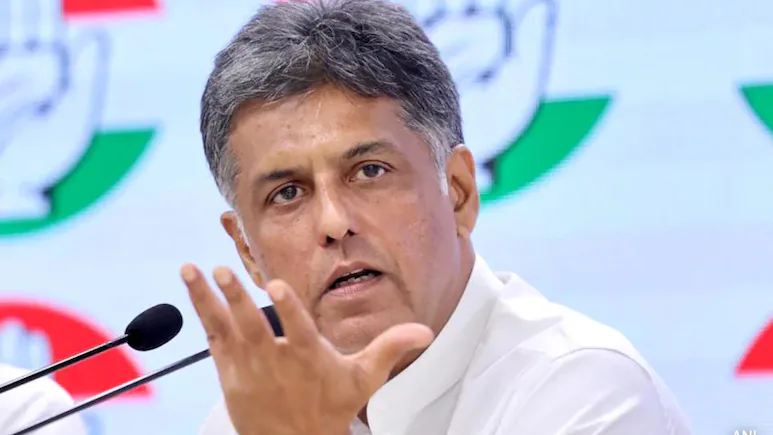
New Delhi : Congress MP Manish Tewari has strongly questioned the renewed push for diplomatic talks between India and Pakistan, saying that while peace is always desirable, it cannot come at the cost of national security.
His remarks came after 117 eminent personalities from both countries wrote to Prime Minister Narendra Modi and Pakistan Prime Minister Shehbaz Sharif, urging them to restart dialogue and reopen diplomatic channels.
Reacting to the appeal, Tewari said the core question India must ask is simple but critical — “Dialogue at what cost?”
He pointed out that India has a long history of attempting peace with Pakistan, cutting across political lines and governments. From the tenure of former Prime Ministers P.V. Narasimha Rao, H.D. Deve Gowda, I.K. Gujral, Atal Bihari Vajpayee, Dr. Manmohan Singh, and now Narendra Modi, every administration has tried in some way to engage with Islamabad.
According to Tewari, however, the pattern has remained painfully familiar — every effort at peace has often been followed by acts of terror.
He said India has tried everything from formal comprehensive dialogue to secret backchannel negotiations, but each attempt has eventually been disrupted by terror strikes, deepening distrust between the two nations.
Raising concerns over Pakistan’s security establishment, Tewari referred to what he described as a long-standing “military-jihadi complex” that continues to operate across the border. He questioned whether Pakistan has ever provided a verifiable and credible guarantee that it has dismantled its terror infrastructure.
The Congress leader recalled that after the 2001 Parliament attack, then Pakistan President Pervez Musharraf had publicly assured action against terror networks. But Tewari claimed that when former Prime Minister Atal Bihari Vajpayee later visited Islamabad for the 2004 summit, those commitments were diluted.
He said similar assurances were made during the tenures of Dr. Manmohan Singh and Narendra Modi as well, but each time, Pakistan failed to deliver on those promises.
Tewari also challenged the intent behind the latest appeal by the 117 signatories. He asked what exactly they wanted India and Pakistan to discuss when terrorism still remains unresolved.
He stressed that before any fresh talks can begin, there has to be clarity on whether Pakistan is willing to take concrete steps against terror groups operating from its territory.
Referring to the Pahalgam terror attack in April 2025, Tewari said the incident further hardened India’s stance on cross-border terrorism. He noted that after the attack, India suspended the Indus Waters Treaty, signalling a tougher approach.
He also pointed to Pakistan’s increasing diplomatic pressure for restoring water-sharing arrangements, suggesting that the timing of the peace appeal raises important questions.
Reiterating India’s official position, Tewari said, “terror and talks cannot go hand-in-hand,” adding that “blood and water cannot flow together.”
He made it clear that India would not differentiate between terrorists and those who support or orchestrate such attacks.
At the same time, Tewari acknowledged that billions of people across South Asia hope for peace and stability, but said peace cannot be built under the constant threat of violence.
According to him, the first step towards any meaningful dialogue must be Pakistan ending the export of terrorism in both words and action.
His statement once again underlines the deep trust deficit that continues to shape India-Pakistan relations — a relationship where the desire for peace remains strong, but the wounds of repeated terror attacks continue to cast a long shadow.
News source: Information for this article was gathered from a variety of reliable news outlets.