India Nears Rs 70,000-Crore Submarine Deal With Germany, Key Approval Expected Soon
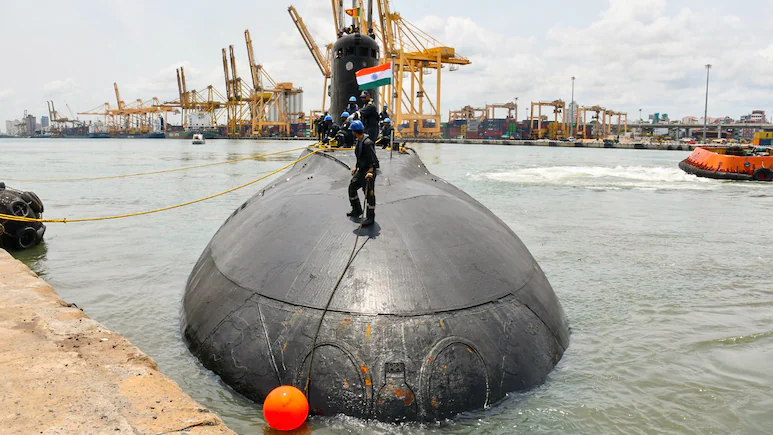
New Delhi: India’s long-delayed Project 75(I) submarine programme could finally move forward, with the proposal reportedly expected to come before the Cabinet Committee on Security (CCS) in the coming days.
The ambitious project involves building six advanced conventional submarines for the Indian Navy at an estimated cost of around Rs 70,000 crore.
The submarines are expected to be constructed primarily in India by Mazagon Dock Shipbuilders Ltd (MDL) in partnership with Germany’s ThyssenKrupp Marine Systems (TKMS).
A Deal Years in the Making
Project 75(I) has faced years of delays, with negotiations repeatedly running into disagreements over technical requirements and commercial terms.
If the CCS gives its approval, the decision could pave the way for the contract to be signed and construction to begin.
For India, however, the programme is about more than simply adding six submarines to the Navy’s fleet. A major focus is expected to be on technology transfer, domestic manufacturing, maintenance and future upgrades.
TKMS Expands Its Indian Partnerships
TKMS has already been strengthening its network of Indian partners.
The German company has signed an MoU with Hyderabad-based VEM Technologies for the development, construction, integration and eventual modernisation of heavyweight torpedoes.
TKMS subsidiary ATLAS ELEKTRONIK is also involved in the collaboration, with VEM expected to handle integration and testing in India. The partnership has since expanded into a broader arrangement involving technology transfer and a potential Make-in-India torpedo programme.
TKMS has also partnered with Mumbai-based CFF Fluid Control for anti-submarine warfare systems and is exploring additional collaborations with Indian organisations, including the Defence Research and Development Organisation (DRDO).
Why the Submarines Matter
The proposed submarines are expected to feature air-independent propulsion (AIP) technology, allowing them to remain underwater for considerably longer periods than conventional diesel-electric submarines.
They are also expected to be equipped with advanced sensors, torpedoes, missiles and electronic warfare capabilities.
For the Indian Navy, the programme comes at a critical time as its conventional submarine fleet faces a significant shortage.
The new submarines are intended to strengthen India’s underwater surveillance, stealth and strike capabilities, particularly across the strategically important Indian Ocean Region.
The development also comes as Chinese naval activity, including submarine deployments, has increased in the Indian Ocean.
Building on an Old Partnership
India and Germany already have a long history of cooperation in submarine technology.
The Indian Navy has operated German-designed Type 209/1500 Shishumar-class submarines, with several built at MDL from the 1980s onwards.
The proposed TKMS-MDL partnership would therefore revive an established relationship, but with a much stronger emphasis on local production and technology transfer.
India previously built six Kalvari-class submarines at MDL with French assistance under Project 75. The final submarine in that series, INS Vagsheer, was commissioned in January 2025.
If the CCS clears Project 75(I), the next stages will include finalising the contract, production timelines and the division of responsibilities between the government, MDL and TKMS.
The key question will be how much technology and manufacturing capability India ultimately gains from the project — and whether the programme can help build a stronger indigenous submarine ecosystem over the long term.
News Source : Information for this article was gathered from a variety of reliable news outlets.