IAEA Chief Backs India’s Shanti Act, Calls Nuclear Expansion Plans a Positive Step
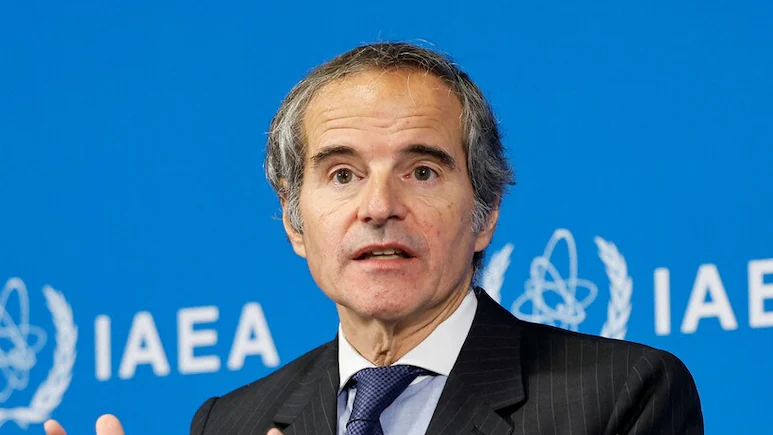
Vienna: India has received strong international support for its ambitious nuclear energy plans, with International Atomic Energy Agency (IAEA) Director General Rafael Grossi describing the country’s newly introduced Shanti Act as a “very positive” development.
Speaking in Vienna, Grossi praised India’s efforts to reform its nuclear sector and expand its atomic energy capacity, highlighting the country’s growing importance in the global nuclear landscape.
The Shanti Act 2025, formally known as the Sustainable Harnessing and Advancement of Nuclear Energy for Transforming India Act, aims to modernize India’s nuclear liability framework and encourage greater participation from private companies. The legislation is expected to help attract investment, speed up project development, and support the country’s long-term energy goals.
Grossi noted that India has long been a major player in nuclear technology and energy, and said the country’s plans to significantly increase nuclear power generation align with its broader energy strategy.
He also emphasized that the expansion of nuclear power is not only about increasing electricity generation but also about creating a more balanced and reliable energy mix. According to him, nuclear energy can play a crucial role in ensuring long-term energy security while supporting sustainable development.
India currently generates around 8 GW of nuclear power and has set an ambitious target of reaching nearly 100 GW by 2047. The government sees nuclear energy as a key pillar of its future energy strategy as demand continues to grow.
Grossi said India’s expansion plans would strengthen cooperation between the IAEA and India, adding that the agency looks forward to working more closely with the country in the years ahead.
Addressing concerns about the safety of nuclear facilities in conflict zones, Grossi acknowledged that attacks on civilian nuclear infrastructure remain a serious concern. Referring to incidents in Ukraine and other regions, he stressed that nuclear plants should never become military targets.
However, he noted that despite these challenges, countries around the world continue to view nuclear energy as an important source of reliable and secure power. According to Grossi, concerns over global energy security and technological advancement continue to drive investment in peaceful nuclear energy programmes.
His remarks are being seen as a significant endorsement of India’s nuclear roadmap and the Shanti Act, reinforcing the country’s ambitions to emerge as one of the world’s leading nuclear energy powers in the coming decades.