Tamil Nadu Moves Supreme Court After High Court Rejects Reservation Benefits for Islam Converts from Backward Communities
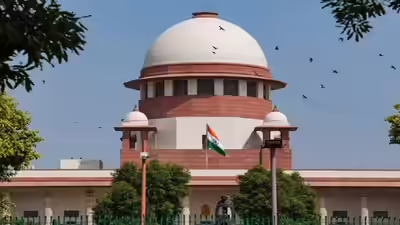
New Delhi : The Tamil Nadu government has approached the Supreme Court challenging a Madras High Court order that struck down the state’s decision to allow certain people who converted to Islam from reserved categories to continue receiving reservation benefits under the Backward Class Muslim (BC Muslim) category.
In March 2024, the Tamil Nadu government issued an order stating that individuals who converted to Islam from Backward Classes (BC), Most Backward Classes (MBC), Denotified Communities (DNC), or Scheduled Castes (SC) could be considered under the BC Muslim category for availing reservation benefits.
However, the Madurai Bench of the Madras High Court later declared the government order unconstitutional. The court rejected a petition filed by a man who had converted to Islam and sought a certificate identifying him as a member of the Muslim Lebbai community to claim reservation benefits.
Tamil Nadu has already recognised seven Muslim communities, including Muslim Lebbai, as part of the Backward Class Muslim category.
While cancelling the government order, the High Court referred to earlier decisions of the Supreme Court and the Madras High Court, including the G Michael vs S Venkateswaran case. The court observed that a person who converts to Islam is considered a Muslim and is no longer identified by the caste they belonged to before conversion.
The court said that Islam does not recognise caste-based divisions and observed that treating certain Muslim groups as backward while others are considered forward would go against the principle of equality within the religion.
The High Court also noted that religious conversions are often based on the belief of social equality, and therefore creating caste-like classifications among converts would be inconsistent with that principle.
The court further stated that when an earlier Madras High Court ruling held that a person converting to Islam becomes a Muslim without retaining their previous caste identity, the state government cannot issue an order that goes against that interpretation.
Following the verdict, the Tamil Nadu government has now moved the Supreme Court, seeking a review of the High Court’s decision and defending its policy of extending reservation benefits to eligible Muslim communities from historically disadvantaged backgrounds.
The case is expected to bring further discussion around reservation policies, religious conversion, and the legal recognition of backward communities in India.
News source: Information for this article was gathered from a variety of reliable news outlets.