India Rejects Report Claiming Bhutan Refused E20 Fuel Import, Says No Offer Was Ever Made
New Delhi : New Delhi: The Government of India has strongly refuted media reports claiming that Bhutan turned down an offer to import E20 petrol from India, asserting that no such proposal was ever made. The clarification comes amid renewed debate over India’s ethanol-blended fuel programme and follows a report published by a Bhutanese newspaper that suggested Thimphu had requested conventional petrol instead of the E20 blend.
In an official fact-check issued on Sunday, the Ministry of Petroleum and Natural Gas (MoPNG) stated that the claims circulating in sections of the media and on social media were “incorrect and misleading.” According to the ministry, neither the government nor India’s Oil Marketing Companies (OMCs) had offered to export E20 petrol to Bhutan, and no such proposal is currently under consideration.
“Claims that Bhutan declined an offer to import E20 petrol from India are incorrect. No such offer has been made by the Oil Marketing Companies, and there is no proposal for export of E20 petrol to Bhutan. Please rely only on official information from the Ministry,” the ministry said in a statement shared on X.
The government’s response followed a report by Bhutanese newspaper The Bhutanese, which claimed that Bhutan had asked Indian suppliers to continue supplying regular petrol instead of E20. The report cited concerns related to fuel quality, storage infrastructure, and the possible impact of ethanol-blended fuel on vehicle performance.
Soon after India’s official denial, The Bhutanese Editor Tenzing Lamsang defended the newspaper’s reporting. In a series of posts on X, he shared what he described as a written response from Bhutan’s Department of Trade. According to Lamsang, the document confirmed that Bhutan had requested Indian Oil Marketing Companies to continue supplying conventional petrol instead of E20.
The shared communication stated that ethanol-blended fuel could present operational challenges for Bhutan’s existing fuel storage system. It noted that once water contaminates ethanol-blended petrol, separating the water from the fuel becomes difficult, potentially affecting fuel quality and vehicle performance. The document also pointed out that Bhutan’s underground fuel storage tanks may face challenges in preventing contamination if required to store E20 fuel.
Based on these concerns, Bhutan reportedly requested Indian public sector oil companies to continue supplying standard Motor Spirit (MS), or regular petrol, for as long as it remains available in the Indian market. While the Bhutanese side maintains that such a request was made, the Indian government continues to insist that no export proposal for E20 was ever initiated, creating a difference in the narratives presented by the two sides.
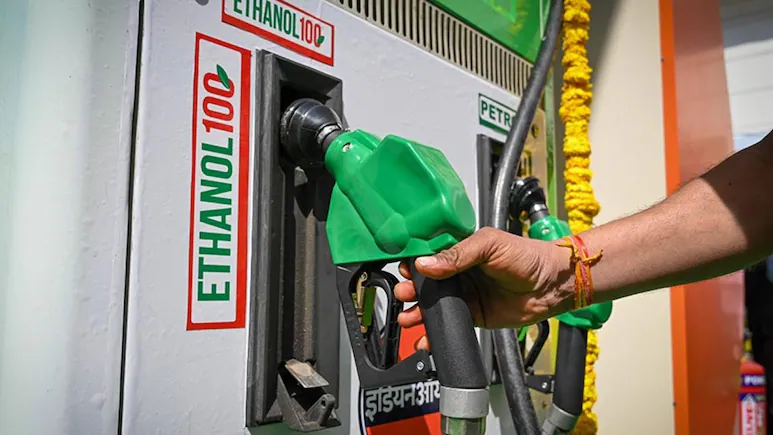
The controversy has once again placed India’s Ethanol Blending Programme under public scrutiny. The Centre has been promoting ethanol-blended fuel as part of its broader strategy to reduce dependence on imported crude oil, improve energy security, support domestic sugarcane farmers, and lower carbon emissions. Under the programme, E20 petrol contains 20 percent ethanol blended with petrol, while higher ethanol blends are also being introduced in phases.
However, the programme has faced criticism from some motorists and automobile experts. Several consumers have claimed that the use of E20 petrol results in reduced fuel efficiency, while others have alleged engine performance issues after switching to ethanol-blended fuel. Viral videos and social media posts have further fuelled concerns by claiming that water contamination and engine damage are becoming increasingly common.
The Government of India has consistently rejected these allegations. The Ministry of Petroleum and Natural Gas has repeatedly stated that there is no evidence of widespread engine failures or vehicle breakdowns caused by E20 petrol since its introduction across the country in 2023. Officials have also dismissed claims that ethanol blending increases insurance risks or causes long-term damage to compatible vehicles.
The ministry has further clarified that the Ethanol Blending Programme is backed by extensive scientific studies and technical evaluations. According to the government, the rollout of E20 fuel was carried out only after consultations with automobile manufacturers, oil marketing companies, scientists, and technical experts to ensure compatibility and safety.
The government has also addressed other misinformation related to ethanol-blended fuel. Earlier this year, viral social media posts claimed that sugarcane juice was being directly mixed into petrol at fuel stations. The Centre dismissed those allegations as baseless and misleading, explaining that fuel-grade ethanol is produced through a regulated industrial process and undergoes strict quality checks before blending with petrol.
Although the Indian government maintains confidence in the safety and effectiveness of the ethanol blending initiative, the latest controversy highlights the challenges of balancing energy transition goals with public perception and technical concerns. The differing statements from Indian authorities and Bhutanese sources have also raised questions about communication between the two countries regarding fuel supply arrangements.
For now, India’s official position remains unchanged: no offer was made to export E20 petrol to Bhutan, and reports suggesting that Bhutan rejected such an offer are inaccurate. Meanwhile, the discussion surrounding ethanol-blended fuel is likely to continue as governments, consumers, and automobile manufacturers navigate the shift toward cleaner and more sustainable transportation fuels.
News source: Information for this article was gathered from a variety of reliable news outlets.