India Rejects Former Japanese Minister’s Criticism Over Bullet Train Delays, Says Mumbai-Ahmedabad Project Is on Track
New Delhi, July 18: India has strongly dismissed criticism from former Japanese Justice Minister Hideki Makihara over delays in the Mumbai-Ahmedabad bullet train project, asserting that cooperation between New Delhi and Tokyo remains strong and the ambitious high-speed rail project is progressing as planned.
The controversy began after Makihara, who was previously associated with the Shinkansen project during his tenure as Japan’s Vice Minister of Economy, Trade and Industry, posted remarks on social media accusing India of causing repeated delays. He claimed that India’s approach during negotiations reflected “sheer recklessness” and alleged that the Indian side frequently failed to honour commitments made during discussions.
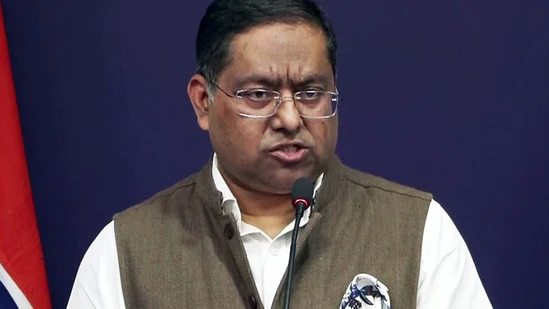
Responding to the remarks during a regular media briefing on Friday, Ministry of External Affairs (MEA) spokesperson Randhir Jaiswal dismissed the allegations, describing them as the personal opinion of an individual that did not reflect the reality of India-Japan cooperation.
Jaiswal said both governments continue to work closely on the Mumbai-Ahmedabad High-Speed Rail Corridor and reiterated that construction has gathered pace in recent months. He added that India and Japan have jointly agreed to begin operations on the first section of the project in 2027.
Addressing concerns over the train technology, the MEA spokesperson explained that Japan’s next-generation E20 Shinkansen train series is still under development and is expected to be available only in the early 2030s. As a result, both countries have mutually decided that the first phase of operations will begin using an Indian high-speed train until the Japanese trains are ready.
Jaiswal also clarified that signalling equipment for the project has already been ordered in accordance with international standards. He rejected claims that Japan had made any alternative proposal regarding signalling technology, stating that no such offer had been received.
“The execution of the project is aligned with the shared objective of launching the high-speed rail service at the earliest,” he said.
What Triggered the Controversy?
The row began after Makihara shared an article written by Isao Tsujimura, a Japanese engineer based in India. The article questioned India’s decision to adopt European-origin signalling systems and an indigenous high-speed train for the project’s initial phase, despite Japan being the primary financial contributor.
Tsujimura argued that the European signalling technology may not be fully compatible with Japan’s Shinkansen bullet trains in the future. He suggested that this could create operational challenges and even jeopardise the long-term success of the project.
Echoing those concerns, Makihara alleged that his experience during negotiations convinced him that the delays were entirely due to the Indian side.
In his social media post, he claimed that Indian representatives repeatedly changed their commitments and prioritised their own interests during discussions. He also criticised the then minister overseeing the project, alleging that the leadership style made constructive negotiations difficult.
Makihara went on to say that, in his view, the responsibility for the project’s slow progress rested entirely with India.
About the Mumbai-Ahmedabad Bullet Train Project
The Mumbai-Ahmedabad High-Speed Rail Corridor is India’s first bullet train project and one of the country’s most ambitious infrastructure initiatives.
The 508-kilometre corridor will connect Mumbai in Maharashtra with Ahmedabad in Gujarat, passing through major cities including Vapi, Surat, Bilimora, Anand and Vadodara.
Once operational, trains are expected to travel at speeds of up to 320 kilometres per hour, significantly reducing travel time between Mumbai and Ahmedabad while improving regional connectivity and economic integration.
The project, launched in 2017 with substantial financial and technical assistance from Japan, was originally expected to be completed by 2023. However, it has faced multiple delays due to land acquisition challenges, construction hurdles and rising project costs.
Despite these setbacks, construction work has accelerated in recent months. Authorities are now targeting the opening of the Surat-Bilimora section on August 15, 2027, marking the first operational stretch of India’s bullet train network.
The latest exchange of remarks has highlighted differing views over the pace of the project, but the Indian government maintains that cooperation with Japan remains strong and that both countries continue to work together to ensure the successful completion of the landmark high-speed rail corridor.
News source: Information for this article was gathered from a variety of reliable news outlets.