US Imposes 50% Tariffs on Canadian Goods as Trade Tensions Escalate; Canada Vows to Push for Fresh Talks
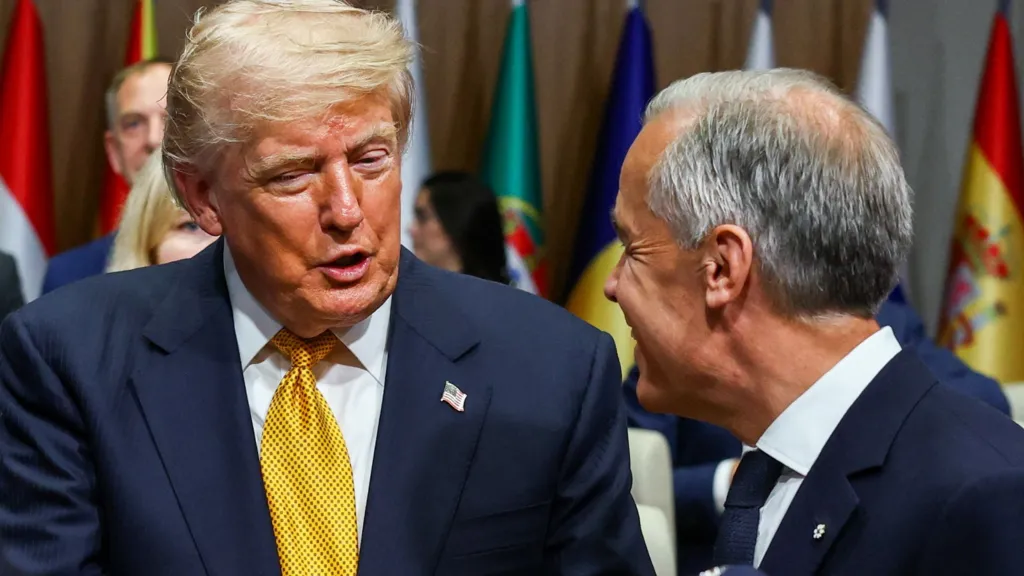
Washington/Ottawa, July 21: Trade relations between the United States and Canada have entered a new phase of tension after US President Donald Trump announced a 50% tariff on a broad range of Canadian imports, accusing Canada of unfair trade practices in sectors such as automobiles, dairy products and alcoholic beverages.
The new tariffs, which will come into effect in 30 days, are expected to impact a wide variety of Canadian products, including wine, hockey equipment, cement and several industrial goods. However, key Canadian exports such as energy products, potash, critical minerals and fish have been exempted from the latest round of duties.
Responding to the announcement, Canadian Prime Minister Mark Carney said his government remained committed to resolving the dispute through negotiations. He stated that Canada is prepared to intensify trade discussions with the United States over the coming weeks in an effort to protect businesses, workers and the country’s economy.
The White House said the tariffs were introduced in response to what President Trump described as Canada’s “unequal treatment” of American goods. The new measures apply even to products that were previously covered under the United States-Mexico-Canada Agreement (USMCA), marking a significant shift in North American trade relations.
Prime Minister Carney criticised the decision, saying the latest tariffs were another unilateral trade action that undermines the spirit of the USMCA. He also referred to recent concerns about Canada’s sovereignty, an apparent reference to President Trump’s repeated remarks suggesting that Canada should become the 51st state of the United States.
The latest move adds to several existing trade barriers between the two countries. The United States already imposes tariffs ranging from 15% to 50% on Canadian steel, aluminium and copper, along with a 35% tariff on Canadian softwood lumber and a 25% duty on certain non-US automobile parts.
Canada has also responded with its own 25% counter-tariffs on selected American imports, including steel, aluminium and vehicles, further intensifying the ongoing trade dispute.
Although President Trump recently threatened tariffs over smoke from Canadian wildfires affecting US cities, the executive orders signed on Monday made no mention of wildfire-related concerns. Instead, they focused on longstanding trade disagreements involving automobiles, dairy imports and alcohol sales.
One of the key issues highlighted by Washington is Canada’s taxation of certain American vehicles and automobile parts that fall outside the USMCA framework. The US administration argues that these taxes unfairly discriminate against American manufacturers.
Canada’s dairy sector has also remained a major point of contention for years. The United States has repeatedly objected to Canada’s supply management system, which limits dairy imports through strict quotas and imposes tariffs exceeding 300% on imports beyond those limits.
Another issue is the ongoing boycott of American alcoholic beverages by several Canadian provinces. The restrictions were introduced last year in response to earlier US tariffs. Canadian provincial leaders have maintained that the boycott will only end once Washington removes tariffs affecting Canada’s metals and automobile industries.
Trade experts believe the latest tariffs indicate that negotiations between the two countries have reached a difficult stage. Earlier this year, the United States chose not to renew the USMCA in its existing form, instead seeking significant changes to the agreement negotiated during President Trump’s first term.
The new tariffs have been imposed under Section 338 of the US Tariff Act of 1930, which allows action against discriminatory foreign trade practices. This follows a ruling by the US Supreme Court earlier this year that limited the administration’s ability to impose broad tariffs under emergency powers.
Business leaders on both sides of the border have expressed concern over the latest development. The Canadian Chamber of Commerce described the decision as regrettable and urged both governments to make meaningful progress before the tariffs take effect. Industry representatives in the United States also warned that the move could trigger further retaliatory measures and disrupt long-standing trade ties between the neighbouring countries.
With only a month remaining before the tariffs become effective, both governments are expected to intensify negotiations in an effort to prevent a deeper trade conflict that could affect businesses, industries and consumers across North America.
News source: Information for this article was gathered from a variety of reliable news outlets