More Than 70 Killed in Bamako Attack: Al-Qaeda-Linked Militants Strike Mali’s Capital, Raising Security Concerns
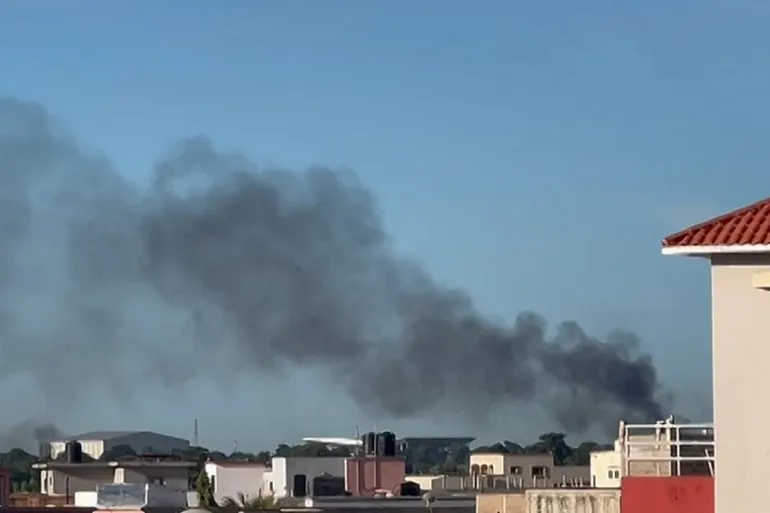
A deadly attack in Mali’s capital Bamako has left at least 77 people dead and around 200 injured, marking one of the most serious assaults on the city in nearly a decade. The attack, which targeted key military locations, has raised fresh concerns over the growing influence of armed groups in the West African nation.
The violence erupted on Tuesday when gunmen launched coordinated attacks on an elite military police training centre in the Faladie district and a military facility near Modibo Keita International Airport. Residents reported hearing heavy gunfire and explosions, while thick smoke was seen rising from several buildings.
Hospitals in Bamako were overwhelmed as large numbers of wounded victims were brought in for treatment. Authorities also temporarily shut down the international airport following the assault.
JNIM Claims Responsibility for Attack
The attack was claimed by Jama’at Nusrat al-Islam wal-Muslimin (JNIM), an armed group linked to al-Qaeda that operates mainly in Mali, Burkina Faso and Niger.
The group released videos allegedly showing parts of the assault, including damage to military aircraft and attacks around the airport area. JNIM claimed it had inflicted heavy losses on Malian forces and fighters from Russia’s Wagner-linked Africa Corps, which has been assisting Mali’s military government in its fight against armed groups.
Mali’s military initially said the situation was under control and that security forces had repelled the attackers. Officials later acknowledged that the military suffered casualties. State television broadcast images of several suspected attackers captured by security forces.
Why the Bamako Attack Matters
The attack is significant because it happened in Bamako, the heart of Mali’s government and military leadership. For years, extremist violence has largely been concentrated in the northern and central regions of the country, far from the capital.
The last major attack in Bamako took place in 2015, when armed groups targeted foreigners at a nightclub and later attacked the Radisson Blu Hotel, killing several people.
The latest assault shows that militant groups still have the ability to strike major urban centres despite years of military operations against them.
Mali’s Changing Fight Against Militancy
Mali has faced armed insurgencies since 2012, with groups such as JNIM and Islamic State-linked fighters expanding their influence across parts of the country.
France and the United Nations previously supported Mali’s fight against militants, but relations between Bamako and Western partners deteriorated after a military coup in 2020. French troops and the UN peacekeeping mission MINUSMA later withdrew from the country.
The military government, led by Colonel Assimi Goita, turned instead toward Russia’s Wagner forces, now operating under the name Africa Corps, for security assistance.
While authorities say cooperation with Russia has helped reclaim some territory, both Malian and Russian forces have faced accusations of human rights abuses during operations against armed groups.
Growing Security Challenges
The Bamako attack comes after another major setback for Mali’s forces. In August, Tuareg rebels in northern Mali claimed a major victory against Malian troops and Russian fighters, reporting heavy casualties.
The continued attacks highlight the complex security situation in Mali, where the government is fighting multiple armed groups while facing political instability and economic challenges.
International leaders, including the United Nations, African Union, France and the United Kingdom, have condemned the Bamako attack and called for stronger efforts to restore peace and stability in the region.
News source: Information for this article was gathered from a variety of reliable news outlets.