How an Iraqi Kurdish Leader Became Team Trump’s Secret Link to Iran’s Revolutionary Guards
Washington: When the United States began exploring direct talks with Iran in May, Washington faced a difficult question: Who in Tehran was actually calling the shots?
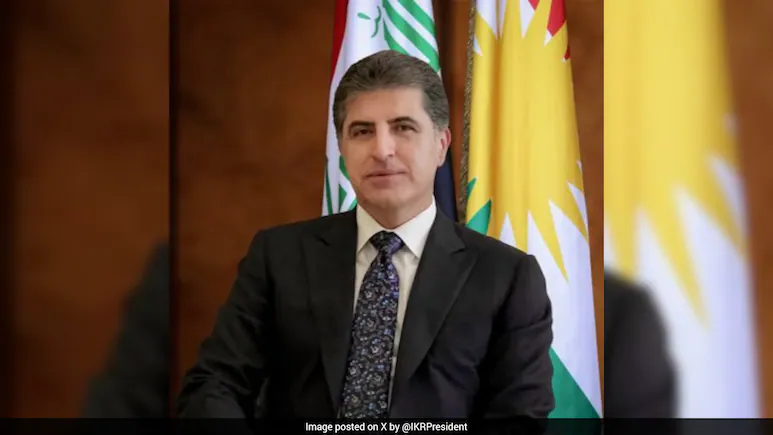
With uncertainty surrounding Iran’s negotiating position, the Donald Trump administration reportedly turned to an unlikely intermediary—Nechirvan Barzani, president of Iraq’s Kurdistan Region.
According to people familiar with the matter, Barzani was quietly asked to help Washington establish contact with senior figures in Iran’s Islamic Revolutionary Guard Corps (IRGC) and determine whether Iranian negotiators were genuinely speaking with the backing of the country’s powerful military establishment.
The unusual backchannel highlights just how complicated diplomacy with Tehran can be, particularly when the US is trying to determine which officials have the authority to make—and keep—major commitments.
Why Barzani was chosen
Barzani was considered a useful bridge because he has relationships on both sides of the divide.
As president of the semi-autonomous Kurdistan Region, he has maintained close ties with the United States while also having longstanding connections in Iran.
Barzani spent part of his life in Iran during the Iran-Iraq War and studied at the University of Tehran. He is fluent in Persian and, according to the report, has personal relationships with senior Iranian officials, including members of the IRGC.
His reputation as a pragmatic and experienced regional politician also made him a potentially valuable go-between.
Washington quietly reaches out
The secret effort reportedly began around May 10, when then-US Director of National Intelligence Tulsi Gabbard contacted Barzani.
According to the account, Gabbard told the Kurdish leader that the Trump administration needed his help reaching General Ahmad Vahidi, a senior IRGC commander.
Gabbard reportedly made clear that she had Trump’s and Vice President JD Vance’s approval to make the request.
The central question was straightforward but crucial: Were Iran’s civilian negotiators actually negotiating with the backing of the IRGC, or did the military leadership have a different position?
Barzani agreed to try to find out.
A secret meeting in Erbil
Barzani reportedly contacted his Iranian connections and asked for a direct conversation with Vahidi.
The request was accepted.
On May 14, an IRGC official allegedly met Barzani at his office in Erbil and handed him an encrypted phone that could be used for a secure conversation.
Barzani then reportedly spoke directly with Vahidi and asked whether he supported the position being taken by Iranian negotiators Mohammad Bagher Ghalibaf and Abbas Araghchi.
The answer, according to the sources cited in the report, was yes.
Vahidi reportedly told Barzani that he fully supported the negotiators and that the IRGC preferred resolving the crisis through diplomacy.
Barzani then passed the message back to Gabbard, who relayed it to the White House.
For Washington, the communication provided something it had been struggling to obtain directly: an indication that the IRGC leadership was, at least at that moment, aligned with Iran’s negotiating team.
Washington makes another request
Following that exchange, the Trump administration reportedly approached Barzani again—this time with a much bigger proposal.
Washington wanted to explore the possibility of holding secret US-Iran talks in Erbil.
The idea, however, never became reality.
Iranian officials reportedly had serious concerns about their personal safety and ultimately did not agree to the proposed meeting.
Why the backchannel matters
The episode illustrates one of the biggest challenges facing US diplomacy with Iran: knowing who has the authority to speak for Tehran.
Iran’s political system has multiple centres of power, with elected officials operating alongside powerful security and military institutions. For Washington, securing agreement from one group does not necessarily guarantee that another will accept the same deal.
That makes trusted intermediaries especially important.
Barzani’s unusual position—close enough to Washington to be trusted, while maintaining longstanding relationships inside Iran—gave him a role that conventional diplomats may not have been able to play.
A fragile diplomatic effort
The US and Iran reportedly reached a memorandum of understanding in May, but the arrangement soon ran into disagreements over its wording.
Meanwhile, Pakistan and Qatar have continued to pass messages between Washington and Tehran.
Progress, however, has remained limited.
The experience with Barzani also points to a broader problem for any future negotiations. Before the US can make meaningful progress with Tehran, it needs confidence that the people sitting across the table have the backing of those who ultimately control Iran’s security and military decisions.
For now, the episode remains a revealing example of the quiet diplomacy taking place behind the scenes—far from official negotiating rooms and public statements.
And in a relationship as complicated as that between Washington and Tehran, sometimes the most important conversations happen through people neither side publicly acknowledges as intermediaries.
News Source : Information for this article was gathered from a variety of reliable news outlets.