Nitin Gadkari Defends Mumbai-Pune Expressway, Says Technology Must Help Spot Road Defects Early
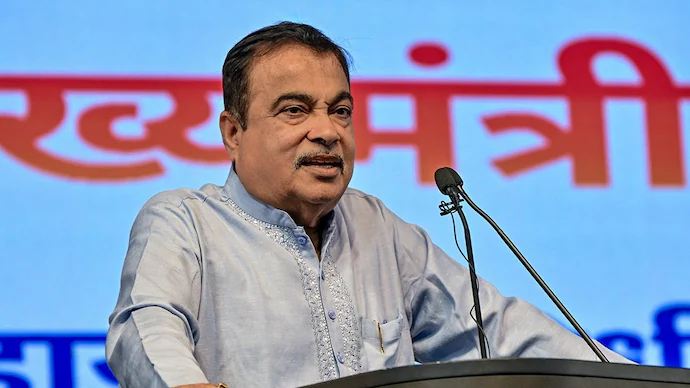
Mumbai–Pune : Union Road Transport and Highways Minister Nitin Gadkari has defended the long-standing performance of the Mumbai-Pune Expressway while addressing criticism that surfaced on social media after a recent incident involving the Missing Link project.
Speaking at the ‘Festival of Thinkers’ organised by Symbiosis International University in Pune, Gadkari said major infrastructure projects should not be planned only to meet today’s needs. Instead, he stressed the importance of looking decades ahead and designing roads and other infrastructure with a 25- to 50-year vision.
Gadkari highlights Mumbai-Pune Expressway’s track record
Gadkari pointed to the Mumbai-Pune Expressway as an example of infrastructure that has continued to perform well decades after its construction. He said the expressway, which was built around 27 years ago, remains free of potholes despite its age and heavy traffic.
He also expressed his disappointment over criticism directed at him on social media following the recent collapse or landslide-related incident near the Missing Link project. Gadkari clarified that the Missing Link was a state government project, rather than a project directly constructed by his ministry.
He suggested that social media criticism can sometimes play a role in highlighting problems and jokingly remarked that social media could itself become a form of “quality control”.
Calls for technology-based road monitoring
The Union minister said India needs to make greater use of modern technology to identify infrastructure problems before they turn into major safety concerns.
According to Gadkari, technologies such as drones, artificial intelligence, LiDAR and satellite-based monitoring can help authorities regularly inspect roads, bridges, slopes and other critical infrastructure.
The idea, he said, is to move away from simply reacting after a road or structure develops a serious problem. Instead, authorities should be able to identify early warning signs and take preventive action.
The recent issues around the Missing Link have once again highlighted the challenges of constructing major infrastructure projects in difficult terrain, particularly in areas vulnerable to heavy rainfall, landslides and other natural risks.
Long-term planning is essential
Gadkari stressed that infrastructure should be designed by keeping future traffic and economic growth in mind. He recalled that when the Mumbai-Pune Expressway was being planned, he had pushed for an eight-lane road because he anticipated increasing traffic.
However, after observing large-scale highways in other countries, he said he realised that India needed to think even bigger when planning future infrastructure.
He cited the Delhi-Meerut corridor as an example of the scale of infrastructure being developed to handle future demand.
His broader argument was that infrastructure projects should not merely solve today’s problems. Roads and transport networks built today must be capable of supporting the country’s economic and population growth for several decades.
Missing Link project faces scrutiny
The 13.3-km Missing Link project on the Mumbai-Pune Expressway was inaugurated by Maharashtra Chief Minister Devendra Fadnavis in May. The project was designed to bypass a difficult and steep mountain section, improve road safety and reduce travel time between Mumbai and Pune.
However, a landslide occurred near Tunnel 2 at the entrance of the Missing Link following heavy rainfall in July. The incident triggered criticism and questions over the project’s safety and construction.
Gadkari said that, at the time of the original planning, the forest department had not granted permission for the construction of the Missing Link. He maintained that the incident should not be used to judge the performance of the older Mumbai-Pune Expressway.
Infrastructure can drive economic growth
Gadkari also linked improved connectivity with India’s broader economic development. He said better roads can reduce transportation costs, improve industrial competitiveness and help businesses reach larger markets.
According to him, good infrastructure can support industry, trade, tourism and employment, while also allowing farmers to transport their products to markets more efficiently.
He said Pune in particular is expected to see infrastructure projects worth around Rs 60,000 crore, which could further strengthen the city’s connectivity and economic potential.
Focus on technology and future-ready infrastructure
Gadkari also spoke about India’s rapidly changing automobile sector. He highlighted developments in electric vehicles, alternative fuels, biofuels and other technologies, saying these areas could create significant employment opportunities and strengthen India’s export potential.
His overall message was that India’s infrastructure development needs to move beyond conventional construction. Future roads and transport systems, he said, should combine better engineering, advanced technology, preventive monitoring and long-term planning.
While defending the record of the Mumbai-Pune Expressway, Gadkari’s comments also underline a larger challenge for India’s rapidly expanding infrastructure network: ensuring that roads and major structures remain safe and reliable not just when they are newly built, but for decades to come.
News source: Information for this article was gathered from a variety of reliable news outlets.