From Asia’s Richest Man to Life in Prison: Evergrande Founder Hui Ka Yan’s Stunning Fall
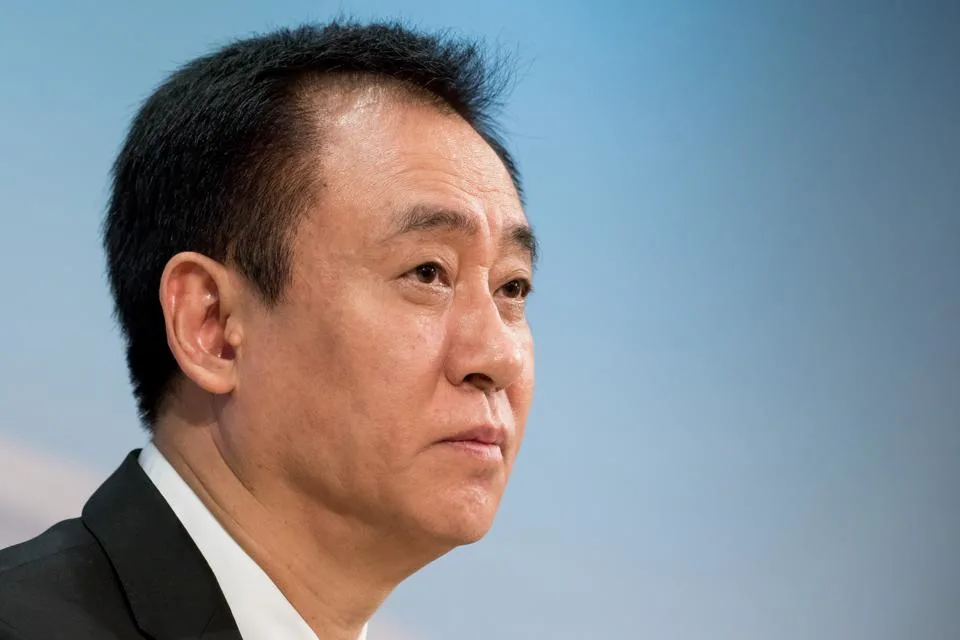
China : Hui Ka Yan, the founder of China’s troubled property giant Evergrande, has been sentenced to life in prison after being found guilty of multiple financial crimes, marking a dramatic end to the career of a businessman who was once one of Asia’s wealthiest and most powerful property tycoons.
Hui Ka Yan, who once had a peak personal fortune of around $45.3 billion, was sentenced by a court in Shenzhen on Thursday in a case involving charges including bribery, fraud and falsifying financial information, according to China’s official Xinhua News Agency.
The sentence represents a remarkable fall for Hui, who rose from relatively modest beginnings to become the face of China’s extraordinary real estate boom. For years, his name was closely associated with Evergrande, once the country’s largest property developer by sales. At the height of his success, Hui was celebrated as one of China’s most influential businessmen and briefly ranked as Asia’s richest person.
Today, he is at the centre of one of the biggest corporate collapses in China’s history.
A Billionaire’s Fortune Turns Into a Prison Sentence
The Shenzhen court handed Hui a life sentence, while Evergrande’s onshore operations were also hit with heavy financial penalties.
According to Xinhua, the court imposed a fine of 8.82 billion yuan, or about $1.3 billion, on Evergrande, while a separate fine of 7 billion yuan was imposed on the company’s mainland unit. Hui’s personal assets are also set to be confiscated.
Chinese authorities described the financial crimes as involving exceptionally large amounts of money and said the conduct had caused serious economic losses and broader harm to society.
The harsh punishment reflects the scale of the crisis surrounding Evergrande and the enormous financial damage caused by the company’s collapse.
The Rise of Evergrande
Hui built Evergrande into a property empire during a period when China’s real estate market was expanding at extraordinary speed.
The company borrowed heavily to finance its rapid growth, building housing projects and expanding into a wide range of businesses. Evergrande eventually became one of the biggest property developers in China, with projects and investments spread across the country.
Hui’s wealth grew alongside the company. At his peak, Forbes estimated his fortune at roughly $45.3 billion, making him one of the richest people in Asia.
But the same aggressive expansion that helped make Hui a billionaire eventually became a major weakness.
Evergrande accumulated enormous amounts of debt from banks, bond investors, suppliers and other creditors. The company also raised money from its employees and other sources as it attempted to keep its business expanding.
The Property Crisis Changes Everything
Evergrande’s troubles became impossible to ignore around 2021, when the company began missing debt payments.
The problems quickly spread beyond Evergrande. Investors became increasingly concerned about the financial health of China’s wider property sector, which was heavily dependent on borrowing and rising property demand.
As confidence weakened, Evergrande struggled to complete projects, repay creditors and meet its financial obligations.
The company eventually found itself carrying liabilities of more than $300 billion, making it one of the world’s most heavily indebted property companies.
Chinese authorities had already introduced measures aimed at curbing excessive borrowing in the property industry. For Evergrande, however, the financial pressure became increasingly difficult to manage.
Restructuring Efforts Fail
For years, Evergrande attempted to restructure its enormous debt burden and negotiate with creditors.
Those efforts ultimately failed.
In 2024, a Hong Kong court ordered Evergrande to be liquidated after concluding that the company had not presented a sufficiently workable restructuring plan.
The court action marked another major turning point for the once-mighty property giant.
The company was later delisted from the Hong Kong Stock Exchange in 2025, following a prolonged suspension of trading.
Liquidators have since been working to identify and recover assets in an attempt to repay creditors.
Hui Had Already Been in Custody
Hui’s legal troubles began well before Thursday’s sentencing.
He was taken into custody in late 2023 after Chinese authorities said he was suspected of crimes.
In April, Hui reportedly pleaded guilty in a Chinese court to charges that included bribery and fundraising fraud.
The latest judgment now brings a dramatic legal conclusion to the downfall of the businessman who had once been among the most prominent figures in China’s property industry.
Dozens of Others Also Sentenced
Hui was not the only person punished in connection with the Evergrande case.
The Shenzhen court also sentenced 56 other people linked to the case. Their prison terms reportedly range from 22 months to 18 years.
The charges include fraud and illegally raising funds from the public.
Among those sentenced were Hui’s sons, Xu Tenghe and Xu Zhijian, according to Xinhua. The agency did not provide a detailed breakdown of the individual sentences or the specific charges faced by each person.
A Symbol of China’s Property Boom—and Its Collapse
Hui’s story has become closely tied to the larger story of China’s property market.
Evergrande’s rise reflected an era when property development and easy access to debt helped create enormous fortunes. Developers borrowed aggressively, expanded rapidly and relied heavily on continued growth in housing demand.
But when the property boom began to weaken, heavily indebted companies were left vulnerable.
Evergrande’s collapse demonstrated how quickly a highly leveraged corporate empire could unravel when access to financing and investor confidence disappeared.
What makes Hui’s downfall particularly striking is the distance between his former status and his current situation.
A businessman who once controlled one of China’s largest property companies and accumulated a fortune worth tens of billions of dollars is now facing life imprisonment, while the company he built is being dismantled through liquidation.
Creditors Still Await Recovery
Even after Hui’s sentencing, the Evergrande saga is far from over.
Liquidators continue to search for assets that can be sold or recovered to compensate creditors. The scale of Evergrande’s liabilities means that recovering the money owed to banks, investors, suppliers and other creditors remains a major challenge.
The company’s collapse has also left a lasting impact on China’s property market, affecting homeowners, businesses and investors.
For Hui himself, however, the latest court ruling marks the starkest possible conclusion to a remarkable rise-and-fall story.
Once celebrated as Asia’s richest man, Hui Ka Yan built a property empire worth hundreds of billions of dollars on paper. Years later, that empire has collapsed, Evergrande has been delisted and liquidated, his personal wealth has been confiscated, and he has been sentenced to spend the rest of his life in prison.
Hui’s journey from billionaire property king to convicted businessman is now one of the most dramatic examples of how quickly fortunes can change when debt-fuelled growth turns into a financial crisis.
News source: Information for this article was gathered from a variety of reliable news outlets.