From Trump Pressure to a Billion-Dollar Bet: How the Ambani Family Became Linked to a Trump-Backed Texas Refinery Project
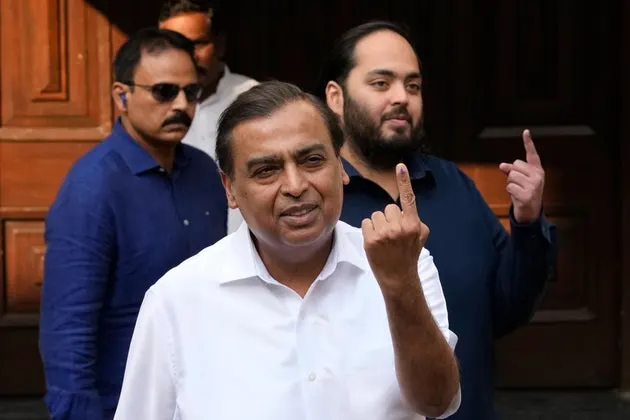
A surprising investment by Reliance in a struggling Texas refinery has raised questions about the growing business ties between the Ambani and Trump families. The deal came months after Donald Trump’s administration had sharply criticized Reliance over its Russian oil purchases.
A remarkable shift appears to have taken place in the relationship between the Ambani family and the Trump family.
Just months after the Trump administration turned up the pressure on Reliance Industries over its continued purchases of Russian crude oil, Mukesh Ambani’s company made a major investment in an obscure Texas refinery project that had struggled for years to attract financing.
The development has drawn attention not only because of the size of the investment, but also because of the people connected to the project.
The Texas company, now known as America First Refining, has ties to Donald Trump Jr., who reportedly became a minority investor. Reliance subsequently committed a nine-figure investment to the refinery venture, which aims to build a major new oil refinery at the Port of Brownsville on the Gulf Coast of Texas.
The project has been promoted as a potential revival of American refining capacity. However, its history is far from straightforward. It has faced years of delays, financial difficulties, lawsuits, rebranding and questions over whether a new refinery can actually become commercially viable.
The unexpected arrival of Reliance as a major investor therefore surprised several people familiar with the U.S. energy sector.
An unexpected meeting in Jamnagar
The story began to take a more interesting turn months before the investment became public.
In November, Donald Trump Jr. travelled to Jamnagar, Gujarat, where he met Anant Ambani, the son of Reliance Industries chairman Mukesh Ambani.
The meeting was notably informal. The two reportedly visited the Ambani family’s private wildlife facility and later participated in a Gujarati folk dance.
At the time, the Trump administration was taking an increasingly tough position toward Reliance because of the company’s purchases of discounted Russian oil following Moscow’s invasion of Ukraine.
Yet, only a few months later, Reliance emerged as a major financial backer of America First Refining.
The timing of the developments has prompted questions about whether the growing relationship between the two families played a role in bringing the deal together.
Reliance, however, has maintained that the investment was made purely on commercial and strategic grounds and that it did not receive special treatment from the U.S. government.
Trump Jr.’s reported role
According to records and people familiar with the company, Donald Trump Jr. had acquired a stake in the refinery venture.
The exact size of his investment and the amount he paid for it have not been publicly established.
Trump Jr.’s representatives have described him as a passive minority investor with no operational role in America First Refining.
His spokesperson has also rejected suggestions that Trump Jr. was using his political connections to influence government decisions on behalf of companies in which he had invested.
Still, the company’s relationship with Trump Jr. became an important part of its efforts to attract potential investors.
People familiar with the company’s activities said Trump Jr. participated in meetings involving potential foreign investors, including discussions with investors from Saudi Arabia.
One foreign official who was approached about the project reportedly said the company’s representatives highlighted their connections to the Trump family and suggested that an investment could potentially provide access to people in Washington.
ProPublica reported that it found no evidence that Trump Jr. himself knew about such representations.
Why Reliance’s investment attracted attention
The investment was particularly striking because Reliance had previously been under significant pressure from the Trump administration.
During 2025, U.S. officials repeatedly criticized India’s purchases of Russian crude.
The Trump administration eventually raised tariffs on India to 50%, with the policy explicitly aimed in part at discouraging Indian companies from continuing to purchase Russian oil.
Trump trade adviser Peter Navarro publicly criticized what he described as India’s politically connected energy companies, with his comments widely interpreted as referring to Reliance and other major Indian energy players.
Against that backdrop, Reliance’s decision to invest in a U.S. refinery project connected to Trump Jr. was viewed as a major change in circumstances.
Bloomberg described the development as Reliance moving from being a target of Trump’s pressure campaign to becoming a financial partner in an American energy project.
Reliance has rejected the suggestion that the investment was linked to favorable treatment from Washington.
The company said its decision was based on the project’s commercial potential, strategic importance and long-term value.
The refinery has a troubled history
America First Refining’s ambitions are enormous.
The company wants to construct a major refinery near Brownsville, Texas, potentially requiring $3 billion to $4 billion to complete.
If successful, it would represent one of the most significant new refinery projects in the United States in decades.
But getting to this point has been anything but easy.
The project has been in development for roughly a decade under entrepreneur John Calce. During that period, it has experienced repeated delays, funding problems, corporate rebranding and disputes with former business partners.
The project also went through bankruptcy proceedings involving an earlier version of the company.
A bankruptcy trustee subsequently filed a lawsuit alleging that Calce and other insiders had improperly diverted money and assets. Calce denied wrongdoing, and the matter was eventually settled.
The company’s supporters argue that the refinery could strengthen U.S. energy security and create jobs in the region.
Critics, however, question whether such a capital-intensive project can generate sufficient returns in an industry where refining margins can be relatively thin.
Some energy experts believe financing a completely new refinery in the United States remains extremely difficult.
The White House connection
The refinery’s relationship with the Trump administration extends beyond Trump Jr.’s reported investment.
Company chief executive John Calce has publicly said that the White House supported the project.
He has also said that the administration’s National Energy Dominance Council helped introduce the company to potential overseas investors.
That assistance became particularly significant as America First Refining searched for the financing needed to move forward.
The company eventually announced Reliance’s investment at a valuation of at least $1 billion, giving the long-delayed project a dramatic new financial boost.
President Donald Trump himself later celebrated the Reliance investment publicly, thanking the Indian company for what he described as a significant investment in the United States.
Connections across the Trump business world
The refinery deal also involved other people with links to the Trump administration.
Cantor Fitzgerald, whose leadership changed after Howard Lutnick became Trump’s commerce secretary, was working as a financial adviser to America First Refining and was involved in the Reliance transaction.
Another important figure was John Willding, a Texas corporate lawyer who has described himself as outside business counsel to the Trump family.
Willding was involved in setting up a company associated with Trump Jr.’s investment in the refinery venture.
He initially appeared to suggest publicly that he had played a role in the larger deal involving Reliance, but later denied having any involvement in the Indian company’s investment.
The conflicting descriptions added another layer of uncertainty around the transaction.
Reliance says there was no special treatment
For Reliance, the central message has been that the refinery investment should not be viewed as a political transaction.
The company has said that it received no unique or preferential treatment from the U.S. government.
Reliance has also rejected any suggestion that its investment in America First Refining was connected to U.S. decisions involving tariffs, sanctions, oil licenses or trade policy.
The company says the investment was assessed on normal business considerations.
The Trump administration has similarly denied any conflict of interest.
That has not stopped questions from being raised, particularly because the investment followed a period of intense political pressure on Reliance and coincided with a broader improvement in U.S.-India relations.
A changing U.S.-India relationship
The refinery deal came at a time when relations between Washington and New Delhi were changing.
After months of tariff disputes, the two countries moved toward a trade agreement that significantly reduced some of the pressure on India.
Reliance also reportedly received permission to purchase Venezuelan crude directly, while the broader international energy situation was changing rapidly because of the conflict involving Iran and instability in global oil markets.
The Trump administration also provided India with a waiver related to purchases of Russian crude, although that exemption was later expanded more broadly.
For Reliance, these developments created a considerably different environment from the one it faced in 2025.
Questions remain about the project’s future
Despite the new money and political connections, America First Refining still faces a major challenge: actually building the refinery.
The company estimates that construction could cost several billion dollars and take years.
The project has already suffered repeated delays.
At one point, officials at the Port of Brownsville reportedly believed the project was effectively dead because of its continued financial and construction problems.
The new investment has changed that picture, but industry experts remain cautious.
Building a refinery from scratch is extraordinarily expensive, and the economics of the project could become difficult if construction costs rise or refining margins weaken.
The company has also explored the possibility of going public, according to people familiar with its plans.
That could potentially give early investors an opportunity to sell their stakes before the refinery is completed.
More scrutiny over the company’s claims
America First Refining’s broader business activities have also attracted scrutiny.
A separate website connected to another company associated with Calce claimed to operate a large international network of energy storage terminals and employ hundreds of people.
However, ProPublica reported that it could not independently verify several of the company’s claimed executives or storage facilities.
The report also said that some telephone numbers listed on the website appeared to belong to unrelated businesses.
The company has disputed allegations made about it, while Calce has denied wrongdoing in connection with earlier lawsuits.
Regulatory approval raises further questions
The refinery’s political connections have also come under scrutiny because of a regulatory decision in Texas.
In February, America First Refining sought an extension of an environmental permit from the Texas Commission on Environmental Quality.
Internal emails obtained by ProPublica reportedly showed agency officials urging that the request be processed quickly.
The permit extension was approved the following day.
A Texas environmental agency spokesperson defended the speed of the decision, saying the request was processed quickly because the company had provided the necessary information.
The emails, however, have fueled additional questions about whether political connections played any role in the project’s regulatory progress.
A deal that raises bigger questions
The Reliance-America First Refining investment is therefore much more than a conventional energy transaction.
It brings together one of India’s most powerful business families, the family of the U.S. president, a troubled Texas refinery project and a changing geopolitical relationship between India and the United States.
For the Ambanis, the investment provides an opportunity to deepen Reliance’s presence in the American energy market.
For America First Refining, Reliance’s financial backing could give a project that spent years struggling for funding a new chance at life.
And for Trump Jr., the deal illustrates how his expanding private business interests intersect with a political environment dominated by his father’s administration.
Whether the Texas refinery ultimately becomes a successful American energy project remains uncertain.
But one thing is clear: a project once considered unlikely to survive has suddenly found some very powerful friends—and a very large Indian investor.
News source: Information for this article was gathered from a variety of reliable news outlets.