China’s Massive Brahmaputra Dam Raises Fresh Concerns for India Over Water Security and Strategic Risks
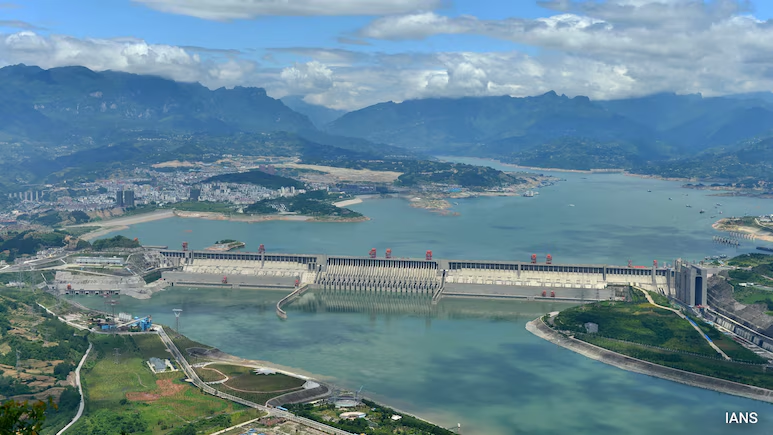
New Delhi , June 18 : China’s decision to speed up construction of what could become the world’s largest hydroelectric dam on the Yarlung Tsangpo River has once again raised serious concerns in India. The massive project is located in Tibet, barely 50 kilometres from the Indian border, making it not just an environmental issue but also a strategic one for New Delhi.
The Yarlung Tsangpo is not just any river. It is the upper course of the mighty Brahmaputra River, one of India’s most important rivers. After flowing through Tibet, it enters Arunachal Pradesh as the Siang River and then reaches Assam, where it becomes the Brahmaputra — a lifeline for millions of people who depend on it for farming, drinking water, fishing, transport, and daily survival.
Indian intelligence agencies, backed by satellite images, have found that construction work on the dam has picked up speed over the past few months. This has put Indian authorities on high alert. Officials say the government is keeping a close watch, knowing the dam could significantly affect the natural flow of water into India.
Experts believe the biggest concern is not just the dam itself, but its possible downstream impact. Large dams can change how water flows, trap sediments that naturally enrich farmland, disturb aquatic life, and alter flood cycles. For states like Arunachal Pradesh and Assam, which already face seasonal floods and ecological challenges, even a small change in the Brahmaputra’s flow could have major consequences.
There is also fear that sudden water releases from the dam during heavy rainfall or emergencies could trigger devastating floods downstream. On the other hand, if China decides to restrict water flow during dry seasons, it could affect agriculture and water availability in India’s northeast.
Beyond environmental risks, the project also has major strategic implications. Water experts and defence analysts warn that controlling a river upstream gives China significant leverage in any future dispute. In times of tension, Beijing could potentially use water as a strategic tool — a possibility that deeply worries Indian policymakers.
China, however, has defended the project, saying it is purely for generating clean energy and that it will not harm downstream countries. Beijing has maintained that its hydropower ambitions are aimed at reducing carbon emissions and meeting rising energy demands. But India remains cautious, given the scale and location of the project.
India’s Ministry of External Affairs has repeatedly raised the matter with Chinese authorities. Minister of State for External Affairs Kirti Vardhan Singh recently told Parliament that India has been tracking the project for decades, as plans for the dam first emerged in 1986. He assured that the government is constantly monitoring all developments and taking preventive steps to protect the lives and livelihoods of people living downstream.
The issue was also discussed at the highest diplomatic levels during External Affairs Minister S. Jaishankar’s visit to China in 2025, showing how seriously India views the matter. Officials say talks on transboundary rivers continue under the Expert Level Mechanism set up between the two countries in 2006.
At the same time, India is working on strengthening its own water infrastructure and disaster management systems to prepare for any future risks. There are also discussions on expanding hydropower and storage projects on the Indian side to reduce vulnerability.
For India, this is not just about a dam in Tibet — it is about water security, environmental balance, and national interest. As China moves ahead with one of its biggest hydro projects, the Brahmaputra issue could become an even bigger point of concern in India-China relations in the years ahead.
News source: Information for this article was gathered from a variety of reliable news outlets