Centre Defends Election Commissioner Selection Law, Supreme Court Questions Fairness of Panel
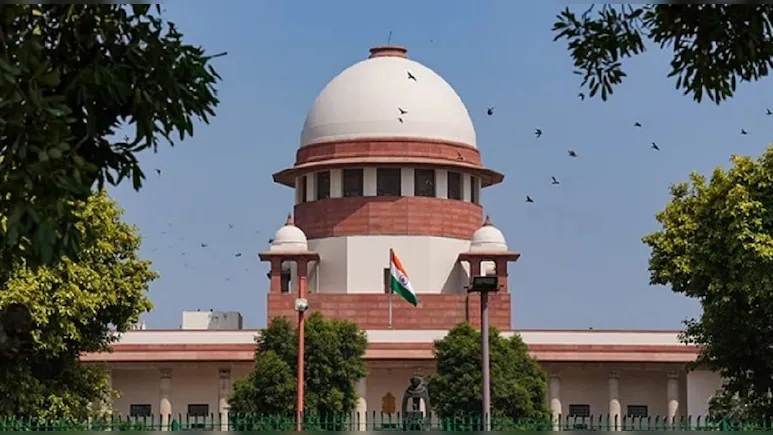
New Delhi: The Supreme Court on Thursday questioned the fairness of the current process for appointing the Chief Election Commissioner (CEC) and Election Commissioners (ECs), while the Centre strongly defended the law, arguing that there was no reason to doubt the integrity of the Prime Minister or the government in making such appointments.
The hearing was held on a batch of petitions challenging the constitutional validity of the Chief Election Commissioner and Other Election Commissioners (Appointment, Conditions of Service and Term of Office) Act, 2023. The law provides that the selection committee will comprise the Prime Minister, a Union Minister nominated by the Prime Minister, and the Leader of Opposition in the Lok Sabha. Unlike an earlier Supreme Court ruling, the Act does not include the Chief Justice of India (CJI) in the selection panel.
During the proceedings, the Supreme Court raised concerns about the exclusion of the Chief Justice from the appointment process. The bench observed that the CJI is part of selection committees for important constitutional positions such as the CBI Director and the Lokpal, and questioned why a similar approach was not adopted for appointing Election Commissioners, whose independence is considered vital to India’s democratic system.
The judges clarified that the issue was not about distrusting the Prime Minister personally but about ensuring that the appointment process visibly reflects fairness and institutional balance. The court remarked that the Election Commission must remain independent, and the selection mechanism should inspire public confidence.
Defending the legislation, Solicitor General Tushar Mehta argued that questioning the composition of the committee effectively casts doubt on Parliament’s judgment and the constitutional trust placed in elected representatives. He said it would be incorrect to assume that the Prime Minister or other ministers would act in bad faith simply because they hold a numerical majority in the selection panel.
Mehta further stated that the office of the Prime Minister carries constitutional sanctity and should not be viewed with suspicion. He argued that if the Prime Minister’s decisions are presumed to lack impartiality, then similar doubts could be raised about every executive decision, including the appointment of Cabinet ministers.
The Solicitor General also requested that the matter be referred to a larger Constitution Bench under Article 145(3) of the Constitution, saying the case involves substantial constitutional questions regarding the balance of powers among different institutions.
During the hearing, Justice Datta remarked that the concern before the court was not about a lack of trust in the Prime Minister but about whether the selection committee adequately demonstrates fairness, especially when the government holds two of the three seats on the panel.
The petitions challenging the law argue that removing the Chief Justice of India from the committee weakens the independence of the Election Commission and goes against the Supreme Court’s landmark judgment delivered in 2023, which had directed that the appointment panel should include the Prime Minister, the Leader of Opposition and the Chief Justice of India until Parliament enacted a law on the subject.
After hearing arguments from both sides, the Supreme Court reserved its decision on whether the petitions should be referred to a larger five-judge Constitution Bench for further consideration.
News source: Information for this article was gathered from a variety of reliable news outlets.