Mumbai To Ahmedabad In 90 Minutes: Bullet Train Trials Likely In May-June 2027
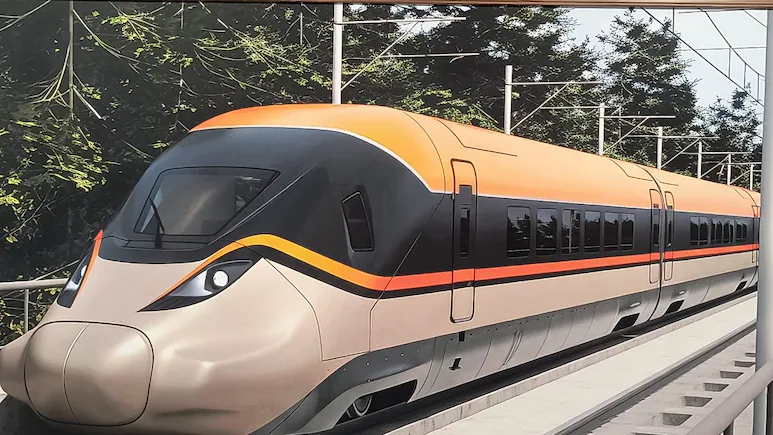
New Delhi: India’s ambitious bullet train project is moving closer to becoming a reality, with trial runs of the country’s first indigenous high-speed train expected to begin in May or June 2027, Union Railway Minister Ashwini Vaishnaw has said.
The trials will initially be conducted on a completed stretch of the Mumbai-Ahmedabad High-Speed Rail Corridor, where construction is progressing rapidly. If testing goes according to plan, passenger services could begin within two to four months after the trials.
Speaking at the Namo for Vikasit Bharat event in Vadodara, Vaishnaw said the first body frame of India’s high-speed train had been completed and sent for squeeze testing to assess the structural strength of the coaches.
He said that by May or June next year, India’s own bullet train would be on the tracks for testing. He added that after two to four months of testing, the service would be inaugurated.
Mumbai To Vadodara In Just 90 Minutes?
One of the biggest attractions of the project will be the dramatic reduction in travel time.
According to Vaishnaw, passengers travelling from Vadodara to Mumbai could reach the city in around 90 minutes by bullet train.
For commuters who currently spend several hours travelling between major cities along the corridor, the high-speed service could significantly change the way people travel for work, business and leisure.
Bullet Train To Open In Phases
The Mumbai-Ahmedabad corridor is expected to become operational in stages rather than opening in its entirety at once.
The proposed rollout includes:
- Surat-Bilimora: First section expected to open
- Vapi-Surat: Second phase
- Vapi-Ahmedabad: Third phase
- Ahmedabad-Thane: Fourth phase
- Ahmedabad-Mumbai: Full Mumbai-Ahmedabad service after the Thane section is completed
The Surat-Vapi stretch is reportedly targeted for completion by December this year.
India’s High-Speed Rail Push
Vaishnaw also highlighted the wider transformation taking place across Indian Railways, including changes to operational systems, ticketing and construction standards.
He pointed to projects such as the Chenab Bridge and the railway connection to Mizoram as examples of major infrastructure developments completed in recent years.
The government has also redeveloped hundreds of railway stations and expanded the country’s rail network with thousands of kilometres of new tracks.
The minister said the pace of infrastructure development had increased despite delays caused by the Covid-19 pandemic.
More Bullet Train Corridors Planned
The Mumbai-Ahmedabad project is only the beginning of India’s proposed high-speed rail network.
The government has also proposed seven additional high-speed corridors:
- Delhi-Varanasi
- Varanasi-Patna-Siliguri
- Mumbai-Pune
- Pune-Hyderabad
- Bengaluru-Chennai
- Bengaluru-Hyderabad
- Chennai-Hyderabad
If these projects progress as planned, India’s high-speed rail network could eventually connect several of the country’s biggest cities.
For now, however, all eyes are on May-June 2027, when India’s indigenous bullet train is expected to begin testing. For millions of passengers, it could mark the start of a completely new era of faster intercity travel.
News Source : Information for this article was gathered from a variety of reliable news outlets.