Blinkit’s 10-Minute Ambulance Service Faces Scrutiny: Piyush Goyal Stresses Compliance With Laws
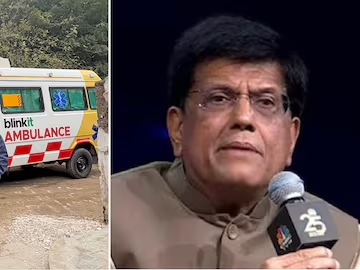
Commerce Minister Piyush Goyal has emphasized the need for Zomato-owned Blinkit to adhere to legal requirements following its launch of a 10-minute ambulance service. Speaking on Friday, Goyal stated that while such services can address critical needs, the company must ensure compliance with the “law of the land” and take care of all legal obligations.
Blinkit’s New Initiative
On Thursday, Blinkit announced the rollout of its 10-minute ambulance service, starting with five ambulances in Gurugram. According to Blinkit CEO Albinder Dhindsa, the ambulances are equipped with essential life-saving equipment, including oxygen cylinders, AEDs (Automated External Defibrillators), stretchers, monitors, and emergency medicines. Each vehicle is staffed with a paramedic, an assistant, and a trained driver to provide immediate medical assistance.
Dhindsa highlighted that profit is not the motive for this service. “We will operate this service at an affordable cost and invest in solving this critical problem for the long term,” he said.
Blinkit, widely known for its quick-commerce services, already offers food items, cosmetics, daily essentials, and pet care products.
Government’s Concerns
At a press briefing, Goyal reiterated the importance of legal compliance. “My only submission would be that they have to make sure that they meet the law of the land, and whatever other legal requirements should be properly taken care of. No laws of the land should be broken,” he stated.
EV Sector Discussions
On the same day, Goyal also held discussions with stakeholders from the electric vehicle (EV) sector, focusing on developing battery charging and swapping infrastructure. Officials from the Department of Heavy Industries and the Department for Promotion of Industry and Internal Trade (DPIIT) participated, along with representatives from companies such as Tata, TVS, and Mercedes-Benz India.
Key issues discussed included the location of charging and swapping stations, as well as standardization. The government aims to address these challenges to promote the EV ecosystem in India.
News Source : “Information for this article was gathered from a variety of reliable news outlets.”