Ajeet Bharti’s Four Demands at ‘Reservation Hatao’ Protest: White Paper, Quota Within Quota and More EWS Benefits
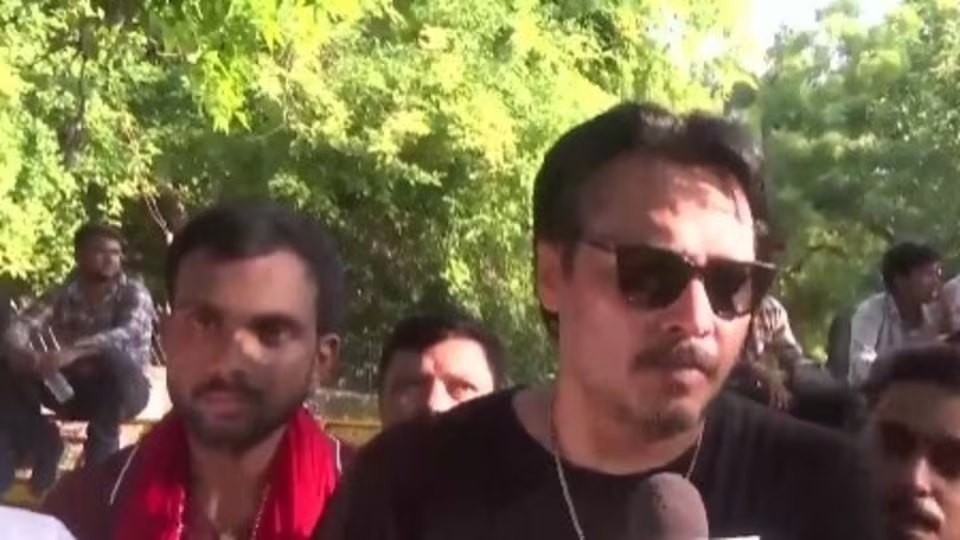
New Delhi : YouTuber and independent media creator Ajeet Bharti put forward four major demands during the ‘Reservation Hatao Andolan’ protest at Delhi’s Jantar Mantar, calling for a review of India’s existing reservation system and greater focus on economic disadvantage.
The protest, organised by the social media-driven ‘Reservation Hatao Andolan’, drew a large crowd on Friday. Demonstrators demanded changes to the existing reservation framework and argued that economic conditions should receive greater consideration while deciding who benefits from government support and educational opportunities.
Bharti, who addressed the gathering, said the reservation system should be examined in detail and its effectiveness assessed after decades of implementation. He called on the government to publish a comprehensive white paper explaining how reservations have worked over the past 80 years and whether the benefits have reached all the communities they were intended to support.
Bharti seeks a white paper on reservation
According to Bharti, his first major demand is that the government release a detailed white paper on the reservation system.
He argued that such a document should examine the impact of reservation policies over several decades and provide data on which communities have benefited and which groups may still be left behind.
Referring to his home state of Bihar, Bharti cited the Musahar community as an example. He claimed that sections of the community continue to face severe social and economic disadvantages and argued that the government should investigate why some of the most marginalised groups have not been able to benefit adequately from existing reservation provisions.
‘Quota within quota’ is another key demand
Bharti’s second demand was the introduction of a “quota within quota” system. He argued that reservation benefits should be distributed more evenly among different communities within the existing reserved categories.
He also questioned the government’s position on applying the creamy-layer principle in such a system. Bharti said that the benefits of reservation should not remain concentrated among relatively better-off sections while economically and socially disadvantaged groups continue to struggle.
The issue of a creamy layer has been the subject of an ongoing policy and legal debate, particularly concerning Scheduled Castes and Scheduled Tribes. The government has maintained that the creamy-layer principle has traditionally been applied to the Other Backward Classes category and should not automatically be extended to SC and ST reservations.
Minimum marks for higher education
Bharti’s third demand focused on admissions to higher educational institutions.
He argued that minimum academic standards should be maintained for admission to institutions such as the IITs, IIMs and other leading higher-education institutions. According to him, reservation policies should not result in a situation where academic standards are compromised.
Bharti said the country’s goal of becoming a developed nation requires strong educational institutions and that deserving students should have adequate opportunities to pursue higher education.
His remarks reflect the broader and often contentious debate over reservation, merit, equal opportunity and access to quality education in India.
More support for EWS students
His fourth demand centred on Economically Weaker Sections, or EWS.
Bharti argued that simply recognising people as economically weaker is not enough unless they receive meaningful assistance. He called for greater financial support for EWS students, including help with application fees, hostel expenses and course fees.
He also proposed that EWS-related benefits should be considered for economically disadvantaged people within the SC category, while calling for a broader discussion on how economic hardship can be addressed alongside existing reservation policies.
Bharti urged the government to initiate a dialogue on the issue rather than allowing the debate to remain limited to political statements and protests.
Protest moved to Jantar Mantar despite permission for Ramlila Maidan
The demonstration also witnessed tension between protesters and the Delhi Police.
The organisers had reportedly received permission for the protest at Ramlila Maidan, but a large number of demonstrators gathered at Jantar Mantar. Police had restricted protests in and around the area, following which several protesters were detained.
Security personnel and paramilitary forces were deployed around key locations, while barricades were installed to manage the movement of demonstrators.
The protest had been mobilised largely through social media, with organisers calling for economic circumstances to play a greater role in determining access to government benefits and reservations.
Who is Ajeet Bharti?
Ajeet Bharti, who was born in Bihar, is an independent journalist, author and media creator known for his political and social commentary.
He has previously worked with mainstream media organisations before moving towards independent media. He later established his own platform, where he publishes videos and commentary on politics, society, law, culture and current affairs.
Bharti is also known for political satire and “roast” videos. He has written several books, including Bakar Puran, Ghar Wapasi, There Will Be No Love and Jo Bhi Kahunga Sach Kahunga.
His appearance at the ‘Reservation Hatao Andolan’ has added another prominent voice to the ongoing national debate over caste-based reservation, economic inequality and affirmative action.
The protest comes at a time when questions surrounding reservation, caste representation and the proposed caste census remain politically sensitive issues. While supporters of reservation argue that it remains necessary to address historical social discrimination and unequal opportunities, critics such as Bharti argue that the system needs greater scrutiny and reforms to ensure that benefits reach the most disadvantaged.
The debate is therefore likely to continue, particularly around issues such as sub-categorisation, the creamy layer, EWS support, educational standards and whether economic disadvantage should play a larger role in determining access to government assistance.
News source: Information for this article was gathered from a variety of reliable news outlets.