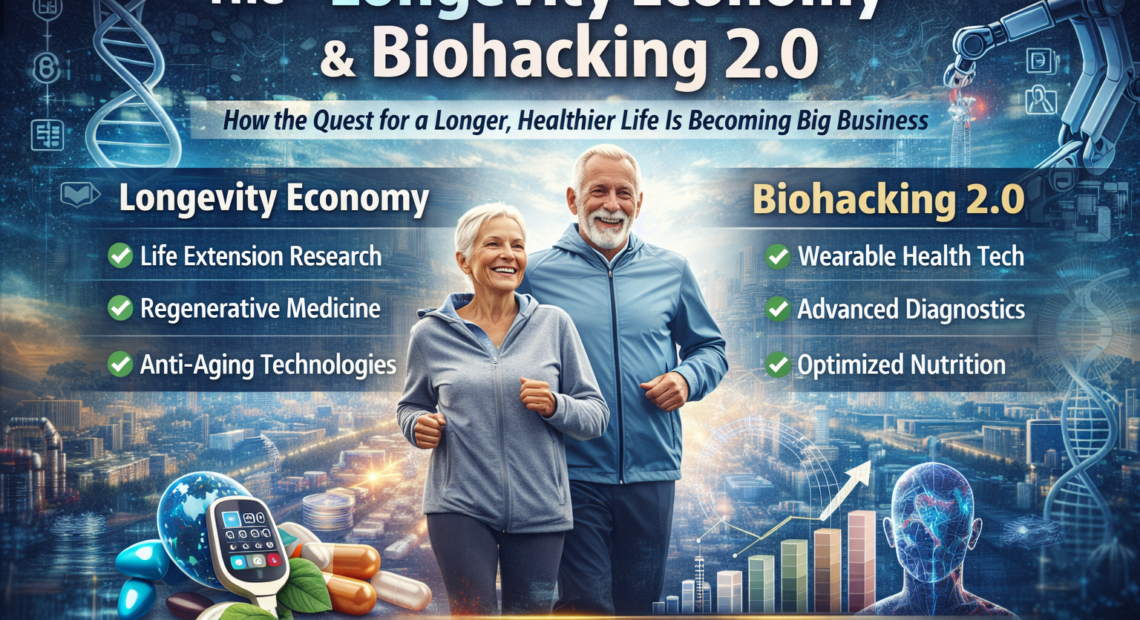
The “Longevity Economy” & Biohacking 2.0: How the Quest for a Longer, Healthier Life Is Becoming Big Business
For centuries, humans have dreamed of living longer, healthier lives. Today, that dream is no longer limited to science fiction or ancient myths. It is becoming a rapidly expanding global industry known as the “Longevity Economy.”
Driven by advances in biotechnology, artificial intelligence, personalised medicine, and wellness innovation, scientists and entrepreneurs are now working toward extending not just lifespan, but healthspan — the number of years a person remains healthy, active, and productive.
According to experts in Gerontology, the science of ageing has entered a new era. Instead of simply treating diseases after they appear, researchers are increasingly focused on slowing down or even reversing aspects of the ageing process itself.
At the same time, a cultural movement known as Biohacking 2.0 is gaining traction. Unlike earlier wellness trends, modern biohacking blends science, technology, and data-driven experimentation to optimise the human body.
People experimenting with biohacking are tracking sleep cycles, monitoring glucose levels, experimenting with nutrition plans, and using wearable devices to understand how their bodies respond to different lifestyles. Popular platforms like Oura Ring, WHOOP, and Apple Health allow users to track everything from heart rate variability to stress levels and recovery patterns.
For many, the goal is simple: live longer and feel better while doing it.
From Wellness Trend to Global Economy
The Longevity Economy is no longer a niche sector. Analysts estimate that products and services related to ageing and health optimisation could be worth trillions of dollars in the coming decades.
This economy includes everything from advanced diagnostics and regenerative medicine to anti-ageing skincare, supplements, personalised diets, and fitness technologies.
Startups and major pharmaceutical companies alike are investing heavily in longevity research. Scientists are studying how cellular processes like Telomere Shortening and Cellular Senescence contribute to ageing, hoping to develop therapies that could slow or repair the damage.
Breakthrough fields such as Regenerative Medicine and Genetic Engineering are also opening new possibilities for extending healthy lifespans.
The Human Side of Longevity
But beyond laboratories and tech startups, the longevity movement also reflects a deeper human desire — the hope of spending more meaningful years with loved ones, staying mentally sharp, and maintaining independence well into old age.
For many people, the pursuit of longevity begins with simple changes: better sleep, healthier diets, regular exercise, and mindfulness practices.
Biohacking enthusiasts often experiment with intermittent fasting, cold exposure, meditation, and optimised nutrition. While not every trend is backed by strong scientific evidence, the broader movement highlights a growing awareness that lifestyle choices play a major role in long-term health.
Opportunities and Ethical Questions
The rise of the Longevity Economy also raises important questions. If advanced anti-ageing treatments become available, will they be affordable for everyone, or only for the wealthy? Could longer lifespans strain global resources or social systems?
Scientists and policymakers are increasingly discussing these challenges as longevity research accelerates.
What remains clear, however, is that humanity’s relationship with ageing is changing. Instead of accepting ageing as an inevitable decline, researchers and innovators are beginning to view it as a biological process that can potentially be managed, slowed, or improved.
If the current wave of discoveries continues, the coming decades could redefine what it means to grow old and perhaps what it means to live.
News Source : Information for this article was gathered from a variety of reliable news outlets.