Over 20 US Warships Remain Near Iran as Trump Says Talks Are Only “Semi-Negotiations”
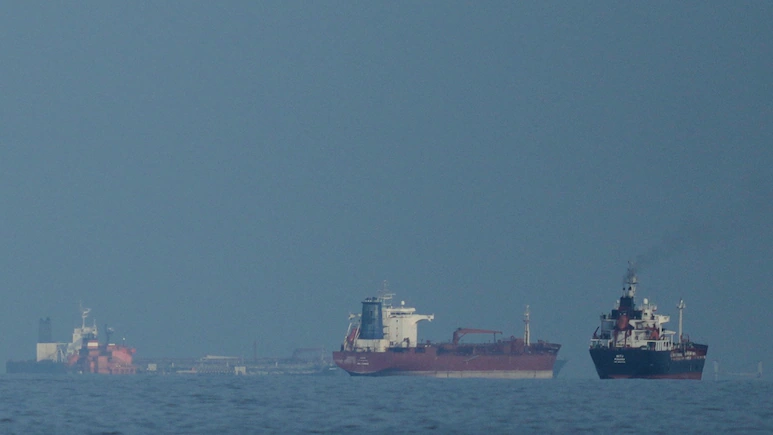
Washington: Tensions around the strategically important Strait of Hormuz remain high, with the United States maintaining a major naval presence in the Middle East while diplomatic efforts to ease the standoff with Iran continue behind the scenes.
More than 20 US warships are currently deployed across the region as part of Washington’s military operations against Iran, according to US Central Command (CENTCOM). The US military has also said that its forces have been enforcing a naval blockade and taking action against commercial vessels attempting to pass through the region.
In a post on X, CENTCOM said that US sailors aboard the USS Ross were among the forces involved in the ongoing operation. The command said that, as of August 9, US forces had redirected 55 commercial vessels, disabled two and boarded two others as part of efforts to enforce the blockade.
The announcement comes at a particularly sensitive moment for the region, with the Strait of Hormuz at the centre of the confrontation between Washington and Tehran.
The narrow waterway connects the Persian Gulf with the Gulf of Oman and the Arabian Sea and is one of the world’s most important routes for energy shipments. A significant share of global crude oil and natural gas normally passes through the strait, making any prolonged disruption a major concern for international energy markets and global trade.
Iran Sets Conditions for Reopening Hormuz
While the United States continues to maintain military pressure, Iran has indicated that it is working with Oman on arrangements for commercial shipping through the Strait of Hormuz.
Iranian officials have said that a potential agreement with Oman could establish new shipping lanes that would be used once the conditions for reopening the waterway are met.
However, Tehran has made it clear that reopening the strait fully will depend on the United States meeting several demands.
Iranian Foreign Minister Abbas Araqchi said Tehran and Washington are not engaged in direct negotiations. According to Iranian statements, communication between the two sides is instead taking place through intermediaries.
Araqchi said Iran would not enter into direct talks while Washington continues to violate an interim agreement reached in June.
He also said that Iran expects compensation for damage caused by US attacks before agreeing to fully restore normal commercial shipping through the strategic waterway.
Trump Says US Is Only “Semi-Negotiating”
Despite the continuing military confrontation, US President Donald Trump has suggested that some form of communication with Tehran is taking place.
In an interview with Axios, Trump described the situation as “semi-negotiating” and said the United States was taking a relatively low-key approach while watching Iran deal with severe economic difficulties.
Trump also pointed to Iran’s inflation and financial situation, suggesting that Washington believes economic pressure could influence Tehran’s position.
The contrasting statements from Washington and Tehran highlight the uncertainty surrounding any possible diplomatic breakthrough. While both sides appear to be communicating indirectly, neither has indicated that a comprehensive agreement is close.
Tehran Lists Key Demands
Iranian officials have laid out a series of conditions that they say must be addressed before the situation around the Strait of Hormuz can return to normal.
Among Tehran’s demands are an end to further US threats and military action against Iran, the removal of the US naval blockade in the Gulf and the lifting of sanctions imposed on Iran.
Iran has also called for the release of frozen Iranian assets and compensation for damage it says was caused by US military attacks.
Mohammad Baqer Zolqadr, secretary of Iran’s top national security body, also demanded that Washington stop what Tehran describes as aggression against Iran and its regional allies in Lebanon, Palestine, Yemen and Iraq.
The demands underline the wide gap that remains between the two sides.
Hormuz Remains at the Centre of the Crisis
The Strait of Hormuz has become one of the most important pressure points in the ongoing US-Iran confrontation. Any prolonged restriction on commercial traffic through the waterway could have consequences well beyond the Middle East, particularly for global oil and gas supplies.
Iran’s willingness to discuss new shipping arrangements with Oman suggests that Tehran may be looking for a controlled way to restore commercial movement. At the same time, its insistence on compensation, sanctions relief and an end to the US military blockade indicates that the country is not prepared to reopen the waterway without major concessions.
For Washington, maintaining a large naval force in the region demonstrates its determination to enforce the blockade and keep pressure on Tehran. For Iran, the continued restrictions around Hormuz remain a key bargaining tool.
With indirect messages still being exchanged and military forces remaining on alert, the possibility of a diplomatic solution remains open—but the two sides are still far from agreeing on the conditions needed to end the confrontation.
News source: Information for this article was gathered from a variety of reliable news outlets.