Miles for a Drop: Water Crisis Is Silently Destroying Women’s Health in Maharashtra’s Tribal Villages
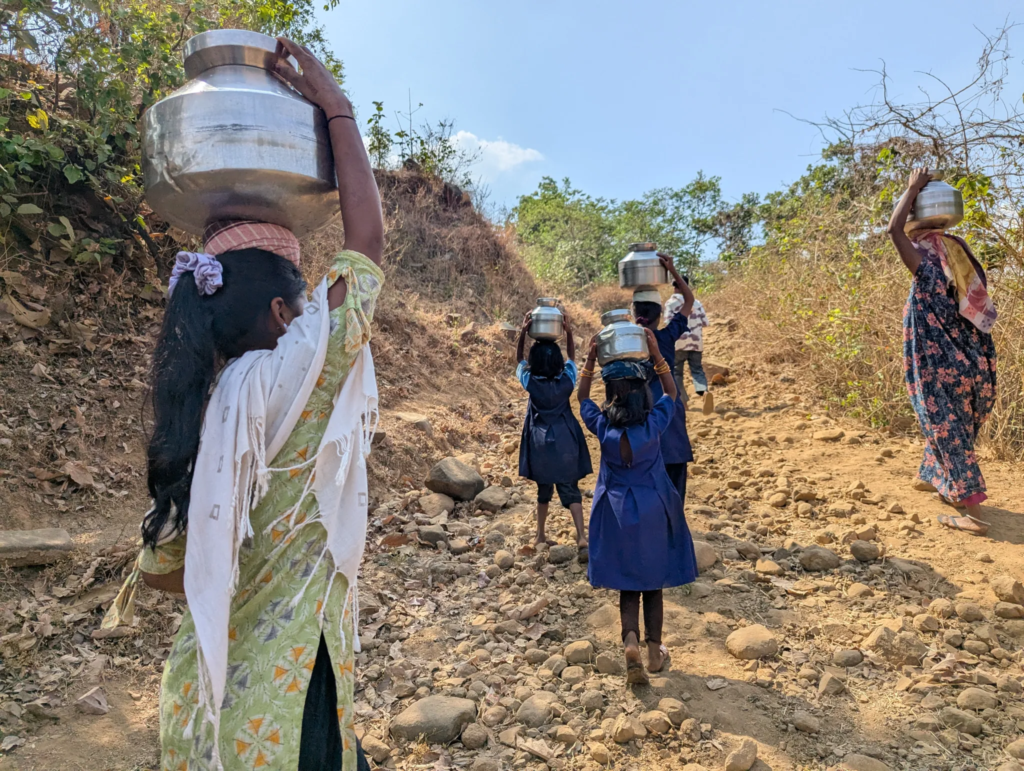
In the remote tribal hamlets of Maharashtra’s Nandurbar district, fetching water is not just a daily chore—it is a lifelong struggle that is leaving deep physical and emotional scars on generations of women.
Every afternoon, under the scorching summer sun, women and young girls trek several kilometres across rocky hills and steep slopes carrying empty pots in search of drinking water. Hours later, they return home balancing heavy containers filled with water on their heads, often carrying loads weighing up to 10 kilograms.
For many families living in the isolated villages of the Satpura ranges, this exhausting routine has continued for decades. But healthcare workers and doctors now warn that the burden is creating a serious public health crisis, particularly among women who begin carrying water from an early age and continue doing so throughout pregnancy and motherhood.
Women across dozens of tribal settlements report suffering from chronic pelvic pain, severe backaches, uterine prolapse, miscarriages, kidney stones, urinary infections, and other long-term health complications. Many believe years of carrying heavy water pots over difficult terrain have contributed significantly to these conditions.
Forty-year-old Bajubai Vadvi recalls fetching water since childhood. As she grew older, the weight she carried increased. Even during pregnancy, she had no option but to continue the physically demanding task because her family depended on her.
She says she suffered a miscarriage while still carrying water during pregnancy and later developed severe uterine prolapse. Despite experiencing constant pain and discomfort, she continued working because access to water remained a daily necessity.
Her story is far from unique. Across the region, women describe enduring similar health problems while having limited access to medical care. Many villages are located far from hospitals, forcing residents to rely on traditional healers and home remedies instead of professional treatment.
Health experts explain that years of strenuous physical labour, combined with malnutrition, anaemia, repeated pregnancies, poor menstrual hygiene, and inadequate healthcare access, significantly increase the risk of reproductive health disorders. Doctors warn that the cumulative impact often becomes visible only after years of silent suffering.
Adding to the challenge, women in several villages are forced to collect water from shallow pits, stagnant pools, and natural springs that are often shared with livestock. The poor quality of available water increases the risk of infections and other health complications.
Local health workers say most cases go unreported because many women never seek medical help. Instead, they continue living with pain, believing it to be an unavoidable part of life.
Social activists have repeatedly urged authorities to implement sustainable water solutions such as rainwater harvesting, groundwater recharge projects, and small check dams. Officials say efforts are underway, including groundwater mapping, spring rejuvenation projects, and a proposed Narmada-based drinking water scheme that could benefit hundreds of tribal settlements.
Government representatives have acknowledged that the issue extends far beyond water scarcity and has become a major public health concern. Authorities have promised to examine both the health impact on women and the broader social consequences, including school dropouts among girls who spend hours each day collecting water.
For the women of Nandurbar’s tribal belt, however, meaningful change cannot come soon enough. Until reliable water reaches their villages, countless women and girls will continue carrying not just water, but the weight of a crisis that is slowly affecting their health, education, and future.
News source: Information for this article was gathered from a variety of reliable news outlets.