“MBS Won’t Forget”: Trump’s Refusal to Strike Houthis Adds Strain to US-Saudi Ties
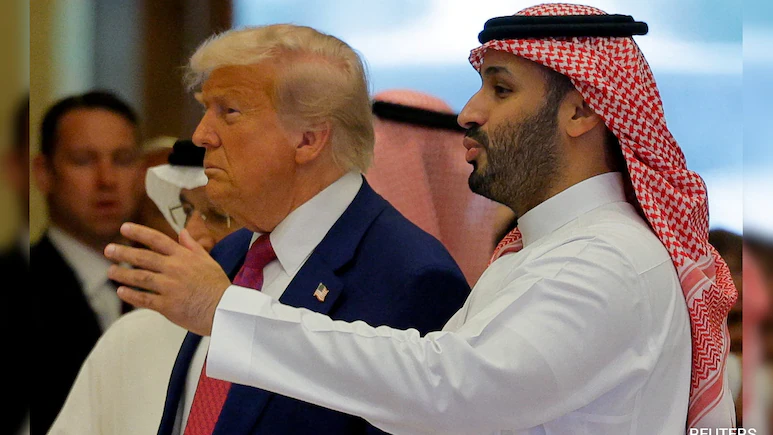
Saudi Arabia is facing an intensifying wave of attacks from Yemen’s Iran-aligned Houthi rebels, but Riyadh has so far not received the direct US military intervention it has requested.
US President Donald Trump has resisted launching a new US air campaign against the Houthis, despite Saudi requests for strikes against the group. The decision is adding another layer of tension to the already complicated relationship between Washington and Riyadh.
The Houthis have stepped up attacks on Saudi territory, including missile and drone strikes, while also targeting energy infrastructure and shipping. At the same time, the group has made territorial gains along Yemen’s Red Sea coast, strengthening its position near the Bab el-Mandeb Strait, one of the world’s important maritime routes.
For Saudi Crown Prince Mohammed bin Salman (MBS), the renewed conflict comes at a sensitive time. Riyadh has spent years trying to reduce its involvement in Yemen while focusing on transforming Saudi Arabia into a major hub for business, tourism and international trade.
Why Is Trump Holding Back?
The Trump administration is already dealing with a wider regional conflict, pressure over fuel prices and the political costs of continued US military involvement in the Middle East.
US military resources have also been stretched by ongoing operations in the region, according to US media reports cited by the Financial Times. The administration therefore appears reluctant to open another sustained military front against the Houthis.
Washington has not completely stepped away from Saudi Arabia, however.
The US continues to provide weapons, intelligence and air-defence support to Riyadh. The Trump administration has also approved a potential $24.3 billion sale of F-35 fighter jets to Saudi Arabia, although those aircraft would take years to be delivered.
The distinction is important: Saudi Arabia continues to receive American military support, but Washington has so far declined to directly join Saudi offensive operations against the Houthis.
“MBS Will Not Forget This”
The latest disagreement could have consequences for the relationship between Trump and Mohammed bin Salman.
Retired Lieutenant General Karen Gibson, formerly director of intelligence at US Central Command, told the Financial Times: “MBS will not forget this.” She argued that Washington’s position demonstrates that the US may not necessarily enter a conflict whenever Saudi Arabia considers its vital interests to be under threat.
Another regional analyst quoted by the Financial Times said there was frustration in Riyadh but also recognition that the US-Saudi relationship remains strategically important.
Mona Yacoubian, director of the Middle East Program at the Center for Strategic and International Studies, said Washington’s decision was creating additional uncertainty in Riyadh about the role the US can be relied upon to play.
Saudi Arabia Pulled Back Into Yemen Conflict
The renewed Houthi offensive has brought Saudi Arabia back into a conflict it had spent years trying to move away from.
The Houthis ended a four-year truce and declared a blockade on Saudi ports in July. Since then, they have attacked Saudi targets with missiles and drones while advancing along Yemen’s Red Sea coast.
Saudi-backed forces have faced setbacks in the region, while Houthi gains around the Red Sea have increased concerns over the security of the Bab el-Mandeb Strait, through which significant international trade passes.
The situation has also contributed to wider concerns over global energy supplies and shipping routes, particularly because the region is simultaneously dealing with disruptions around the Strait of Hormuz.
US Still Maintaining a Role
Despite refusing to launch the requested air campaign, Washington has continued to maintain security ties with Riyadh.
The US has also held talks with the Houthis through Oman. A Houthi official told the Associated Press that the group would target Saudi vessels but would not attack US or other international ships. Trump has similarly said the Houthis agreed not to target American interests.
The US position was also described differently by Secretary of State Marco Rubio, who said Washington would stand with Saudi Arabia under its commitments while acknowledging the complexity of the Yemen conflict.
Meanwhile, other countries are stepping forward with support. The UK has agreed to provide Saudi Arabia with limited defensive air-to-air refuelling assistance following a formal request from Riyadh. Turkey has also said it is prepared to help meet Saudi military needs under its defence arrangements with the kingdom and Pakistan.
A Relationship Under Pressure
The latest dispute adds to a US-Saudi relationship that has seen both close cooperation and moments of friction during Trump’s presidency.
Saudi Arabia remains an important American security and economic partner, but Riyadh has also been diversifying its relationships with other countries as it seeks greater strategic independence.
Analysts quoted by the Financial Times said the current tensions could accelerate that process, potentially prompting Saudi Arabia to look more closely at alternative security partnerships.
For now, the key question is whether Washington’s limited role will remain temporary or become a broader shift in how the US approaches Saudi Arabia’s security concerns. With the Houthi offensive continuing and vital shipping routes under pressure, the answer could have consequences far beyond the US-Saudi relationship.
News Source : Information for this article was gathered from a variety of reliable news outlets.