PM Modi Appeals to All Parties to Back Women’s Reservation in Parliament
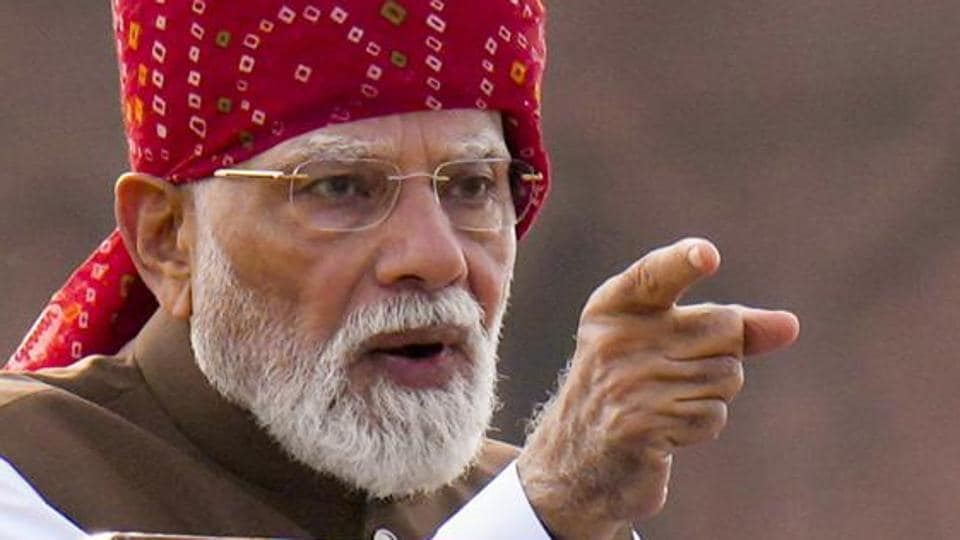
On Independence Day, Prime Minister Narendra Modi urged political parties to come together and support the proposal for 33% reservation for women in Parliament and state assemblies, saying the time has come to ensure greater representation of women in Indian politics.
New Delhi:
Prime Minister Narendra Modi used his Independence Day address on Saturday to make a fresh appeal for greater political representation for women, urging all political parties to support the proposed legislation providing 33% reservation for women in the Lok Sabha and state legislative assemblies.
Speaking from the Red Fort, Modi described women’s reservation as “the call of the hour” and appealed to political parties to come together and help move the proposal forward.
“I appeal to all parties to support and take credit for it,” the Prime Minister said, stressing that the issue should rise above political differences.
The proposal is part of the Constitution (One Hundred and Thirty-First Amendment) Bill, which seeks to introduce one-third reservation for women in elected legislatures. Under the proposal, the strength of the Lok Sabha would be increased, with the number of seats rising from the existing 543 to 815. Of these, 272 seats would be reserved for women.
The proposal also involves delimitation of constituencies using data from the 2011 Census.
Government Seeks Earlier Implementation
The latest proposal comes after Parliament passed the Nari Shakti Vandan Adhiniyam in 2023. That legislation provided for one-third reservation for women in the Lok Sabha and state assemblies, but its implementation was linked to the completion of a census and subsequent delimitation exercise.
The government is now seeking to bring forward the implementation of women’s reservation, with the latest proposal aimed at making the reservation effective from 2029.
The issue has therefore become an important political subject, particularly as parties discuss the future structure and representation of the Lok Sabha.
During the recent Monsoon Session of Parliament, which concluded on August 13, senior BJP leaders reportedly reached out to several opposition parties, including the Congress, in an effort to build support for the proposed legislation.
Bill Faced Hurdle in Parliament
The proposed constitutional amendment had faced a major hurdle during an earlier parliamentary session.
In April, the bill did not secure the required two-thirds majority in the Lok Sabha. Of the 528 members present, it needed the support of at least 352 MPs to clear the constitutional amendment requirement.
The government has since continued efforts to gather broader political support.
The Prime Minister’s Independence Day appeal appears to be part of that effort, with Modi calling on political parties to support the legislation rather than allowing political disagreements to prevent its passage.
Opposition Questions Government’s Approach
While opposition parties have broadly expressed support for women’s reservation, there is disagreement over how and when it should be implemented.
Trinamool Congress MP Sagarika Ghose criticised the Prime Minister’s appeal, arguing that women’s reservation should be implemented immediately rather than being linked to a future delimitation exercise.
Ghose said the existing 543-member Lok Sabha should itself have one-third of its seats reserved for women without waiting for an increase in the size of the House.
She also questioned whether the proposed delimitation exercise could have wider political consequences, particularly by changing the distribution of Lok Sabha seats among states.
The Congress has similarly maintained that it supports women’s reservation but wants the quota to be implemented immediately.
Congress Rajya Sabha chief whip Jairam Ramesh reiterated the party’s position, saying Congress supports one-third reservation for women and wants it implemented in the existing 543-member Lok Sabha.
A Long-Standing Demand for Greater Representation
Women’s representation in Indian politics has been debated for decades. Supporters of the reservation argue that a fixed quota could help bring more women into legislative bodies and provide them with a stronger voice in policymaking.
The 2023 Nari Shakti Vandan Adhiniyam was seen as a significant step towards that goal, but its implementation was tied to future census and delimitation exercises.
The latest proposal seeks to change the timeline and make the reservation effective earlier.
The government’s plan to expand the Lok Sabha to 815 seats would also significantly alter the composition of the House. With 272 seats reserved for women under the proposal, the number of women MPs could increase substantially.
However, the proposed changes have also sparked a broader debate over delimitation, regional representation and the balance of parliamentary seats between different parts of the country.
Modi Calls for Political Consensus
For the government, the challenge now is to build sufficient political consensus to pass the constitutional amendment.
Modi’s Independence Day appeal was therefore not simply a call for women’s representation but also an invitation to opposition parties to participate in the process.
By asking political parties to support the proposal and “take credit” for it, the Prime Minister sought to present women’s reservation as an issue that should be collectively owned rather than treated as the achievement of any one political party.
The opposition, meanwhile, has made it clear that while it supports the principle of reservation, it wants clarity on the implementation timeline and has raised concerns about linking the quota with delimitation.
The debate is now expected to intensify as the government works to secure the numbers required for the constitutional amendment.
At the heart of the discussion is a common question: how quickly can India move towards giving women one-third representation in its elected legislatures, and should that process wait for a larger Lok Sabha and a fresh delimitation exercise?
With the Prime Minister making the issue a prominent part of his Independence Day address, women’s reservation is once again set to become a major political debate in Parliament.
News source: Information for this article was gathered from a variety of reliable news outlets.