22 Death Sentences in 10 Cases: Inside the UP Judge’s Crackdown on Crime
Muzaffarnagar, Uttar Pradesh: In just four months, an Uttar Pradesh fast-track court has delivered a series of unusually tough verdicts, sentencing 22 people to death in 10 separate cases.
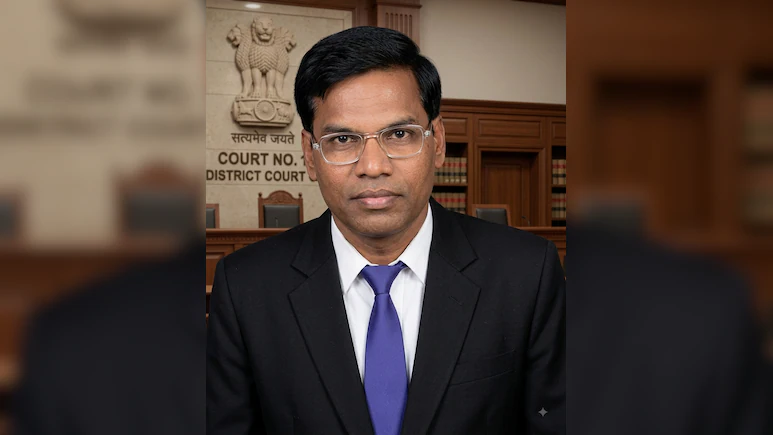
At the centre of this string of judgments is Additional District and Sessions Judge Ravi Kumar Diwakar, who has been serving in Muzaffarnagar since November 2025. The judge is not new to the spotlight. He previously made national headlines in 2022 after ordering a videography survey of the Gyanvapi complex in Varanasi.
Now, his recent judgments have once again drawn attention because of the sheer number of capital punishment verdicts delivered in a relatively short period.
Judge Diwakar, 46, is from Lucknow. He began his judicial career in 2009 as an additional civil judge in Azamgarh. He later served in Sultanpur and was elevated to the position of judicial magistrate in 2015. He holds a BCom degree as well as an LLM.
Here is a look at the major cases in which his court handed down death sentences in recent months.
Four sentenced to death in 12-year-old murder case
On August 13, Judge Diwakar sentenced four men—Ramvir, Rajiv, Rahul and Harender Kumar—to death for the murder of Pawan Kumar.
The case dates back to July 14, 2014, when the accused allegedly entered Pawan Kumar’s home in Shamli district and opened fire. The attack was reportedly linked to an old rivalry.
Pawan Kumar was killed, while his brother, Ashok Kumar, was injured in the shooting.
The court also imposed a fine of Rs 1.70 lakh on the four convicts.
Death penalty in a murder committed nearly 27 years ago
Just a day earlier, on August 12, the court sentenced Shahnawaz to death for the kidnapping and murder of wood trader Saleem.
The crime happened in 1999. According to the prosecution, Saleem was kidnapped for a ransom of Rs 5 lakh before being taken to a jungle in Chapar, where he was allegedly killed by having his throat slit.
It took nearly three decades for the case to reach this stage.
Four men sentenced to death for 2011 farmer murder
On July 17, four men were handed the death penalty for the murder of farmer Raj Singh, who was killed during an attempted robbery in Shamli district in 2011.
Raj Singh was riding a motorcycle with his friend Bijendra on August 20 that year when they were allegedly stopped by armed assailants.
When Raj Singh resisted the robbery, he was shot dead. Bijendra was reportedly tied up and thrown into a nearby sugarcane field.
Former village head and associate receive death sentences
On July 6, the court sentenced former village head Pramod and his associate Sahdev to death for the 2010 murder of Rajbir Singh.
The 60-year-old victim was allegedly killed because of hostility linked to village panchayat elections.
The judge described the case as falling within the “rarest of rare” category, the legal standard used in India for imposing the death penalty.
Death penalty for killing a home guard
On July 2, Judge Diwakar sentenced Deepak to death for killing home guard Ratiram while he was on duty.
The incident took place on June 4, 2020. According to the case presented in court, Ratiram intervened after Deepak allegedly assaulted his mother.
The confrontation turned deadly, with Deepak stabbing the home guard.
The court concluded that the circumstances justified the maximum punishment.
Two receive death sentences for murder
On June 20, Gajendra and Ramkiran were sentenced to death for the murder of Rajendra Saini.
Once again, the court found that the circumstances of the crime met the “rarest of rare” threshold for capital punishment.
50-year-old sentenced to death in double murder
On May 30, the court sentenced Rahis, a 50-year-old man, to death for the murders of Rajesh Devi and her six-year-old son, Himanshu.
The case dates back to November 2011.
According to the prosecution, Rahis took the woman and her child to a sugarcane field following an argument and allegedly killed them by repeatedly striking them with bricks. Their bodies were discovered several days later.
The court considered the crime serious enough to warrant the death penalty.
Woman and three sons sentenced to death
On April 28, a woman and her three sons were sentenced to death in connection with a 2019 murder case.
The case is among the judgments contributing to the striking figure of 22 death sentences handed down by the court over the four-month period.
Three sentenced to death for lawyer’s kidnapping and murder
Earlier, on April 6, the court sentenced three people to death for the kidnapping and murder of lawyer Mohammad Sameer.
According to the prosecution, Sameer was kidnapped on October 15, 2019, over a financial dispute involving Rs 45 lakh.
Investigators later recovered his body from a forest area in Sikri village after the accused allegedly disposed of it at another location.
A striking number—but not the end of the legal process
The 22 death sentences have attracted considerable attention, but a death sentence handed down by a trial court does not automatically mean that the convict will be executed.
Under Indian law, a death sentence awarded by a sessions court must be confirmed by the High Court. The accused can also challenge their conviction and sentence through the higher courts and, ultimately, seek further legal remedies.
That distinction is important when looking at the headline figure of 22 death sentences. These are trial-court verdicts, not 22 executions.
Still, the number of capital punishment verdicts delivered by one court in such a short period is striking. The cases range from murders committed years ago to crimes involving robbery, kidnapping, personal rivalries and attacks on people performing their duties.
For the families of the victims, these verdicts may represent a long-awaited moment of accountability after years of waiting for justice. For the convicted individuals, however, the legal battle does not necessarily end with the trial court’s judgment.
The recent decisions have therefore put Judge Ravi Kumar Diwakar and his Muzaffarnagar court firmly in the national spotlight, while also renewing the wider debate around India’s death penalty and the circumstances in which courts consider a crime to be among the “rarest of rare.”
News Source : Information for this article was gathered from a variety of reliable news outlets.