Vantara’s Assam Rescue Centre Plan Faces Opposition From Wildlife Conservationists
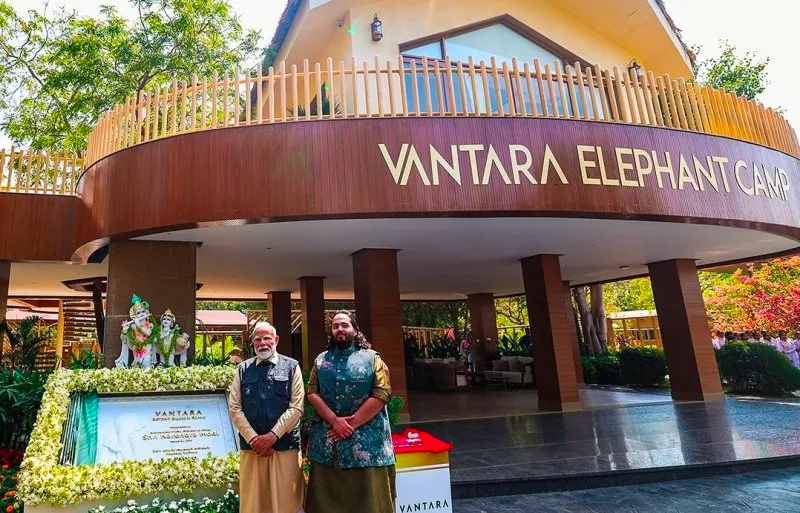
Greens Zoological Rescue & Rehabilitation Center (GZRRC), popularly known as Vantara, is managed by Anant Ambani, the youngest son of Reliance Industries Chairman Mukesh Ambani.
Guwahati: Vantara’s proposal to establish three wildlife rescue and rehabilitation centres in Assam has triggered a debate among wildlife experts and conservationists. The proposal, submitted by the Reliance-backed wildlife facility in Jamnagar, includes a dedicated centre for Asian elephants.
The Assam government is currently examining the proposal, but several wildlife activists have raised questions about the plan, particularly over the transfer of animals, transparency, veterinary facilities and the growing involvement of private organisations in wildlife rescue and rehabilitation.
Vantara is managed by Anant Ambani, son of industrialist Mukesh Ambani. The proposal was submitted to Assam’s Environment, Forest and Climate Change Department on August 12.
Conservationists question the role of private facilities
Wildlife activist and environment journalist Mubina Akhtar said Assam certainly needs stronger rescue and rehabilitation facilities, but she questioned whether such responsibilities should be handed over to private organisations.
She pointed out that rescue centres and zoos are covered under the Wildlife (Protection) Act and must follow legal standards related to animal housing, hygiene and veterinary care. However, she stressed that rescue centres have a different purpose from traditional zoos.
According to Akhtar, rescue centres are meant to care for and rehabilitate animals and are not supposed to function as places for public exhibition.
She also raised concerns about the way rescued animals have allegedly been accessed or displayed in the past. She argued that rescued wildlife belongs to the government and questioned whether private facilities should have such a significant role in deciding how these animals are housed, moved or displayed.
Assam needs better wildlife veterinary care
Akhtar said the bigger issue for Assam is the lack of a strong wildlife veterinary system.
The state has a large and diverse wildlife population and regularly faces human-animal conflicts, wildlife injuries and disease-related emergencies. However, according to her, Assam does not have a dedicated wildlife veterinary cadre within the Forest Department.
She believes the government should focus on creating a specialised team of wildlife veterinarians instead of becoming dependent on private facilities.
“A robust veterinary ecosystem” is urgently needed, she argued, particularly because wildlife emergencies can require immediate treatment and specialised expertise.
Elephant transfers remain a major concern
One of the biggest concerns raised by conservationists is the movement of elephants from Assam and other parts of the Northeast to facilities in Gujarat.
Akhtar questioned why healthy elephants, including young animals, have reportedly been moved away from their natural habitats. She argued that elephants are long-ranging animals and that shifting them to a completely different geographical and climatic environment can have serious consequences.
She also questioned the justification for transferring elephants that were not necessarily in urgent need of rescue or medical treatment.
According to her, every such transfer should have a clear conservation purpose and should be properly documented.
She referred to cases involving elephants from Arunachal Pradesh and said the large number of elephants reportedly kept at the Jamnagar facility deserves greater public scrutiny.
Activists demand transparency
Another major demand from conservationists is greater transparency in the movement of wildlife from Assam to Vantara.
Akhtar alleged that animals rescued or seized in the Northeast have been transferred to the Jamnagar facility through animal exchange programmes. She called on the Assam government and the state zoo to publicly disclose which animals are being transferred, where they are going and why such transfers are necessary.
She also urged the government to publish a detailed white paper before approving Vantara’s proposal.
The document, she said, should clearly explain the proposed locations of the centres, the species they would handle, their infrastructure, veterinary arrangements, operating procedures and the reasons for involving Vantara.
‘Why does Assam need another centre?’
Wildlife activist Devojit Moran also opposed the proposal.
Moran argued that Assam already has experience in wildlife rescue and rehabilitation and pointed to the work being carried out by the Wildlife Trust of India in the Kaziranga region.
Instead of creating another private facility, he said, the government should strengthen existing rescue infrastructure and provide it with better equipment, staff and veterinary support.
He also expressed concern about the alleged movement of elephants from Assam and Arunachal Pradesh to Gujarat and said the state should not approve a new facility if it could eventually lead to more wildlife being transferred out of the Northeast.
Some experts see potential benefits
Not all conservationists have rejected the proposal outright.
Assam wildlife conservationist Jayanta Kr Das said new rescue and rehabilitation centres could be useful for the state and the wider Northeast, provided they genuinely strengthen conservation efforts in the region.
However, he stressed that the centres should not become a route for sending more wildlife to Vantara’s facility in Gujarat.
Das acknowledged Vantara’s contribution to wildlife conservation and its modern infrastructure but said questions remain over how animals have been transported from different parts of India.
He said the proposal could be welcomed if the centres are used primarily to address Assam’s own wildlife rescue needs rather than facilitating the movement of animals away from their natural habitats.
The bigger question
Assam is home to some of India’s most important wildlife populations, including Asian elephants, one-horned rhinos and several other protected species. With frequent human-wildlife conflicts and increasing pressure on natural habitats, the state undoubtedly needs strong rescue, treatment and rehabilitation facilities.
The disagreement is therefore not simply about whether Assam needs more rescue centres. The larger question is who should operate them, how transparent their operations will be and whether rescued animals will remain within the region or be transferred elsewhere.
For now, the Assam government is examining Vantara’s proposal. Its eventual decision is expected to receive close attention from wildlife experts, conservation groups and the public, particularly because of the concerns surrounding animal transfers and private participation in wildlife conse
News source: Information for this article was gathered from a variety of reliable news outlets.