US Prepared for Strikes on Houthis After Saudi Appeal, But Trump Reversed Course at the Last Moment
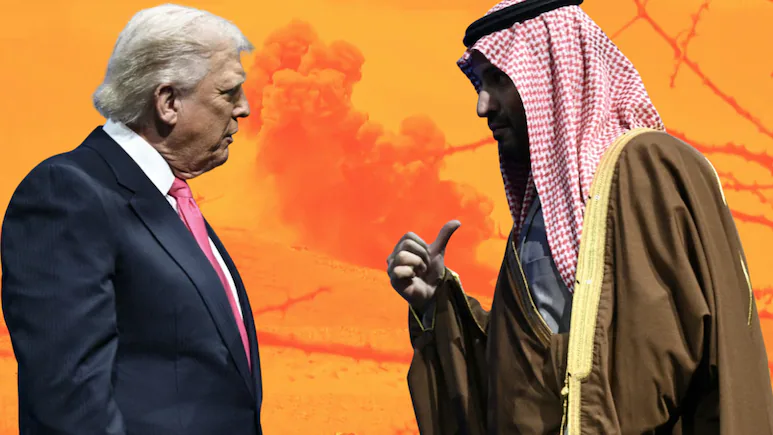
WASHINGTON: The United States reportedly came close to launching a fresh military operation against Yemen’s Iran-backed Houthi movement after Saudi Crown Prince Mohammed bin Salman appealed directly to President Donald Trump for help.
According to a report by The New York Times, US military preparations had progressed significantly. Commanders had reportedly approved target lists, weapons were being loaded onto aircraft and troops were preparing for a potential wave of strikes against Houthi positions in Yemen.
But before the operation could begin, Trump changed course.
The reported reversal highlights the difficult position facing Washington as Saudi Arabia comes under increasing pressure from Houthi attacks, while the Trump administration seeks to avoid opening another major military front in an already volatile Middle East. Recent reporting has also described Saudi requests for greater US support as Houthi forces expand their presence along Yemen’s Red Sea coast.
MBS makes another appeal to Trump
The issue reportedly intensified after Crown Prince Mohammed bin Salman, widely known as MBS, contacted Trump and urged Washington to intervene against the Houthis.
Saudi Arabia has been fighting to contain the Houthi advance in Yemen while also dealing with attacks on its territory and critical infrastructure.
According to earlier reporting by Axios, MBS called Trump twice on September 10 and asked the US president to launch strikes against the Houthis as the group advanced toward strategically important areas near the Red Sea. Trump initially declined direct military intervention, while Washington continued providing support such as intelligence and targeting information.
The situation has since become more serious for Riyadh. Houthi forces have expanded their attacks into Saudi territory, while Saudi-backed forces have continued military operations against Houthi positions in Yemen.
From hesitation to military preparations
The latest report suggests that Trump’s position changed after his conversation with the Saudi crown prince.
Trump had reportedly told advisers shortly before the call that he was not inclined to become directly involved in the fighting between Saudi Arabia and the Houthis.
After speaking with MBS, however, the president reportedly instructed Pentagon officials to prepare for possible strikes.
The preparations apparently moved well beyond an initial planning stage.
According to the report, military commanders had identified and approved targets, while US personnel were preparing aircraft and loading munitions for the proposed operation.
The apparent decision to proceed was nevertheless short-lived.
By Sunday, Trump had again changed his position, and US officials indicated that there would be no American airstrikes against the Houthis, at least for the time being.
Why did Trump pull back?
The precise reason for Trump’s reversal has not been publicly established.
A senior US official said Washington has a defence relationship with Saudi Arabia and would continue to support its allies. At the same time, other officials have reportedly expressed concern about committing American forces to another conflict while the US military is already heavily engaged in the wider confrontation involving Iran.
The administration has also stressed that its immediate interests include protecting freedom of navigation and maintaining stability around the Red Sea, while allowing regional partners to take the lead in dealing with the broader Yemen conflict.
That approach would allow Washington to continue supporting Saudi Arabia without necessarily committing American forces to a new large-scale air campaign.
Houthis say they do not want a fight with the US
Adding another layer to the situation, Trump has said that the Houthis have communicated that they do not want to fight the United States.
Trump told Fox News that Washington remains in communication with the group and that the Houthis have agreed not to attack American forces.
He had made a similar statement during a visit to Ireland on September 12, saying that the Houthis did not want the US to become directly involved in the conflict.
A senior Houthi official has also said the group does not intend to target US vessels, while warning other countries against joining Saudi Arabia’s military campaign. The Houthis and the US have previously relied on Oman-mediated communication, and the two sides have reaffirmed a 2025 ceasefire arrangement.
Saudi Arabia faces growing pressure
While Washington has held back from direct military intervention, Saudi Arabia’s security situation has continued to deteriorate.
The Houthis have expanded their military activity against Saudi territory, with missile and drone attacks reported around several locations.
On September 19, the Houthis claimed responsibility for attacks targeting sensitive sites around Riyadh and an Aramco facility in Yanbu. Saudi authorities said a missile aimed at Riyadh was intercepted and reported that additional attacks against other locations were thwarted.
Earlier attacks also prompted warnings in several Saudi cities. According to the Institute for the Study of War, Saudi authorities reported multiple missile and drone attacks during the escalation, with civilian injuries and property damage reported in some incidents.
Houthi advances in Yemen add to the pressure
The situation is not limited to attacks across the Saudi border.
Houthi forces have been expanding their control over strategically important territory in Yemen, including areas along the Red Sea coast and near the Bab al-Mandeb Strait, a crucial maritime route connecting the Red Sea with the Gulf of Aden.
Their territorial gains have increased concerns about the security of commercial shipping and Saudi Arabia’s oil-export routes.
Saudi-backed Yemeni forces have responded with airstrikes and other military operations aimed at preventing the Houthis from consolidating their new positions.
The escalation has also contributed to a wider humanitarian crisis, with tens of thousands of Yemenis reportedly displaced as fighting has intensified.
Washington faces a difficult balancing act
The latest developments put the Trump administration in a complicated position.
Saudi Arabia is a longstanding US security partner and has repeatedly sought greater American assistance as Houthi attacks intensify.
At the same time, direct US military action against the Houthis could open another front in a region already affected by the conflict involving Iran, disruptions around the Strait of Hormuz and instability along the Red Sea.
Recent reporting has described the US approach as one of supporting Saudi Arabia with intelligence, targeting information and other forms of assistance while avoiding direct combat against the Houthis.
What happens next?
For now, the US has not publicly committed to a new campaign of airstrikes against Houthi targets.
The situation remains fluid, however, as Saudi Arabia continues to face attacks and Houthi forces maintain pressure along Yemen’s Red Sea coast.
Trump has also continued to make statements about the broader Iran conflict, while saying that significant decisions regarding the region could be forthcoming.
For Saudi Arabia, the immediate challenge is dealing with Houthi attacks while seeking international support. For Washington, the question is how far it will go in supporting its ally without becoming directly drawn into another military campaign.
The reported last-minute cancellation of the planned strikes shows just how quickly US policy can shift as the wider Middle East conflict continues to evolve.
News source: Information for this article was gathered from a variety of reliable news outlets.