Trump Welcomes PM Modi’s Anti-Opium Efforts as India Appears on US ‘Major Drug’ List
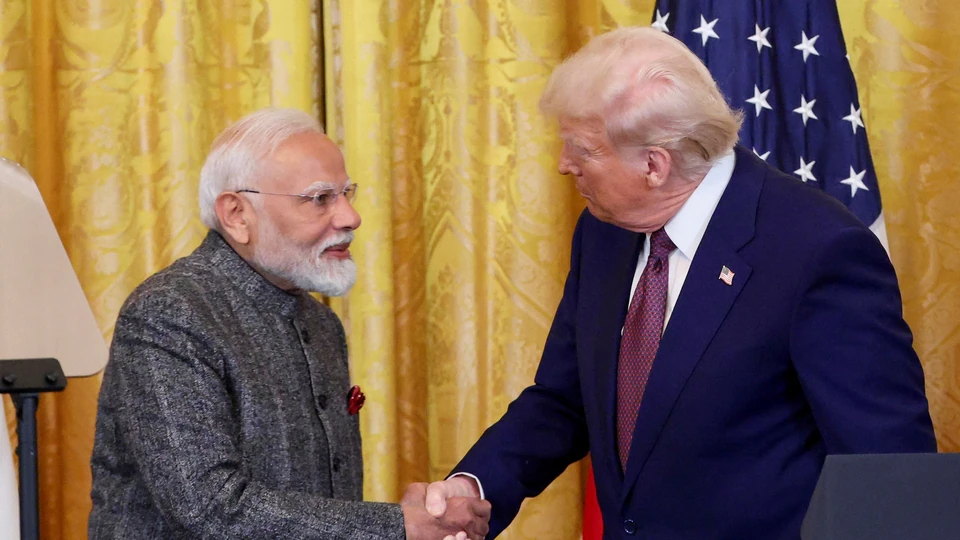
New Delhi: US President Donald Trump has welcomed Prime Minister Narendra Modi’s efforts to tackle illicit opium poppy cultivation in India, even as Washington has included India among 23 countries designated as major drug transit or major illicit drug-producing countries for fiscal year 2027.
In an official statement, the Trump administration said it welcomed the Indian government’s efforts to address illegal opium cultivation and strengthen the integrity of supply chains. Trump also said he looked forward to continued cooperation with India under the United States-India Drug Policy Framework.
The development has drawn attention because India’s inclusion on the US list comes alongside an explicit acknowledgement from Trump of the steps being taken by the Modi government against illicit opium cultivation.
The US designation, however, does not automatically mean that a country’s government has failed to control illegal drugs. The White House clarified that countries can be placed on the list because of a combination of geographic, commercial and economic factors that make them locations through which drugs or precursor chemicals may be produced or transported. The designation itself is therefore separate from an assessment that a government has failed in its counter-narcotics responsibilities.
India among 23 countries on the US list
For fiscal year 2027, the United States has identified 23 countries as major drug transit or major illicit drug-producing countries. The list includes India, Pakistan and China, along with Afghanistan, The Bahamas, Belize, Bolivia, Burma, Colombia, Costa Rica, the Dominican Republic, Ecuador, El Salvador, Guatemala, Haiti, Honduras, Jamaica, Laos, Mexico, Nicaragua, Panama, Peru and Venezuela.
The list is intended to identify countries that are considered significant in the production or movement of illicit drugs or related precursor chemicals affecting the United States.
India’s presence on the list is not a new development. The country has appeared on US major drug-producing or drug-transit lists in previous years as well. The current designation therefore needs to be understood as part of a longer-running US counter-narcotics framework rather than as a new finding that India has suddenly failed in its anti-drug efforts.
Four countries singled out over counter-narcotics efforts
While 23 countries were named in the latest determination, the US specifically identified Afghanistan, Bolivia, Burma and Colombia as having “failed demonstrably” during the previous 12 months to make substantial efforts to meet their obligations under international counter-narcotics agreements.
India was not included in that separate group.
This distinction is significant because the two parts of the US announcement address different issues: one identifies countries connected to the production or transit of illicit drugs, while the other identifies countries Washington says have failed to take substantial counter-narcotics measures.
Trump highlights US anti-drug campaign
In the same announcement, Trump highlighted what his administration described as progress in combating drug trafficking and narcoterrorism in the United States.
Trump pointed to tighter border security, changes in drug seizures and a reported decline in overdose deaths as part of his administration’s broader counter-drug campaign. The White House has also made disrupting international drug supply chains a major element of its 2026 National Drug Control Strategy.
The administration has said its strategy focuses on disrupting illicit drugs and precursor chemicals at multiple stages of the supply chain, while also strengthening domestic enforcement and prevention efforts.
Trump also claimed that drug seizures at the US southern border had fallen by more than half and that overdose deaths had declined significantly. These figures and the administration’s broader assessment form part of the White House’s own description of its counter-narcotics record.
India-US cooperation on drug control
The latest statement also underlines the growing focus on counter-narcotics cooperation between India and the United States.
Earlier in 2026, officials from both countries held the inaugural meeting of the US-India Drug Policy Executive Working Group in Washington. The meeting focused on strengthening cooperation against illegal drug production and trafficking, precursor chemicals and the diversion of substances into illicit channels.
The two countries have also been working on a broader drug policy framework covering illicit drug trafficking, precursor chemicals and pharmaceutical supply-chain security. The framework was designed to expand cooperation between the two governments while addressing both enforcement and public-health concerns.
Against this backdrop, Trump’s latest remarks signal that Washington intends to continue working with New Delhi on counter-narcotics issues, particularly efforts aimed at preventing illegal opium cultivation and strengthening supply-chain controls.
For India, the US designation and Trump’s positive remarks therefore represent two connected but distinct developments: Washington continues to classify India among countries relevant to the global illicit-drug supply chain, while simultaneously acknowledging the Indian government’s efforts to tackle illegal opium cultivation and expressing interest in deeper cooperation on drug policy.
News source: Information for this article was gathered from a variety of reliable news outlets.