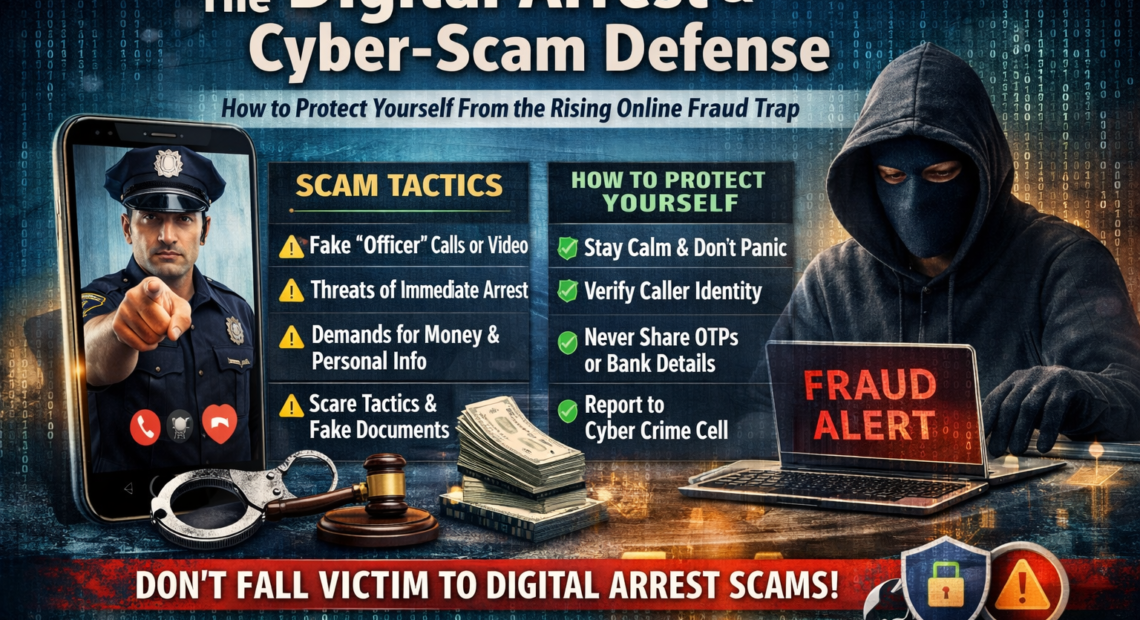
The Digital Arrest & Cyber-Scam Defense: How to Protect Yourself From the Rising Online Fraud Trap
In today’s hyper-connected world, cybercriminals are constantly inventing new ways to deceive people. One of the latest and most alarming trends is the “digital arrest” scam, where fraudsters impersonate law enforcement officers or government officials to scare victims into transferring money or sharing sensitive information. As cyber fraud continues to rise, understanding how these scams work and learning how to defend against them has become more important than ever.
What Is a Digital Arrest Scam?
A digital arrest scam typically begins with a phone call, video call, or message from someone claiming to represent a government agency, police department, or investigative authority. The caller may accuse the victim of being involved in illegal activities such as money laundering, drug trafficking, or financial fraud.
To make the threat appear real, scammers often use official-sounding language, fake documents, forged identification cards, or even staged video calls showing people dressed as officers. They then claim the victim is under “digital arrest” and must remain on call while cooperating with the investigation.
The fraudsters pressure victims to transfer money for “verification,” “bail,” or “case settlement.” In some cases, victims are asked to share bank details, OTPs, or personal identification information.
Why These Scams Are Effective
Digital arrest scams rely heavily on fear, urgency, and authority. By posing as law enforcement or government officials, scammers manipulate victims into believing they must comply immediately.
Many victims panic when they hear accusations of serious crimes, making them more vulnerable to following instructions without verifying the claims. The use of sophisticated technology such as spoofed phone numbers, fake video calls, and forged documents makes the scam appear convincing.
Common Warning Signs
Several red flags may indicate a digital arrest or cyber-scam attempt:
- Calls claiming you are involved in a crime without prior official notice
- Demands for immediate payment to avoid arrest
- Requests for bank details, OTPs, or confidential information
- Pressure to stay on the call and avoid contacting anyone else
- Threats of legal action if instructions are not followed immediately
Legitimate law enforcement agencies do not conduct investigations through video calls or demand payments over phone calls.
How to Protect Yourself
To defend against cyber scams and digital arrest fraud, individuals should follow some key precautions:
Stay calm and do not panic. Scammers rely on fear to manipulate victims.
Never share sensitive information. Avoid revealing OTPs, bank details, or identity documents to unknown callers.
Verify the caller’s identity. If someone claims to represent a government authority, contact the official department through verified channels.
Do not transfer money under pressure. Legitimate authorities do not demand payments to “close cases.”
Report suspicious activity. If you receive such calls, report them immediately to local cybercrime authorities or national cybercrime portals.
The Growing Need for Cyber Awareness
As digital technology becomes more integrated into everyday life, cybercrime is evolving at a rapid pace. Scams like digital arrest fraud highlight the urgent need for greater cyber awareness, digital literacy, and stronger security practices.
Governments, law-enforcement agencies, and technology companies are working to combat online fraud, but public awareness remains the first line of defence.
In the digital age, staying informed and cautious can make the difference between becoming a victim of cybercrime and successfully avoiding it.
News Source: Information for this article was gathered from a variety of reliable news outlets.