Swatantra Bhardwaj’s Hour-Long Podcast Raises Fresh Questions Over Hate-Filled Remarks and Assault Claims
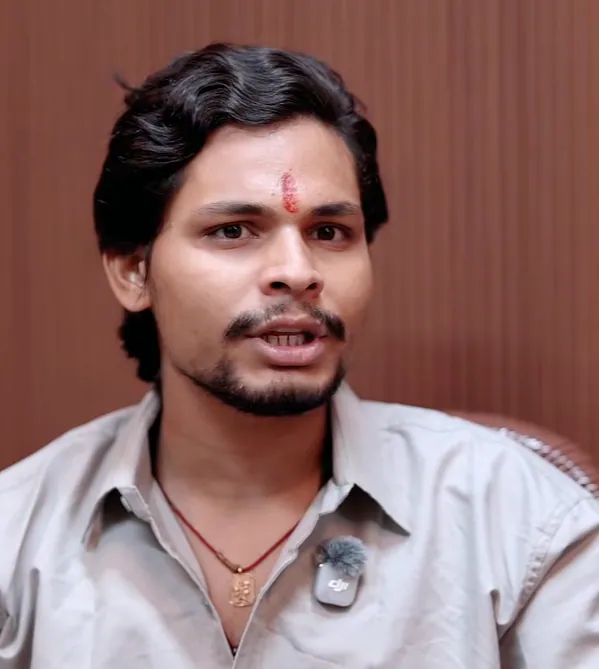
New Delhi: A controversial podcast featuring right-wing influencer Swatantra Bhardwaj has come under intense scrutiny after several portions of the hour-long conversation surfaced online, revealing a series of inflammatory statements about Muslims, caste reservations, political leaders and the alleged assault of a student activist’s father.
The controversy gained momentum after a video clip from the interview went viral in which Bhardwaj appeared to boast about attacking the father of a young Dalit student activist during a protest organised by the Cockroach Janta Party (CJP) in June.
In the clip, Bhardwaj claimed that he had struck the man on the head with a heavy iron bracelet, or kada. His remarks triggered widespread criticism and contributed to police action against him.
However, the longer podcast, uploaded on September 1 by the YouTube channel The Casual Talk, has drawn attention for much more than the assault-related comments. During the conversation, Bhardwaj made a series of remarks expressing hostility towards Muslims and discussed his political views in strongly polarising terms.
Controversial remarks about Muslims
During the podcast, Bhardwaj made derogatory comments about Muslims and described feelings of intense hatred towards members of the community.
He also spoke about avoiding businesses and services operated by Muslims and advocated an economic boycott of the community.
In one particularly inflammatory portion of the conversation, he said he would not take water from a Muslim-owned shop even if he were extremely thirsty.
Bhardwaj went on to describe a political vision of forming what he called a separate hardline Hindu party. According to his remarks, the party’s stated objective would be to create a “Muslim-free India”.
He also said that he and others would look for opportunities to act against Muslims if they made mistakes.
The remarks have prompted renewed criticism over the role of online influencers in spreading communal hostility and the impact such statements can have on an already sensitive social environment.
Comments on caste and reservation
The podcast also touched on caste-based reservation.
Identifying himself as a Maithil Brahmin from Darbhanga in Bihar, Bhardwaj argued that economic circumstances rather than caste should determine eligibility for reservations.
His position on the issue was presented alongside his broader political views during the discussion.
Threatening remarks over the SC/ST Act
Another contentious section of the podcast involved the Scheduled Castes and Scheduled Tribes (Prevention of Atrocities) Act.
Bhardwaj spoke about the possibility of being booked under the law and made a threatening statement about shooting whoever applied the law against him.
The remarks have gained additional significance because the same legislation was subsequently invoked in the police case registered after the alleged assault on the student activist’s father.
The controversy has therefore extended beyond political rhetoric, with questions being raised about whether statements made on the podcast could have implications for the ongoing legal proceedings.
Claims about the June protest assault
The most widely circulated portion of the podcast concerned the incident at the CJP protest.
Bhardwaj claimed that he had struck the student activist’s father with an iron kada. He described the attack in graphic terms and suggested that it could amount to an attempt to murder.
He also claimed that he did not initially know the man was the father of the student activist.
According to the report, the young activist has alleged that she subsequently received threats, including threats of death and sexual violence.
Police later invoked the POCSO Act, which deals with sexual offences against children, in the case. The SC/ST (Prevention of Atrocities) Act had also been included in the FIR.
There have been demands from political and social groups for more serious charges, including an attempt-to-murder provision, to be considered. Police have indicated that the medical examination of the injured man would be relevant before deciding on further action.
Political name-dropping sparks controversy
Bhardwaj also made several claims about his alleged political connections during the podcast.
He referred to Delhi BJP minister Kapil Mishra as someone who had supported him and described Lok Janshakti Party (Ram Vilas) leader Chirag Paswan as an elder brother. He also included Prime Minister Narendra Modi among political figures he referred to as “brothers”.
However, there is no official indication of an organisational connection between Bhardwaj and the BJP based on the information cited in the report.
Paswan has since publicly distanced himself from Bhardwaj’s claims and filed a police complaint alleging misuse of his name.
The development has placed additional focus on the way online personalities invoke the names of political leaders and parties while making controversial or provocative statements.
Bhardwaj says Modi is not hardline enough
Interestingly, despite invoking Modi’s name in the conversation, Bhardwaj also criticised the Prime Minister for not being sufficiently hardline.
He complained that people associated with his online activities were sometimes described as supporters of the BJP, while claiming that the government did not directly acknowledge them.
The contrasting remarks have added another dimension to the controversy surrounding the podcast.
Defence of the alleged assault
As criticism intensified and police action followed, Bhardwaj continued to defend his conduct.
Speaking to NDTV on Friday, he claimed that he had struck the student activist’s father in self-defence.
He reportedly showed no remorse and said that if he found himself in a similar situation again, he would use the same response.
The comments have further intensified debate over the boundaries between political activism, provocative speech and threats of violence.
Older videos also resurface
Following the controversy, several older videos featuring Bhardwaj have begun circulating on social media.
Some of these clips reportedly contain additional instances of aggressive or violent language, including alleged threats directed at actor Swara Bhasker.
The resurfacing of the older material has added to scrutiny of his online activities and public statements.
Police action and growing scrutiny
Bhardwaj was detained on Friday in connection with the alleged assault on the student activist’s father.
The case has attracted considerable attention because of the nature of the alleged attack, the identity of the victim and the subsequent statements made by Bhardwaj himself.
The invocation of the SC/ST Act and POCSO Act has further raised the legal stakes.
The case has also prompted political reactions, with the CJP, Congress leaders and Dalit representatives demanding stronger action.
At the centre of the controversy is the question of how authorities will respond to alleged violence and inflammatory public statements while ensuring that the investigation follows due legal process.
A wider debate over online speech
The controversy has also revived a broader conversation about the influence of podcasts and social-media personalities.
Unlike traditional political platforms, online podcasts can provide lengthy, informal settings where guests often speak at considerable length and without the constraints of conventional news interviews.
In Bhardwaj’s case, the attention initially centred on a short viral clip. The longer interview, however, revealed a much wider range of controversial views and statements.
The episode highlights how comments made online can quickly move beyond social media and become part of a real-world legal and political controversy.
As the investigation continues, the focus is now likely to remain on the allegations surrounding the June protest, the statements made during the podcast and the legal action being taken against Bhardwaj.
The developments also underline the importance of distinguishing between political opinion, protected expression and statements or conduct that may cross legal boundaries. Any further charges or findings will ultimately depend on the evidence collected by investigating authorities and the outcome of due legal proceedings.
News source: Information for this article was gathered from a variety of reliable news outlets.