Shehzad Poonawalla’s First Interview After Quitting BJP: “I Need to Pay My Rent”
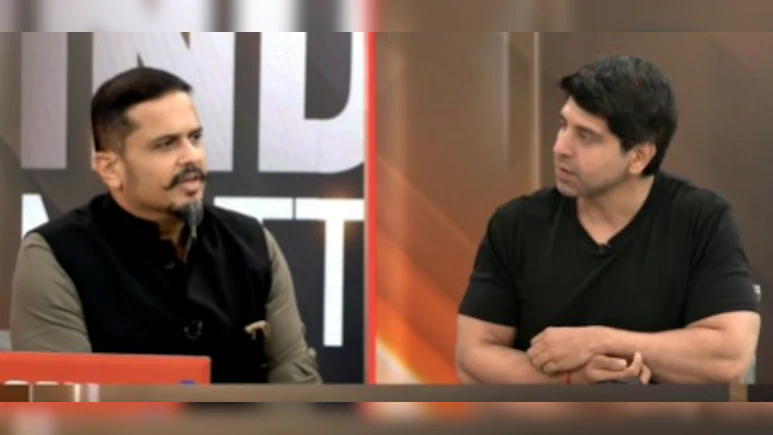
Delhi : Shehzad Poonawalla has spoken publicly for the first time after resigning from the Bharatiya Janata Party, explaining that his decision was driven largely by personal and financial difficulties rather than any sudden political disagreement.
Poonawalla, who was one of the BJP’s most recognisable spokespersons and a familiar face on television debates, recently announced his resignation from the party’s primary membership as well as all positions he held within the organisation. In his first interview following the resignation, he said that the decision had been under consideration for quite some time and was not something he arrived at overnight.
According to Poonawalla, his immediate concern was the practical difficulty of supporting himself financially. He pointed out that political parties generally do not provide salaries to their spokespersons or party workers, leaving him in a difficult personal situation.
“I need to pay my rent. My landlord is not going to give me free rent because I’m from the BJP. He’s asking me for rent on the 1st,” Poonawalla said, explaining the financial pressure he was facing.
He clarified, however, that his comments were not intended to suggest that the BJP had an obligation to financially support him. Rather, he said that his circumstances had reached a point where he needed to find a sustainable source of income.
Poonawalla stressed that working for a political party is fundamentally different from having a conventional salaried job. He said that people who join a political movement often do so because of their belief in its ideology, leadership or organisation, rather than for financial benefits.
“The BJP’s job is not to sustain me or any other karyakarta,” he said, adding that his commitment to the party’s ideology and to Prime Minister Narendra Modi’s vision had not disappeared simply because he had resigned.
His remarks underline the personal dilemma behind his decision. While Poonawalla remains supportive of the political ideas and leadership that initially brought him into the BJP, he said he also has personal responsibilities that cannot be ignored.
For him, the resignation therefore appears to be less about abandoning his political beliefs and more about stepping away from a role that he says was becoming financially difficult to maintain.
Poonawalla also made it clear that his decision should not be viewed as a sudden reaction to a particular incident. He repeatedly indicated that he had been considering leaving the BJP since 2024. The decision, according to him, came after a prolonged period of reflection about his personal circumstances and future.
His resignation marks a notable moment because Poonawalla had become one of the BJP’s most prominent television representatives. Over the years, he regularly appeared in political debates, defending the party’s policies and responding to criticism from opposition leaders. His frequent television appearances made him one of the more recognisable spokespersons associated with the BJP.
Despite stepping away from the party, Poonawalla said that his respect for the organisation and its leadership remains intact. He described his continued connection to the BJP’s ideology as separate from his decision to leave his formal responsibilities.
His comments also highlight a less-discussed aspect of political work: not every party functionary necessarily receives a regular salary for their political activities. While senior political figures may hold elected office or have other professional sources of income, spokespersons and grassroots workers can face very different financial realities.
Poonawalla’s explanation has therefore presented his resignation as a combination of personal responsibility, financial pressure and a decision that had been developing for years.
His message was clear: political commitment and financial independence are two different matters. He may have stepped away from the BJP’s organisational structure, but he insists that his belief in the party’s broader ideology and leadership remains unchanged.
For now, his resignation brings an end to his formal association with the BJP, while leaving open questions about what he plans to do next professionally and politically. His first interview suggests that whatever comes next, the decision to leave was not taken lightly and was shaped as much by personal circumstances as by politics.
News source: Information for this article was gathered from a variety of reliable news outlets.