New Delhi: US Downplays India’s Concerns Over Russia Sanctions Bill, Says ‘No Hard Feelings’
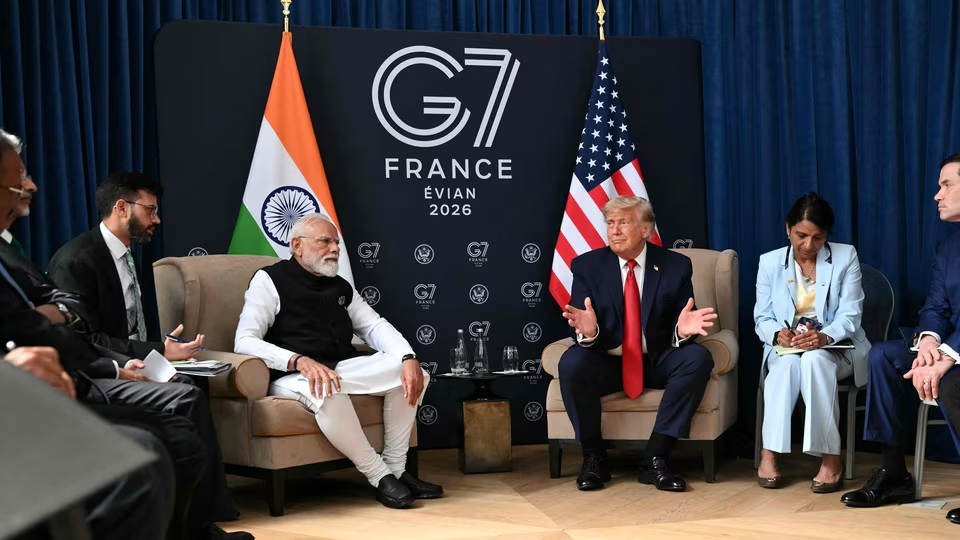
New Delhi : The United States has sought to play down concerns over growing differences with India following the passage of a proposed Russia sanctions bill in the US House of Representatives. A senior US State Department official said Washington understood why the Indian government had responded strongly to the legislation and indicated that there were no “hard feelings” over New Delhi’s objections.
The legislation, known as the Sanctioning Russia and Iran Act, could impose tariffs of up to 100% on countries that remain major purchasers of Russian energy. India, which continues to import significant quantities of Russian oil, could potentially be affected if the proposed measures become applicable.
The development has added another layer of complexity to the India-US relationship, which has expanded considerably in areas such as defence, trade, energy, technology and strategic cooperation.
India warns of possible impact on bilateral ties
Following the passage of the bill in the US House, India’s Ministry of External Affairs (MEA) publicly expressed concern over the possible consequences of the legislation.
The ministry said the issue had been discussed at senior levels between India and the United States in recent months. According to the MEA, Indian officials had clearly explained that the proposed sanctions could have implications not only for the bilateral relationship but also for international energy markets.
India has maintained that its energy purchases are driven by the need to secure affordable and reliable supplies for its large population and growing economy.
The latest US remarks suggest that Washington is aware of India’s concerns and does not intend to treat New Delhi’s response as an unexpected diplomatic confrontation.
US says India has to respond to domestic concerns
The senior US official said India was naturally expected to respond to the legislation, particularly because some members of the US Congress had publicly singled out India over its purchases of Russian energy.
The official also pointed out that governments in both countries have domestic constituencies and political considerations that influence their public positions.
At the same time, the official stressed that the disagreements should not necessarily be viewed as damaging the broader relationship between the two countries.
The comments indicate that Washington is attempting to separate the debate over Russia-related sanctions from its wider strategic partnership with India.
Bill gives Trump broad waiver powers
Another important aspect of the legislation is the authority it would provide to US President Donald Trump through a broad national-security waiver.
The senior US official said the bill would give the President an additional tool that could potentially be used in certain circumstances. However, the official did not say whether India would specifically receive such a waiver.
Instead, the official noted that there could be situations in which the US President might decide to exercise the waiver authority.
This leaves open the possibility that the impact of the legislation on countries such as India could ultimately depend on how the administration chooses to implement the provisions.
Jaishankar and Rubio discuss sanctions issue
The Russia sanctions legislation was also discussed during a meeting between India’s External Affairs Minister S Jaishankar and US Secretary of State Marco Rubio.
According to the US State Department’s account of the meeting, Rubio highlighted Washington’s ability to assist countries in addressing their energy-security requirements.
The discussion comes at a time when India has been attempting to maintain a diverse range of energy suppliers while managing the economic impact of global oil-market disruptions.
India looking to diversify energy supplies
The US official said India had been working for years to diversify its energy sources because of its enormous and growing energy requirements.
Washington also pointed to changes in the availability of oil from different countries, which have affected the choices available to India.
The official said the United States believed India could have greater access to alternative energy markets in the future and indicated that the issue of energy diversification had been discussed between American and Indian officials.
For India, diversification remains important because changes in international sanctions, geopolitical tensions and supply disruptions can affect both the availability and cost of crude oil.
Broader India-US relationship remains significant
Despite the disagreement over Russia-related sanctions, the US official highlighted Washington’s continued engagement with India.
The official pointed to cooperation through the Quad, which has continued to hold meetings during 2026. The Quad brings together India, the United States, Japan and Australia and focuses on cooperation across the Indo-Pacific.
The US State Department also highlighted Secretary Marco Rubio’s planned visit to India in October. It would be his second visit to the country during the year, underlining the continued high-level engagement between Washington and New Delhi.
The developments therefore reflect a complicated phase in India-US relations. While the two countries continue to cooperate closely on several strategic issues, differences over India’s relationship with Russia and its energy purchases remain an important point of discussion.
For now, Washington appears to be signalling that India’s objections to the proposed sanctions should not automatically translate into a broader deterioration in bilateral ties. At the same time, the final impact on India will depend on how the legislation progresses and whether the US administration ultimately uses the waiver powers provided under the proposed law.
News source: Information for this article was gathered from a variety of reliable news outlets.