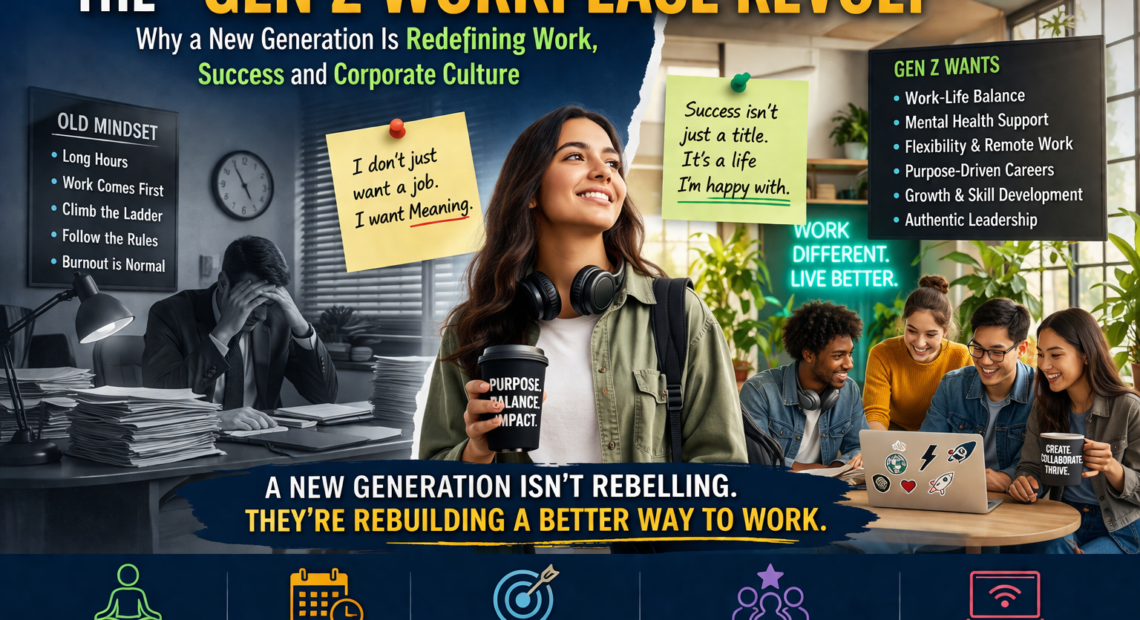
The “Gen Z Workplace Revolt”: Why a New Generation Is Redefining Work, Success and Corporate Culture
Across offices, startups, and global corporations, a quiet but powerful shift is taking place. The youngest generation in the workforce — Generation Z — is challenging traditional workplace norms and pushing companies to rethink how work should look in the modern world.
Often described as the “Gen Z Workplace Revolt,” this movement isn’t about rebellion for the sake of it. Instead, it reflects a deeper desire for balance, purpose, and authenticity in professional life.
A Generation That Sees Work Differently
Born roughly between 1997 and 2012, Gen Z grew up in a world shaped by smartphones, social media, economic uncertainty, and the global disruption caused by COVID-19.
These experiences have influenced how they view work. For many Gen Z professionals, a job is no longer just about salary or status. It’s also about mental well-being, flexibility, meaningful work, and personal growth.
Unlike previous generations who often accepted long hours as the norm, Gen Z workers are more willing to question systems that they feel harm productivity or personal happiness.
The Push for Work-Life Balance
One of the most visible parts of this workplace shift is the demand for work-life balance. Gen Z employees openly discuss burnout, stress, and mental health in ways that previous generations often avoided.
They advocate for flexible schedules, remote work options, and clearer boundaries between professional and personal time.
The rise of trends such as Quiet Quitting — where employees do their assigned work but refuse to overextend themselves — highlights this changing attitude.
For Gen Z, productivity should not come at the cost of personal well-being.
Purpose Matters More Than Ever
Another defining characteristic of Gen Z workers is their desire for purpose-driven careers. Many young professionals want to work for companies that align with their personal values.
Issues such as sustainability, diversity, and social responsibility influence where they choose to work and how loyal they feel toward employers.
Companies that fail to address these expectations may struggle to attract or retain younger talent.
How Companies Are Responding
Businesses are slowly adapting to this new workforce mindset. Many organisations are redesigning policies to include:
- Flexible work arrangements
- Mental health support programs
- Transparent leadership communication
- Opportunities for rapid skill development
Technology companies, startups, and even traditional industries are experimenting with new workplace models to stay competitive in the talent market.
A Cultural Shift, Not a Rebellion
While some critics frame this trend as entitlement, many experts see it differently. The Gen Z workplace movement reflects a broader cultural shift about what work should mean in the 21st century.
Younger workers are simply asking a question that many employees have silently wondered for decades:
Can success exist without sacrificing personal happiness and well-being?
As Gen Z continues to enter the workforce in larger numbers, the answer to that question may reshape the future of work for everyone.
News Source : Information for this article was gathered from a variety of reliable news outlets.