China Warns Barrier Lake On Tibet-Nepal Border Could Breach Within 72 Hours
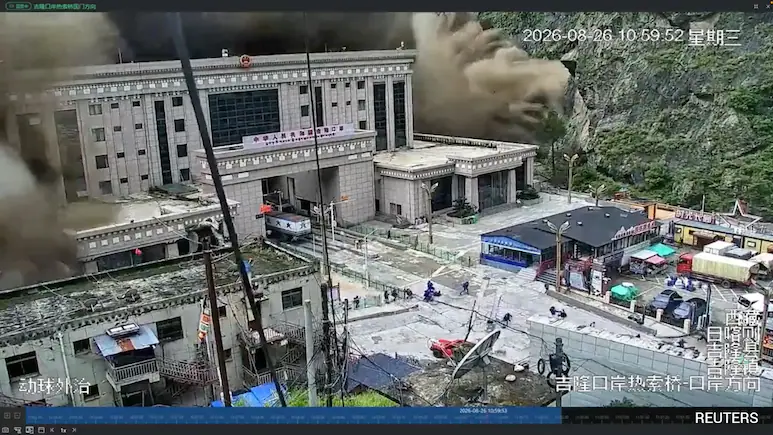
Beijing: Rescue operations along the Tibet-Nepal border are facing a fresh threat after Chinese authorities warned that a rapidly filling barrier lake could overflow further, potentially triggering another wave of flooding in the disaster-hit region.
The warning comes after a massive mudslide struck the border area, sending torrents of water and debris through communities and leaving hundreds of people missing.
According to Chinese state broadcaster CCTV, 558 people were reported missing in Tibet after the mudslide triggered devastating flash floods. China’s Foreign Ministry spokesperson Lin Jian also said that nearly 100 Chinese citizens were missing on the Nepalese side of the border.
At least three people were reported dead in Tibet after a huge wall of mud and rocks collapsed into the Lhende River near Gyirong. The sudden surge of water then travelled downstream through the Bhote Kosi and Trishuli river systems, causing widespread destruction in Nepal.
The floods have killed at least 177 people in Nepal, while hundreds remain missing. Homes, roads and major infrastructure, including power projects, have been damaged or swept away.
New Threat From Barrier Lake
Authorities are now closely monitoring a barrier lake upstream from the Himalayan border crossing, fearing that it could complicate rescue operations and trigger further flooding.
China’s Ministry of Water Resources has stepped up monitoring of the lake, which lies near the meeting point of the Chhochen Khola and Purepu Tsangpo rivers, northeast of the main disaster zone.
CCTV reported that the lake contained an estimated 2 million cubic metres of water as of Thursday and was already overflowing. Another 3 million cubic metres of water could enter the lake over the next three days, raising concerns about a potentially dangerous breach.
Authorities have evacuated villages located within identified danger zones on the Tibetan side. Two villagers have also reportedly been rescued.
Rescue Teams Mobilised
China has deployed fire and rescue personnel from Beijing and Chengdu to support local police and armed forces involved in the emergency response.
Some electricity and communication services have been restored in central parts of Gyirong town. However, services connected to the border port remain disrupted.
The additional geological threat has made rescue efforts even more challenging, with authorities working to evacuate people from vulnerable areas while simultaneously monitoring water levels and ground conditions.
Himalayan Region Faces Growing Risk
The latest disaster has once again highlighted the vulnerability of communities living along the Himalayan river systems.
Scientists and disaster authorities have increasingly warned that rising temperatures and changes in the Himalayan ice and water systems can increase the risk of glacial lake outbursts, landslides and sudden floods. Such events can travel rapidly downstream, threatening communities and critical infrastructure across national borders.
The region witnessed a similar disaster in August 2025, when a glacial lake in Tibet overflowed amid high temperatures. Nine people were killed, while major infrastructure, including a bridge linking Nepal and China, was damaged.
As rescue teams continue their efforts, authorities on both sides of the border are now racing against time to monitor the unstable terrain and prevent the latest disaster from turning into an even larger humanitarian crisis.
News Source : Information for this article was gathered from a variety of reliable news outlets.