The Bholari Hangar Mission: How a “White Lie” Helped Seal the Strike
Operation Sindoor pushed the Indian Air Force into one of its most demanding missions. Behind the strikes, however, commanders were making split-second decisions where timing could mean the difference between success and failure.
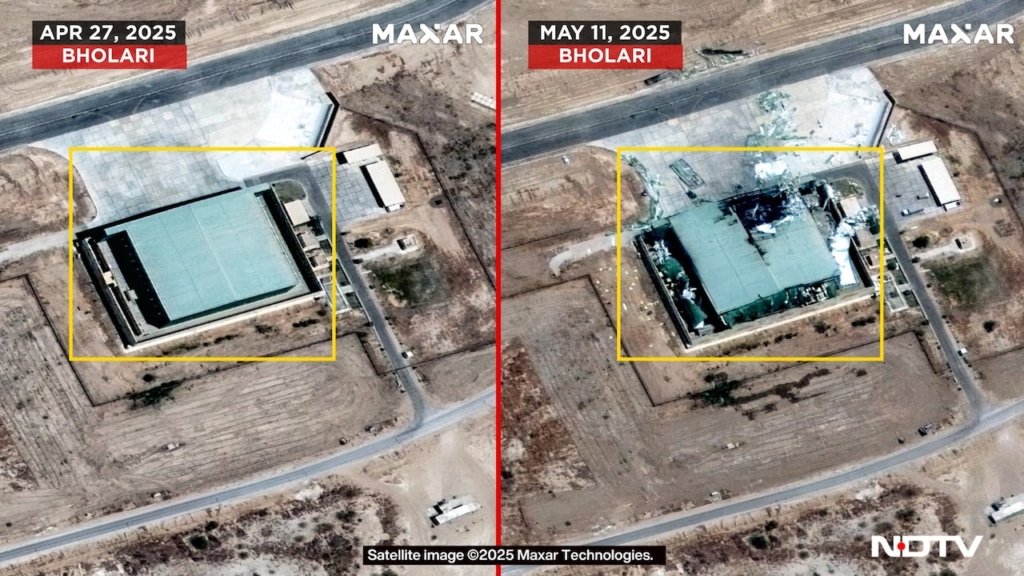
On May 10, 2025, Air Marshal Nagesh Kapoor, who was commanding the South Western Air Command, was preparing for a crucial mission against Pakistan’s Bholari Airbase. The target was a hangar believed to house a Pakistani Air Force SAAB Erieye airborne early-warning aircraft.
The IAF had fighter pilots ready at one of its frontline bases. Their aircraft were armed, fuelled and prepared for take-off. The mission involved Sukhoi-30 MKI fighter jets carrying the air-launched BrahMos missile.
Then came a phone call from Air Chief Marshal A.P. Singh.
The Air Chief wanted to know where the aircraft were. Kapoor knew the jets were still preparing to take off, but he deliberately gave him a different answer.
“There was a time when I had to lie to my Chief for this mission,” Kapoor later recalled on NDTV’s #CtrlAltDefence podcast. He clarified that he had not exactly lied, but had deliberately withheld the actual timing.
When asked about the aircraft’s position, Kapoor told the Chief they were “getting airborne,” even though he knew they would not take off for another 15 minutes.
Later, when the Air Chief asked about the weapons, Kapoor again gave a time that was ahead of the actual launch. His priority was to ensure that the pilots, who had been waiting with their weapons ready, were not ordered to stand down.
The mission eventually went ahead.
The Sukhoi-30 MKIs took off and headed towards their launch zone. As the aircraft approached their targets, their systems monitored the skies for potential threats while the BrahMos missiles were prepared for launch.
Once the weapons were fired, Kapoor finally informed the Air Chief that the aircraft were returning.
The strike on Bholari became one of the most notable images of Operation Sindoor. Satellite imagery showed a large hole in the roof of the targeted hangar, with debris scattered around the structure, indicating the impact had been concentrated on the building.
But the story did not end there.
Some time later, Defence Minister Rajnath Singh was having lunch with Kapoor and Air Chief Marshal A.P. Singh. It was then that Kapoor openly admitted to the Air Chief that he had lied about the timing of the mission.
The Air Chief simply smiled and replied, “Mujhe pata hai” — “I know.”
What began as a tense moment inside an IAF command room ultimately became a remarkable story of trust, judgement and the pressure faced by military commanders during a high-stakes operation.
News source: Information for this article was gathered from a variety of reliable news outlets.