RSS Responds to Criticism Over Mohan Bhagwat’s UK Visit: ‘Let Them Speak, We Are Open to Dialogue’
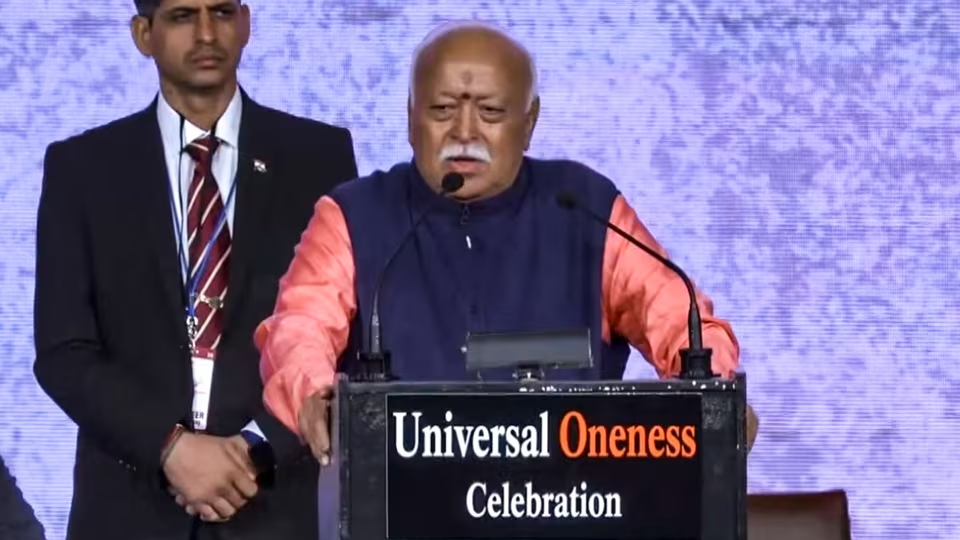
London: The Rashtriya Swayamsevak Sangh (RSS) has responded to growing criticism surrounding its chief Mohan Bhagwat’s visit to the United Kingdom, saying the organisation is willing to engage with those who disagree with its views and believes that differences of opinion are a normal part of a democratic society.
Bhagwat’s visit to Britain comes as part of a three-country international outreach programme marking the RSS’s centenary. Before arriving in the UK, the RSS chief had travelled to the United States and Canada, where his appearances also attracted criticism and protests from sections of civil society and political groups.
Speaking to reporters in London, RSS media head Sunil Ambedkar said the organisation had no objection to people expressing opposing views. Instead, he said, the RSS expected debate and an exchange of ideas.
“We are here for peace, integration and oneness, and we are open to dialogue with everyone,” Ambedkar said, responding to questions about criticism of Bhagwat’s visit.
He added that different voices emerging in a democracy were “very normal” and that the RSS was prepared to engage with groups and individuals who wanted to have a discussion.
RSS says criticism is part of democratic debate
Ambedkar’s remarks came amid opposition from a number of civil society organisations in Britain. Around 20 groups have reportedly written to London Mayor Sadiq Khan, asking the Greater London Authority not to support or provide facilities for events connected with the RSS chief’s visit.
The organisations have also called for public criticism of Bhagwat’s visit, drawing a comparison with the stance taken by New York Mayor Zohran Mamdani during the RSS chief’s earlier US visit.
The RSS, however, has rejected the suggestion that criticism should prevent Bhagwat from communicating his organisation’s views.
Ambedkar said the purpose of the overseas outreach was to explain what the RSS stands for, how it approaches social and national issues, and what its broader worldview is.
“We are here to communicate what we are, what we think, how we think and what our worldviews are,” he said, adding that the organisation believed it had nothing to hide.
“We expect a debate and exchange of thoughts. We’re open to the dialogue. Let them speak,” Ambedkar said.
Bhagwat’s three-nation tour draws attention
Bhagwat’s international tour has attracted considerable attention as the RSS marks 100 years of its existence.
After programmes in North America, the RSS chief is now in the United Kingdom, where he is scheduled to address members of the Indian and Hindu diaspora and interact with supporters and other community groups.
The organisation has presented the outreach as an opportunity to discuss its philosophy, social initiatives and vision with communities outside India.
However, critics in the UK and the US have raised concerns about the RSS’s ideology and its influence within sections of the Indian diaspora.
The disagreement has turned Bhagwat’s overseas engagements into a wider debate over political expression, community relations and the role of organisations with strong ideological identities in multicultural societies.
UK organisations raise strong objections
The criticism in Britain intensified after several civil society groups wrote to authorities opposing Bhagwat’s visit.
According to reports, the groups described the RSS in strongly critical terms and argued that its international outreach could deepen divisions within the Indian diaspora.
The organisations also urged London Mayor Sadiq Khan to take a position against Bhagwat’s visit, similar to the response from New York Mayor Zohran Mamdani.
Among the groups reported to have signed the letter are Hindus for Human Rights, the UK-Indian Muslim Council, India Labour Solidarity and the South Asia Solidarity Group.
The letter reportedly described the RSS as an organisation with authoritarian and militarist characteristics and raised concerns about what the groups described as its historical ideological influences.
The organisations also asked British authorities about security arrangements and the steps being taken by the Metropolitan Police to protect communities during Bhagwat’s visit.
The groups alleged that the RSS’s activities could contribute to tensions within sections of the Indian diaspora and expressed concern that the visit could encourage hate speech and further polarisation.
These claims represent the views of the organisations that signed the letter and have been strongly disputed by the RSS.
RSS maintains it has nothing to hide
Responding to the criticism, Ambedkar sought to frame the controversy as part of a democratic exchange rather than something the organisation wanted to avoid.
He said people from different sides had already expressed their opinions about the reaction to Bhagwat’s US visit and suggested that the RSS was willing to listen to those views.
“People from all sides have already responded,” Ambedkar said while referring to the controversy surrounding the New York mayor’s position.
The RSS spokesperson reiterated that the organisation wanted to use the international tour to communicate directly with people and explain its ideas.
His comments appeared aimed at separating disagreement from confrontation, with the RSS arguing that opposing voices should be allowed to speak while maintaining that its own representatives should also have the opportunity to present their views.
Debate over Bhagwat’s overseas outreach
Bhagwat’s international visits have increasingly become a subject of political and social debate, particularly among diaspora communities.
Supporters view his outreach as an opportunity for the RSS to explain its philosophy and connect with Indians and people of Indian origin living abroad. Critics, meanwhile, have questioned the organisation’s ideology and its influence on political and social discourse in India.
The latest controversy in London reflects that continuing divide.
For the RSS, the overseas programme is also significant because it coincides with its centenary year. The organisation has been using the occasion to highlight its history, social work and engagement with Indian communities around the world.
For critics, however, Bhagwat’s presence abroad provides an opportunity to raise concerns about issues they associate with the RSS and its wider ideological influence.
A wider conversation about free expression
At the centre of the dispute is a broader question about how political and ideological organisations should engage with communities outside India, particularly in countries with diverse populations and established traditions of public protest.
The RSS has maintained that criticism is legitimate and that people should have the freedom to express disagreement. At the same time, it wants its own representatives to have the space to put forward their ideas.
Ambedkar’s comments suggest that the organisation does not intend to withdraw from public engagement because of protests or criticism.
Instead, the RSS appears determined to continue its international outreach and use public forums to explain its position.
As Bhagwat continues his UK programme, the competing reactions are likely to keep the debate alive — with supporters welcoming the opportunity to hear from the RSS chief and critics continuing to question the organisation’s ideology and its influence.
For now, the RSS message is clear: disagreement is expected, but the organisation says it is ready to listen, debate and engage with those who want to challenge its views.
News source: Information for this article was gathered from a variety of reliable news outlets.