Rift Within NCPI as Three MPs Keep Their Distance From BJP Alliance
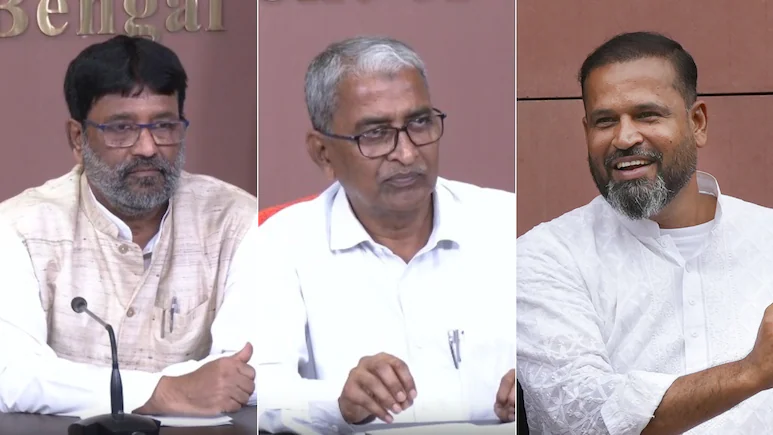
Kolkata: A political disagreement is beginning to surface within the Nationalist Citizens Party of India (NCPI), with three of its Lok Sabha MPs reportedly uncomfortable with the party’s growing proximity to the BJP and the National Democratic Alliance (NDA).
Abu Taher Khan, Khalilur Rahman and Yusuf Pathan, who joined the NCPI after breaking away from the Trinamool Congress, have reportedly been skipping NDA meetings because they do not want to be seen as closely aligned with the BJP.
The development comes only weeks after a series of political defections reshaped the Trinamool Congress, with a large group of its MPs and MLAs moving into the NCPI. The three MPs are now concerned that a close association with the BJP could affect their standing among voters, particularly in constituencies where opposition to the BJP has traditionally been strong.
Three MPs Maintain Distance From NDA
According to sources, Khan, Rahman and Pathan have made it clear that they do not support the NCPI’s alliance with the BJP. They have also avoided several meetings involving NDA lawmakers.
The three MPs have reportedly argued that their political position should remain separate from the BJP and that their primary focus is on the interests of their constituents.
“We have already made it clear that we won’t go with the BJP and will not be part of the NDA,” Abu Taher Khan said on Saturday.
Khan also said that greater attention was needed for the Muslim community, particularly sections that continue to face social and economic challenges.
The issue has become particularly significant in Murshidabad, where Khan and Khalilur Rahman are politically active and where a large section of the electorate belongs to the Muslim community.
Meeting With Suvendu Adhikari Adds To Political Speculation
On Saturday, Abu Taher Khan and Khalilur Rahman met West Bengal Chief Minister Suvendu Adhikari and raised concerns about alleged harassment of people in Murshidabad during the Special Intensive Revision (SIR) exercise.
Their meeting with Adhikari, combined with their opposition to the BJP alliance, has added another layer to the political developments surrounding the three MPs.
Despite maintaining that they are not aligned with the BJP, the three MPs have continued to engage with senior BJP leaders at the Centre.
They travelled to Delhi along with Birbhum MPs Satabdi Roy and Asit Mal for a meeting with Union Home Minister Amit Shah. They also attended a breakfast meeting hosted by Prime Minister Narendra Modi.
The MPs have maintained that meeting central leaders does not mean they have adopted the BJP’s political position. They say they are willing to cooperate with both the central and state governments whenever it benefits their constituencies.
Mamata Camp Hits Back
The emerging differences have drawn a sharp response from leaders loyal to former West Bengal Chief Minister Mamata Banerjee.
Trinamool Congress MP Kalyan Banerjee accused the three MPs of misleading voters and questioned their political position after joining the NCPI.
He argued that the NCPI has already been recognised as an ally of the NDA and said the rebel MPs cannot distance themselves from that association after becoming members of the party.
Banerjee also pointed to the political composition of Murshidabad, where minorities make up a substantial share of voters. He claimed that the MPs were elected largely with anti-BJP votes and suggested that their current political positioning could leave voters feeling betrayed.
Trinamool leader Kunal Ghosh also attacked the three MPs, accusing them of trying to maintain their political relevance while simultaneously staying close to BJP leaders.
He alleged that the MPs were attempting to balance two opposing political positions—remaining acceptable to voters who oppose the BJP while maintaining a relationship with the ruling party at the Centre.
NCPI Leadership Downplays Differences
The NCPI leadership, however, has sought to play down the apparent disagreement.
Kakoli Ghosh Dastidar, who leads the NCPI faction, said the party had recently held an extended meeting with Prime Minister Narendra Modi and discussed issues concerning the development of West Bengal.
She said Abu Taher Khan was present during the meeting and indicated that she was not aware of his latest comments about the BJP and NDA.
The statement suggests that the NCPI leadership does not currently view the differences as a major internal crisis.
NDA Meeting Attendance Raises Questions
The disagreement became more visible during an NDA meeting last week.
While NCPI MPs attended a meeting known as “Mangal Milan”, the party’s representation stood at 17 rather than its full strength because Khan, Rahman and Pathan did not attend.
Their absence has raised questions about whether the NCPI can maintain a unified position within the NDA while some of its MPs openly distance themselves from the BJP alliance.
The three MPs, however, have consistently maintained that they do not share the BJP’s political ideology. At the same time, they say they will cooperate with the government on development and constituency-related issues.
Could More Political Changes Follow?
The latest developments have also revived speculation about whether some of the rebel MPs could eventually reconsider their decision to leave the Trinamool Congress.
Senior Trinamool leader Saugata Roy has claimed that some rebel MPs are in contact with his party and are exploring the possibility of returning to Mamata Banerjee’s camp.
There has been no confirmation that the three MPs named in the latest controversy intend to return to the Trinamool Congress.
For now, the situation reflects a complicated political balancing act. The NCPI has moved closer to the BJP-led NDA, while some of its newly acquired MPs are trying to maintain distance from the BJP to protect their political base.
With the political equations in West Bengal already undergoing rapid changes, the stance of Abu Taher Khan, Khalilur Rahman and Yusuf Pathan could become increasingly important in determining the future direction of the NCPI and its relationship with the NDA.
News source: Information for this article was gathered from a variety of reliable news outlets.