Nepal Flash Floods Raise Alarm in India as Narayani-Gandak River Links the Two Countries
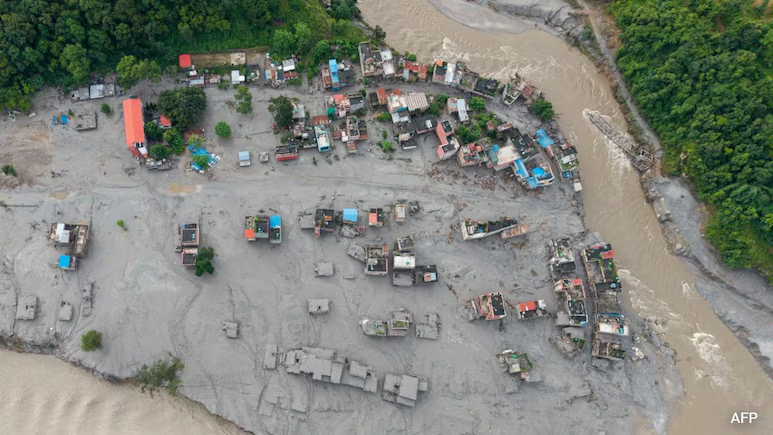
Nepal : The devastating flash floods in Nepal have triggered concern across the border in India, highlighting how closely the two countries are connected by rivers and the risks they carry. Although political boundaries separate Nepal and India, rivers continue to flow naturally from one country to the other, carrying both water and, during extreme weather events, the threat of flooding.
One of the most important examples is the Narayani River in Nepal, which is known as the Gandak after it enters India. The same river system that is witnessing rising water levels in Nepal can therefore create serious flood concerns downstream in parts of Uttar Pradesh and Bihar.
From Narayani in Nepal to Gandak in India
The river originates in the Himalayan region near the Tibet-Nepal border and flows through Nepal before crossing into India near Triveni Dham. It then reaches Valmikinagar in Bihar, where the river is known as the Gandak.
From Valmikinagar, the Gandak continues through Bihar and Uttar Pradesh before eventually joining the Ganga near Hajipur and Sonepur.
This geographical connection means that an extreme rise in water levels upstream in Nepal can have consequences for communities living downstream in India.
Flash Floods in Nepal Create Downstream Concerns
The latest concern follows massive flash flooding in Nepal after a glacial lake outburst reportedly triggered an avalanche and sent huge volumes of water rushing downstream.
The Bhote Koshi River, which originates in the Tibetan region, also witnessed a dramatic surge in water levels in Nepal’s Rasuwa district. The flooding caused extensive destruction, sweeping away villages, roads and other infrastructure.
The Bhote Koshi is part of the river system that eventually feeds into the Trishuli and Narayani river basin. As a result, developments in Nepal’s Himalayan rivers can have implications for areas much farther downstream in India.
Uttar Pradesh and Bihar Put on Alert
With water levels rising in the Narayani-Gandak system, authorities in Bihar and Uttar Pradesh have stepped up preparations.
In Bihar, special vigilance has been ordered in several districts, including West Champaran, East Champaran, Gopalganj, Saran, Muzaffarpur and Vaishali. Other vulnerable areas, including Sitamarhi and Sheohar, have also been asked to remain alert.
At the Gandak Barrage in Valmikinagar, all 36 gates were opened as part of precautionary measures to manage the situation and regulate the flow of water.
Authorities reported that around 86,000 cusecs of water had been discharged from the barrage around Wednesday afternoon.
A technical team led by a Superintending Engineer was also deployed at the barrage to monitor the situation. Officials issued warnings to districts located along the Gandak river basin and advised local administrations to remain prepared for possible flooding.
Villages in Uttar Pradesh Face Flood Risk
The situation has also raised concerns in Uttar Pradesh, particularly in districts close to the Nepal border.
Maharajganj, which shares a border with Nepal, and neighbouring Kushinagar have been placed on alert because of the rising water levels in the Narayani and Gandak rivers.
Uttar Pradesh Chief Minister Yogi Adityanath directed the local administration to remain vigilant and ensure that all necessary preparations were in place to deal with the possibility of flooding.
In Kushinagar, authorities ordered evacuations from villages including Marchahwa and Shivpur, while public announcements were made asking residents in vulnerable areas to move to safer locations.
A Reminder That Rivers Have No Borders
The situation once again demonstrates how natural disasters can cross political boundaries. A river does not stop flowing when it reaches an international border, and events occurring high in the Himalayas can quickly become a concern for communities hundreds of kilometres downstream.
For Nepal and India, the Narayani-Gandak river system is not just a source of water and livelihood but also a shared flood-risk corridor. Extreme rainfall, glacier-related events and sudden surges in Himalayan rivers can affect people on both sides of the border.
As rescue and relief operations continue in Nepal, authorities in Uttar Pradesh and Bihar are closely monitoring the river levels and preparing for any possible rise in downstream flooding.
The unfolding situation underlines the importance of cross-border coordination, timely warnings and effective flood-management measures between Nepal and India, particularly as extreme weather events increasingly pose challenges across the Himalayan region.
News source: Information for this article was gathered from a variety of reliable news outlets.