Is Maharashtra Politics Heading for a Power Shift? Shinde’s Rise Sparks Talk of Fadnavis Challenge
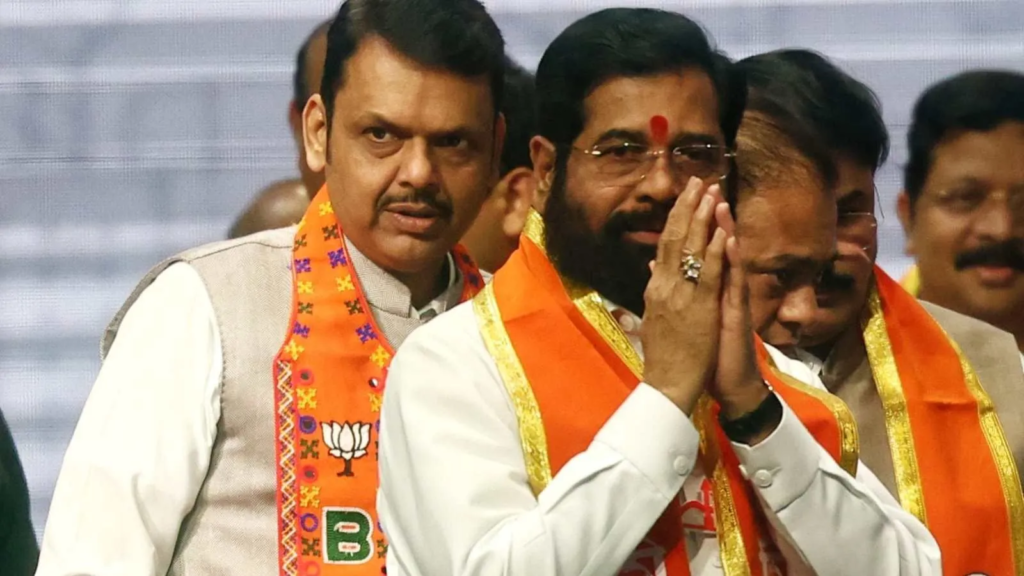
Maharashtra : Maharashtra’s political landscape is once again witnessing intense speculation and behind-the-scenes maneuvering, as the evolving relationship between Deputy Chief Minister Eknath Shinde and Chief Minister Devendra Fadnavis becomes a major talking point in state politics.
Recent developments involving defections from the Shiv Sena (UBT) camp have further strengthened Shinde’s position within the ruling Mahayuti alliance, leading to growing debates over whether his rising influence could eventually reshape the internal balance of power in Maharashtra’s leadership structure.
At the centre of the latest political churn is what has been informally termed as “Operation Tiger,” a series of political switches in which several leaders aligned with Uddhav Thackeray’s faction moved toward Shinde’s Shiv Sena. One of the most notable developments was the exit of senior leader Sachin Ahir from the Uddhav camp, a move seen as both a symbolic and strategic gain for Shinde’s faction.
These shifts have not only weakened the Opposition Shiv Sena (UBT) but have also raised broader questions about whether Shinde is building a stronger independent base within the alliance, or whether these moves are part of a larger national-level strategy aimed at strengthening numbers in Parliament for key constitutional legislation in the future.
Within political circles, opinions remain divided. Some analysts believe these developments are purely tactical and linked to legislative strength, particularly for crucial bills that may require strong parliamentary backing. Others, however, see a deeper political narrative unfolding—one in which Shinde is steadily consolidating his leadership position and expanding his influence beyond being just a coalition partner.
Inside the ruling alliance, reactions are also mixed. A section of the BJP is said to welcome the expansion of Shinde’s support base, especially when it comes to strengthening legislative numbers for national-level policy goals. However, some leaders within the party have also expressed discomfort over increasing defections at the state assembly and council levels, arguing that such shifts could complicate internal stability in the long run.
A senior BJP leader, speaking on condition of anonymity, suggested that political ambition and organisational expansion are natural processes in any major party system. According to this view, both the BJP and Shinde-led Shiv Sena are independently strengthening their bases while remaining part of the broader Mahayuti alliance.
However, the same political developments have also triggered speculation that Shinde’s growing assertiveness may eventually serve as a counterbalance to Fadnavis within the state’s power structure. Some observers believe this dynamic could play a significant role in shaping Maharashtra’s political equations leading up to the 2029 elections.
Opposition parties, on the other hand, have been sharply critical of the ongoing political realignments. Leaders from the Maha Vikas Aghadi (MVA) have alleged that the developments are not just routine political shifts but part of a calculated effort to weaken rival camps and consolidate power within the ruling alliance.
Aaditya Thackeray, a prominent leader of the Shiv Sena (UBT), has gone further, suggesting that the real objective behind these moves is to gradually diminish Fadnavis’s influence within the government. According to Opposition leaders, what is being presented as political realignment is actually a deeper internal restructuring of power within the Mahayuti.
Maharashtra Navnirman Sena (MNS) chief Raj Thackeray has also weighed in, criticising the increasing frequency of defections and describing the trend as “dangerous” for democratic stability. He warned that such political shifts could set an unhealthy precedent in Maharashtra’s electoral culture, where loyalty and ideology risk being overshadowed by power calculations.
The relationship between Shinde and Fadnavis has itself gone through multiple phases over the past decade. During the 2014–2019 period, both leaders worked within the same NDA framework, with Shinde serving as a relatively low-profile minister. The political situation changed dramatically in 2022 when Shinde led a rebellion within the Shiv Sena, eventually splitting the party and forming a new government in alliance with the BJP. At that point, Shinde became Chief Minister, while Fadnavis accepted the role of Deputy Chief Minister.
However, after the 2024 Assembly elections, the BJP emerged as the single largest party in the state, leading to Fadnavis’s return as Chief Minister. This shift altered the internal balance once again, with Shinde moving back into the Deputy Chief Minister role. Political observers suggest that this transition created underlying tensions, as expectations and ambitions within both camps were recalibrated.
Since then, Shinde has reportedly been working to strengthen his political base and maintain influence within the alliance, while also ensuring that his faction remains a key pillar of the ruling structure. Supporters of Shinde argue that his leadership has been instrumental in maintaining electoral strength for the Mahayuti, while critics view his growing assertiveness as a potential source of friction within the coalition.
As Maharashtra moves closer to the next major electoral cycle, the evolving dynamics between Shinde and Fadnavis are expected to remain a central theme in state politics. Whether Shinde’s rise represents a genuine redistribution of power or simply a temporary phase of political consolidation within a larger alliance is still unclear.
What is evident, however, is that Maharashtra’s political environment is becoming increasingly complex, with shifting loyalties, strategic alignments and leadership ambitions continuously reshaping the state’s power structure.
News source: Information for this article was gathered from a variety of reliable news outlets.