India Rejects Pakistan-China Boundary Commission, Says It Has ‘No Legal Basis’
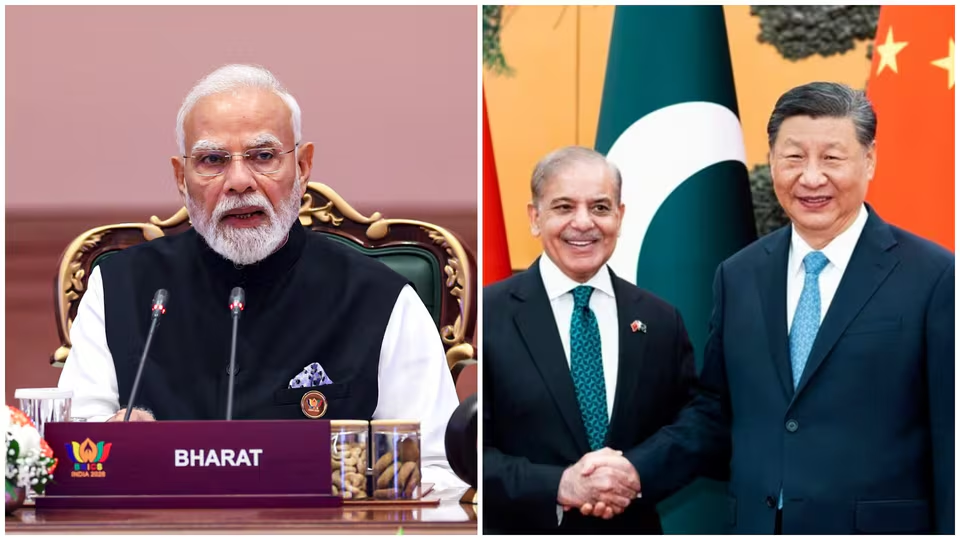
New Delhi: India has strongly objected to the operationalisation of a Pakistan-China Boundary Joint Commission, saying that the mechanism has no legal basis and cannot have any bearing on Indian territory. New Delhi’s response came after Pakistan and China held the commission’s first meeting in Islamabad and announced plans to strengthen cooperation on border management, joint surveys, trade and people-to-people connectivity.
The development has once again brought the long-running territorial dispute involving India, Pakistan and China into focus. India’s Ministry of External Affairs reiterated that New Delhi does not recognise the 1963 China-Pakistan boundary agreement and maintains that arrangements involving territories that India considers part of Jammu and Kashmir and Ladakh cannot be accepted.
India Objects to Pakistan-China Boundary Mechanism
MEA spokesperson Randhir Jaiswal said India’s position on the matter remained clear and consistent. According to the ministry, India rejects the so-called Pakistan-China Boundary Joint Commission, arguing that it cannot be used to establish or legitimise any arrangement concerning territory that India claims as its own.
Jaiswal reiterated India’s position that the Union Territories of Jammu and Kashmir and Ladakh are integral parts of India. He also said Pakistan has no standing, in India’s view, to enter into arrangements concerning territory that New Delhi considers to be under Pakistan’s illegal occupation.
India has maintained this position for decades, including its rejection of the 1963 China-Pakistan Boundary Agreement. The MEA has previously stated that India considers that agreement invalid and has consistently conveyed its position to both Pakistan and China.
What Pakistan and China Announced
Pakistan’s Foreign Ministry described the operationalisation of the joint commission as a significant development in its relationship with China.
According to Pakistan’s official statement, the mechanism is intended to improve cooperation in areas including border management, joint border surveys, trade flows and people-to-people connectivity. The first meeting was held in Islamabad on September 16.
The meeting was jointly led by Chinese and Pakistani foreign ministry officials dealing with boundary and China-related affairs.
For Pakistan and China, the commission is being presented as another institutional mechanism for managing their border-related cooperation. India, however, has rejected the framework because of its connection with territory that New Delhi claims as part of India.
Dispute Over the 1963 Agreement
At the centre of India’s objection is the 1963 China-Pakistan boundary agreement.
India has consistently said that Pakistan could not legally negotiate or transfer territory that New Delhi regards as Indian territory. According to an MEA document, India maintains that Pakistan ceded 5,180 square kilometres in the Shaksgam Valley to China under the 1963 agreement.
India has therefore refused to recognise the agreement and has repeatedly opposed efforts that it believes could legitimise what it describes as Pakistan’s occupation of parts of the former state of Jammu and Kashmir.
New Delhi has also previously objected to projects associated with the China-Pakistan Economic Corridor (CPEC) because portions of the route pass through areas that India claims as its territory.
India’s Position on Jammu and Kashmir and Ladakh
The latest statement is consistent with India’s long-standing position on the territorial dispute.
The MEA has repeatedly stated that Jammu and Kashmir and Ladakh are integral and inalienable parts of India. In earlier statements, New Delhi has also rejected references to these territories in China-Pakistan joint statements and opposed what it sees as attempts to reinforce Pakistan’s control over areas under its occupation.
India’s latest response therefore goes beyond the specific functioning of the new commission. It reflects New Delhi’s broader position that neither Pakistan nor China can alter the status of disputed territories through bilateral arrangements that India does not recognise.
India Calls for Pakistan to Vacate Occupied Areas
Jaiswal also reiterated India’s demand that Pakistan withdraw from areas that India says are under its illegal and forcible occupation.
New Delhi has consistently maintained that any arrangement between Pakistan and China concerning those areas cannot change India’s stated claim over the territory. The Indian government has also said that such arrangements would not affect its position on sovereignty and territorial integrity.
The issue remains particularly sensitive because the China-Pakistan boundary runs along territory that India claims as part of the former princely state of Jammu and Kashmir.
A Fresh Diplomatic Flashpoint
The creation of the joint commission adds another layer to the already complex relationship between India, Pakistan and China.
Pakistan and China have described the mechanism as a way to improve practical cooperation along their shared border. India, on the other hand, has rejected it because it believes the arrangement involves territory whose status cannot be determined by Pakistan and China alone.
For now, the two sides remain firmly apart in their positions. Pakistan and China have moved ahead with their boundary cooperation mechanism, while India has made clear that it does not recognise the framework or the 1963 boundary agreement and will not accept any arrangement that, in its view, affects its territorial claims.
The latest exchange highlights how questions surrounding Jammu and Kashmir continue to influence diplomatic relations among the three neighbouring countries, with territorial claims remaining a major point of disagreement.
News source: Information for this article was gathered from a variety of reliable news outlets.