Evergrande Founder Hui Ka Yan Sentenced to Life in Prison as China Cracks Down on Property Fraud
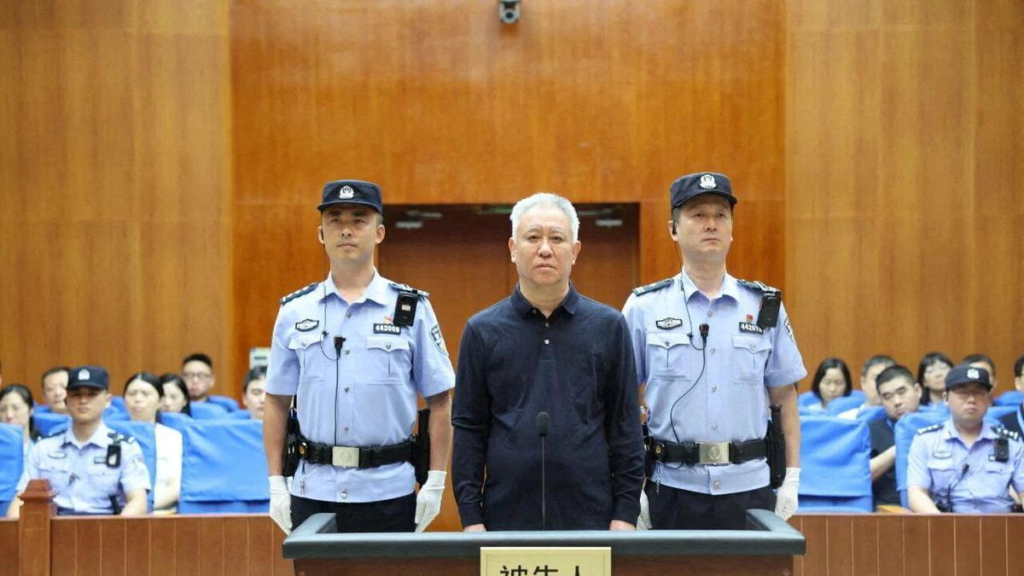
Hong Kong, August 20: The dramatic collapse of Chinese property giant Evergrande has taken another major turn, with its founder Hui Ka Yan sentenced to life in prison by a court in Shenzhen.
The 67-year-old businessman, once one of China’s most prominent property developers, was convicted of large-scale financial wrongdoing linked to the troubled real estate group. The Shenzhen Intermediate People’s Court also imposed fines of more than $2 billion on Evergrande and related companies, according to the court.
The verdict marks a major development in the long-running saga of Evergrande, whose financial troubles shook China’s property sector and sent ripples through the wider economy.
Evergrande’s spectacular rise and collapse
Evergrande grew into one of China’s biggest property developers during the country’s massive real estate boom. The company expanded rapidly, borrowing heavily to finance thousands of housing and other development projects.
However, its business model came under increasing pressure as Chinese authorities began tightening rules on excessive borrowing in the property sector.
The problems became particularly severe in 2020, when Beijing introduced measures aimed at limiting the amount of debt developers could take on. Evergrande struggled to meet its financial obligations, and its mounting debt eventually turned into one of the biggest corporate crises in China’s history.
The company ultimately collapsed under liabilities reported at more than $300 billion, leaving creditors, homebuyers and investors facing enormous uncertainty.
Court finds financial fraud
According to the court, Hui and Evergrande were involved in inflating the company’s assets and concealing its liabilities, allowing the financial condition of the group to appear stronger than it actually was.
The allegations highlighted the extent of the financial problems inside the property giant and raised questions about how the company had continued to attract investment and maintain its operations despite its growing debt burden.
The court’s decision now puts Hui’s personal fate at the centre of the Evergrande crisis, years after the company first began showing signs of serious financial distress.
A major blow to a once-powerful businessman
Hui was once regarded as one of China’s most successful entrepreneurs. Under his leadership, Evergrande expanded from a property business into a vast corporate empire with interests extending beyond real estate.
For years, the company was a major player in China’s housing market, with developments across the country. Its rapid expansion helped make Hui a symbol of China’s property boom.
But as debt piled up and the housing market weakened, Evergrande’s fortunes changed dramatically.
The company’s financial crisis affected not only investors and creditors but also millions of homebuyers who had paid for apartments in projects that faced delays or uncertainty.
Evergrande crisis had wider impact
The collapse of Evergrande became a symbol of the broader problems facing China’s property sector.
Real estate had long been one of the most important parts of the Chinese economy, supporting construction, employment, banks and local governments. When major developers began running into financial trouble, concerns grew about the impact on the wider economy.
Evergrande’s downfall also contributed to a prolonged period of weakness in China’s property market, with falling confidence among buyers and continuing financial stress among developers.
Verdict marks another chapter in the crisis
Hui’s life sentence represents one of the most serious consequences yet in the Evergrande saga. The case also sends a strong message about Beijing’s increasingly tough approach to corporate financial misconduct and excessive risk-taking.
For Evergrande, however, the legal proceedings are only one part of a much larger crisis. The company still faces the enormous task of dealing with its debts and the consequences of its collapse.
The verdict therefore closes one chapter in the story of Hui Ka Yan and Evergrande, but the fallout from the company’s spectacular rise and collapse is likely to continue affecting China’s property sector and economy for years to come.
News source: Information for this article was gathered from a variety of reliable news outlets.