CBFC Flags Proposed Umar Khalid Documentary Screening at IIIT-H; Students Reportedly Cancel Event
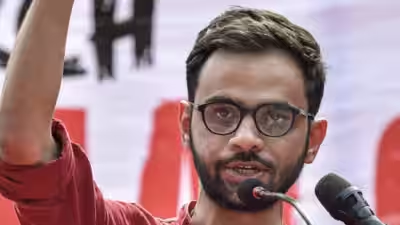
Hyderabad: A proposed screening of a documentary about jailed activist Umar Khalid at the International Institute of Information Technology, Hyderabad (IIIT-H) has come under scrutiny after the Central Board of Film Certification (CBFC) raised an objection over the film’s certification status.
The documentary, titled Prisoner No. 626710 is Present and directed by filmmaker Lalit Vachani, was scheduled to be screened by a group of students at the institute’s KRB Auditorium at 8 pm on Friday. According to reports, the students have now decided to cancel the proposed screening following the CBFC’s public statement.
The controversy centres on whether an uncertified documentary can be publicly screened without a specific exemption under the Cinematograph Act.
CBFC cites certification requirements
The CBFC, which functions under the Union Information and Broadcasting Ministry, posted on X that publicly screening a documentary that has not received certification would amount to a violation of the Cinematograph Act unless an exemption has been obtained under the law.
The board also tagged IIIT-H in its post and said the institute’s authorities could take note of the matter and take necessary action.
The CBFC’s intervention brought attention to the proposed event before it could take place, with the certification issue becoming the central point of the dispute.
The documentary was reportedly being organised by students rather than as an official institute programme.
IIIT-H distances itself from the proposed screening
IIIT-H has clarified that neither the institute nor any of its recognised student organisations had organised or hosted a screening of an uncertified film.
In a statement, the institute said it had established procedures governing official events and activities on its campus. It maintained that attributing an unauthorised or unrelated activity to the institute or its recognised student bodies would be factually incorrect.
The institute also pointed out that its large and diverse community includes students and faculty who may interact with individuals or participate in activities in their personal capacities.
According to IIIT-H, such personal interactions or visits should not automatically be considered institute-organised events or interpreted as representing the institute’s views or activities.
The clarification appears intended to distinguish any individual student activity from programmes officially organised or hosted by the institution.
Documentary focuses on Umar Khalid
Prisoner No. 626710 is Present focuses on Umar Khalid, a former Jawaharlal Nehru University research scholar who has been in custody since his arrest in September 2020.
Khalid was arrested in connection with the case concerning the alleged larger conspiracy behind the northeast Delhi riots. He has been charged under the Unlawful Activities (Prevention) Act (UAPA) and other provisions in the case.
The documentary’s proposed screening at IIIT-H was planned around the occasion of Political Prisoners’ Day. The invitation for the event also referred to the anniversary of the death of revolutionary Jatindra Nath Das, a comrade of Bhagat Singh who died in 1929 after a prolonged hunger strike while imprisoned in Lahore.
The film’s subject and the circumstances surrounding Khalid’s continued incarceration have made screenings of the documentary a matter of public and institutional discussion.
Similar screening postponed in Bengaluru
The Hyderabad development comes only days after a proposed screening of the same documentary at the National Law School of India University (NLSIU) in Bengaluru was postponed.
The programme at NLSIU had been organised by the student-run Law and Society Committee and was scheduled for September 14. The event was intended to mark Political Prisoners’ Day as well as six years since Khalid’s arrest.
The Akhil Bharatiya Vidyarthi Parishad (ABVP), a student organisation affiliated with the Rashtriya Swayamsevak Sangh (RSS), had opposed the proposed screening and called for it to be cancelled.
The organisation alleged that allowing the documentary to be screened on campus would amount to using the institution for political propaganda.
The student committee subsequently announced that the programme had been postponed, citing logistical and security considerations. The committee said the decision did not mean it had abandoned the screening and indicated that it could be held later during the trimester.
Debate over campus screenings
The developments at IIIT-H and NLSIU have brought renewed attention to the question of how educational institutions handle screenings and discussions involving politically sensitive subjects.
Universities and colleges often host student-led discussions, film screenings and academic programmes on a wide range of social and political issues. At the same time, institutions have their own rules governing campus activities, while films intended for public exhibition may also be subject to applicable certification requirements.
In the Hyderabad case, the immediate issue raised by the CBFC is the certification status of the documentary and whether any exemption has been obtained.
IIIT-H, meanwhile, has stressed that it did not organise or officially host the proposed screening.
Screening plans remain in focus
With the students reportedly deciding not to proceed with Friday’s screening, the proposed event at IIIT-H is unlikely to take place as originally planned.
The controversy, however, has highlighted the different positions involved: the CBFC has pointed to the legal requirements governing public exhibition of uncertified films, while IIIT-H has distanced itself from the proposed event and clarified that it was not an institute-organised programme.
The earlier postponement at NLSIU has added to the attention surrounding the documentary and its planned screenings at educational institutions.
For now, the focus remains on the legal and institutional questions surrounding the exhibition of the film, as well as the circumstances under which student-led screenings can be organised on university campuses.
News source: Information for this article was gathered from a variety of reliable news outlets.